
Kenya’s Counterfeit Alcohol Crackdown Expands as Nigeria Seizes N300m in Banned Drinks
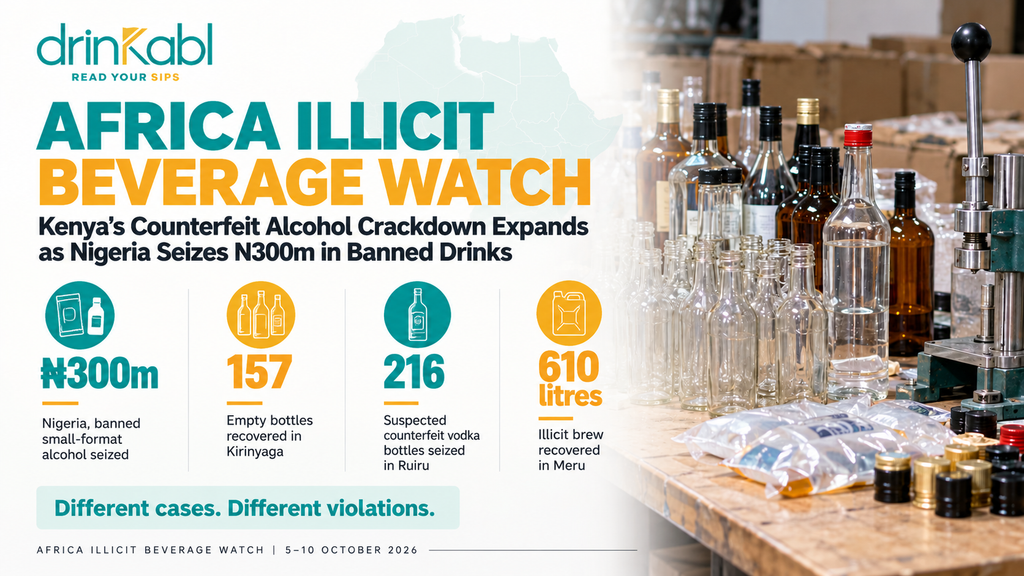
Fresh raids in Kenya turned up suspected counterfeit branded alcohol, empty bottles and sealing equipment, while Nigeria’s regulator seized small-format alcoholic drinks worth N300 million. Kenya also announced a new round of vetting for alcohol manufacturers.
Enforcement agencies are reaching manufacturers, distributors and retailers across African beverage markets, but the evidence does not always show what is inside a seized bottle. This week, the National Agency for Food and Drug Administration and Control (NAFDAC) seized prohibited small-format drinks in Lagos, while Kenyan police and regulators found suspected counterfeit alcohol in Kirinyaga and Ruiru.
These cases are not interchangeable. Counterfeiting is the unauthorised imitation of a brand or its packaging. Adulteration concerns what a product contains. Selling prohibited or unlicensed alcohol is a separate regulatory breach. Each needs its own evidence.
Nigeria’s N300 Million Seizure
On October 5, NAFDAC said it had seized alcoholic drinks worth about ₦300 million, packed in sachets and plastic bottles smaller than 200 millilitres. Operations covered Ile-Epo Market, Ojuwoye Market in Mushin and Oke-Arin Market on Lagos Island. Distributors and retailers were arrested, and investigators found that some operators were hoarding the prohibited products as demand and prices rose. Two people are under investigation: Grace Ehis Eke, 70, and Azudigwu Prince Eva, 43.
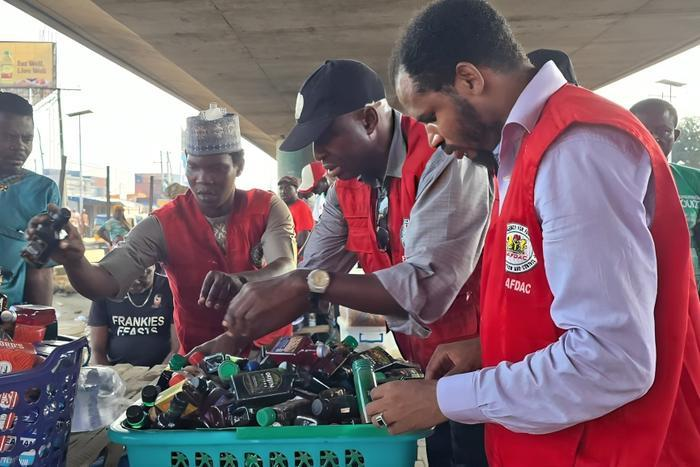
The raids are part of a nationwide restriction on producing, importing, distributing and selling alcohol in sachets and containers below 200ml, which the regulator says protects children and young people from easy access to alcohol. The seizure does not, by itself, show that the drinks were counterfeit or chemically adulterated. The reported breach is the packaging and distribution. It does show how such rules reshape the small-format market, especially when distributors are suspected of withholding stock.
Kenya Orders Fresh Vetting of Manufacturers
On October 5, Deputy President Kithure Kindiki announced that makers of alcoholic drinks sold in Kenya will be vetted again. Speaking in Nyambari, Kiambu County, he said the exercise would check compliance with health and quality standards, and that licences would be reviewed. He added that some manufacturers previously flagged for harmful products had kept operating, and that licences could be revoked where violations are proven.
On October 6, in Gatundu South, he repeated the warning and said premises would be inspected before products reach consumers.
The exercise could affect legitimate manufacturers as well as illicit ones. Its value will depend on published inspection criteria, laboratory evidence and consistent enforcement. For beverage companies, licensing, product composition, production conditions and distribution records will carry more weight as scrutiny grows.
Kirinyaga Raid Finds Bottles and Sealing Equipment
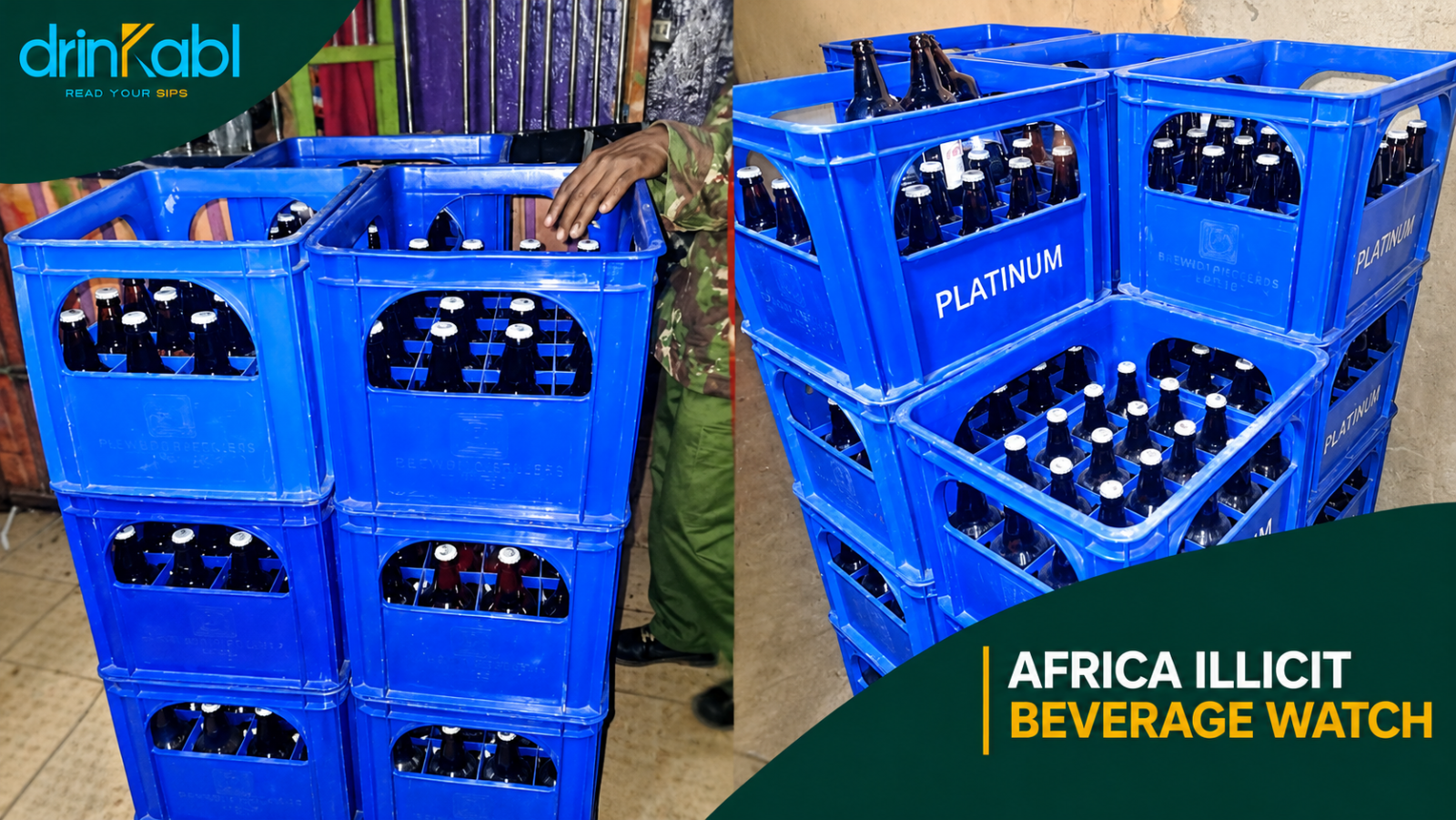
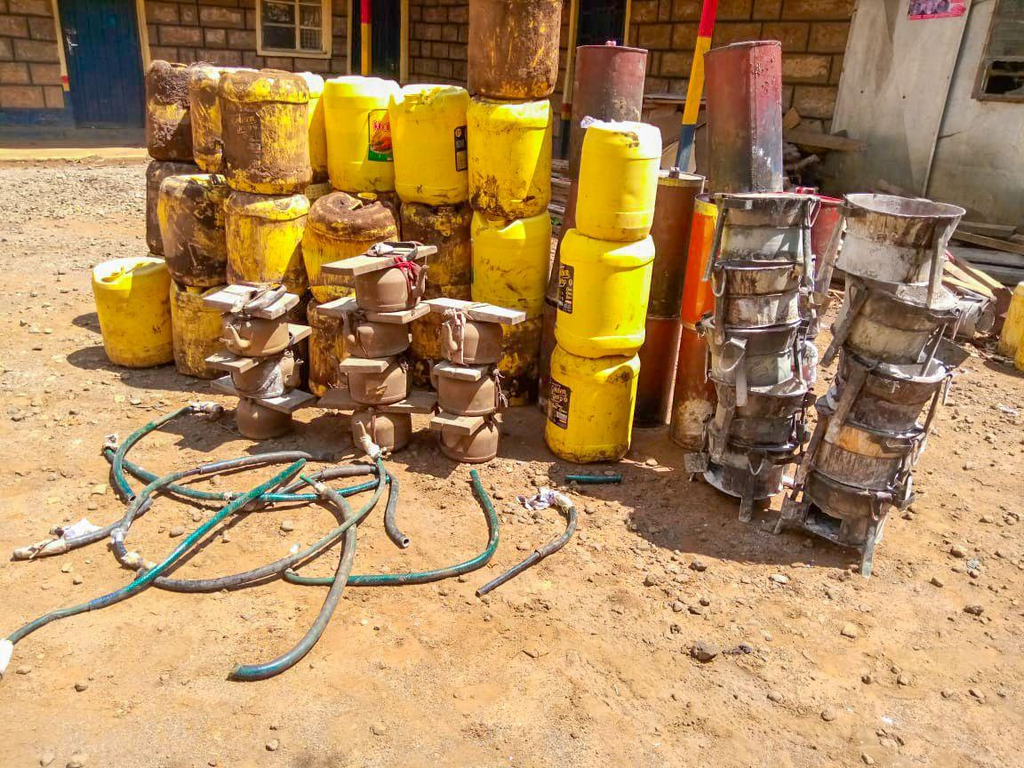
A raid in Kangai Ward, Mwea, Kirinyaga County, on October 8 gave the week’s clearest sign of suspected counterfeit packaging. Police recovered assorted drinks bearing Dallas, Jumbo Ice and Santa King Ice branding, along with 157 empty bottles of different brands. They also seized equipment suspected of sealing bottles, two motorcycles without number plates and a vehicle believed to carry the stock.
Members of the public had reported that alcohol was being made, packed and delivered to bars from the premises. Kirinyaga Police Commander Anderson Njagi described the site as unhygienic. The seized drinks will go to the Kenya Revenue Authority (KRA), the Kenya Bureau of Standards (KEBS) and the Government Chemist for examination. The owner escaped during the raid and was still being pursued when the report was filed.
The evidence points to possible repackaging and unauthorised use of branded containers, but the final classification depends on analysis. Kangai also has a grim history: more than 17 people died there in February 2024 after drinking toxic illicit alcohol.
Ruiru Raid Targets Suspected Counterfeit Vodka
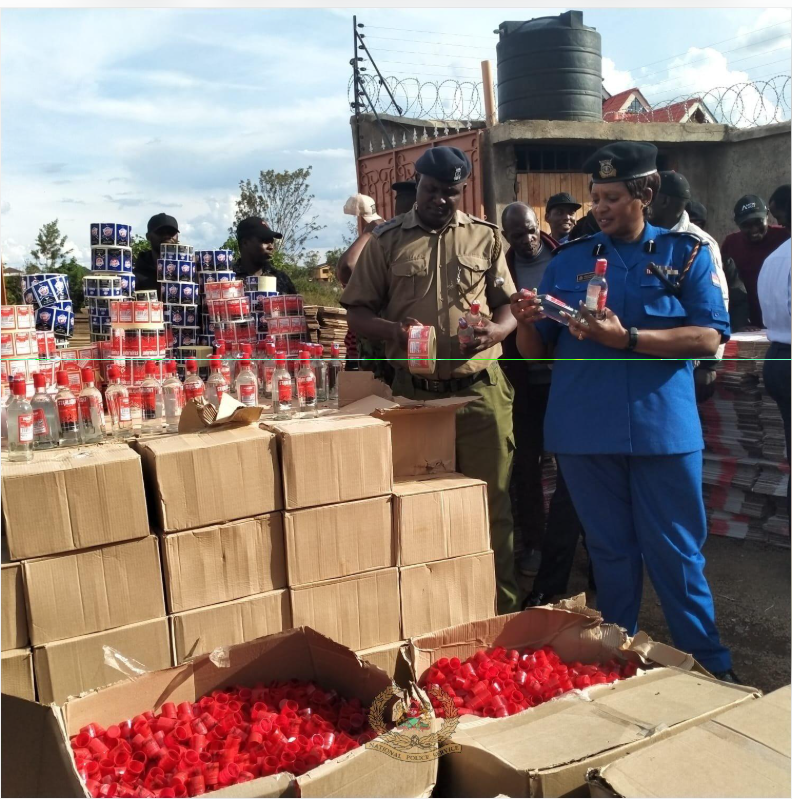
On October 9, the National Authority for the Campaign Against Alcohol and Drug Abuse (NACADA), working with the National Police Service and the Anti-Counterfeit Authority, seized 216 bottles of suspected counterfeit vodka in Gwa Kairu, Ruiru, Kiambu County. The 250ml bottles carried the Starlid brand and came from a liquor store. Officers also seized suspected narcotics at a nearby shop, along with cash, records and a lease agreement. Two people were arrested over the liquor and narcotics investigations, and a third suspect was linked to the operation.
The agencies cover different parts of one supply chain: NACADA’s public-health mandate, the police’s investigative powers and the Anti-Counterfeit Authority’s brand protection role. For manufacturers, counterfeits cost more than sales. They erode consumer confidence and leave buyers unable to tell original products from imitations.
Meru Seizure Adds to the Pressure
On October 8, a multi-agency team recovered 610 litres of illicit brew from three homesteads in Irindie Village, Igembe Central, Meru County. About 600 litres was Muna, a locally known brew, and 10 litres was chang’aa. One suspect was arrested. Police said the operation was part of continuing nationwide enforcement, with more than 2.8 million litres of illicit alcohol seized since December 2025.
That figure shows the scale of enforcement, not the size of the illicit market. Seizures capture what authorities find, and volume alone does not show how much was counterfeit, adulterated or merely non-compliant.
Local Enforcement Under Scrutiny
On October 10, Information Cabinet Secretary William Kabogo called for chiefs who fail to tackle illicit alcohol production to be dismissed. Speaking during Mazingira Day celebrations in Kiambu County, he argued that local administrators know where illicit brewers operate and should answer for inaction.
Raids remove stock, but lasting results depend on identifying suppliers, tracing distribution routes, establishing what the product contained and concluding cases in court.
The Week at a Glance
| Case | Date | Classification | Evidence strength |
| Nigeria, Lagos | October 5 | Prohibited small-format alcohol, ₦300m seized | NAFDAC enforcement; not proof of counterfeiting |
| Kenya, manufacturer vetting | October 5 to 6 | Policy announcement | Inspections and licence reviews to be tracked |
| Kenya, Kirinyaga | October 8 | Suspected counterfeit | Police seizure of drinks, 157 empty bottles and sealing equipment; analysis pending |
| Kenya, Meru | October 8 | Illicit brew | Multi-agency seizure of 610 litres; composition not established |
| Kenya, Ruiru | October 9 | Suspected counterfeit | NACADA and police seizure of 216 Starlid vodka bottles; verification pending |
| Kenya, Kiambu | October 10 | Administrative pressure | Cabinet secretary’s remarks; not a seizure |
Open Questions
In Kirinyaga, laboratory results should show what the seized drinks contained, whether investigators confirm unauthorised use of the brands, and whether the owner is caught. In Ruiru, investigators must establish whether the Starlid vodka was counterfeit and whether the arrests lead to charges. In Nigeria, the prosecution of the arrested distributors and the fate of the seized products are still unreported.
Kenya’s manufacturer vetting is worth watching for published criteria, the number of producers reviewed, licence decisions and any improvement in compliance. The table’s figures measure different things, including finished drinks, empty packaging and policy action, so they cannot be added into a regional total. A seizure tells the trade more when authorities disclose what the product contained, which rules it broke and what action followed.