
We recently examined how nightclubs and lounges can end up serving as a last-mile channel for illicit alcohol, and how a club that looks legitimate can still put a counterfeit bottle on the table. That piece left one question hanging: if it isn’t happening at the club itself, where exactly does the breakdown occur?
The answer is that there’s no single point of failure. Nigeria’s counterfeit-alcohol enforcement record maps out several places along the chain where a fake product can slip into a supply chain that looks legitimate by the time it reaches a table, from the factory floor to the bottle in a bartender’s hand. Here are ten of them.
1. It starts in an illegal factory
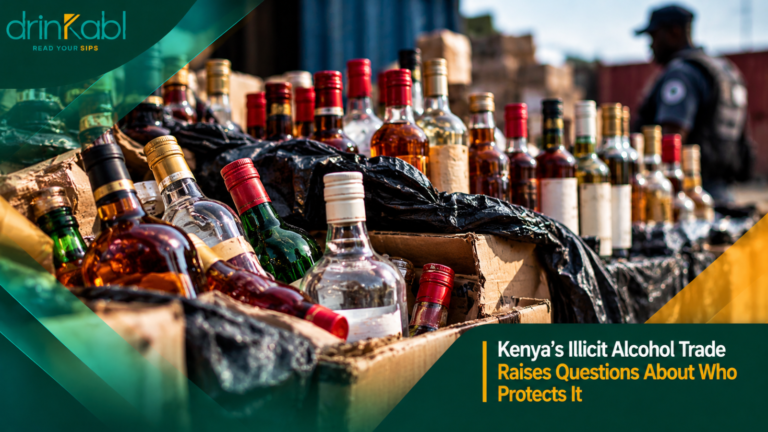
Someone has to make or repackage the product first, and NAFDAC keeps finding where that happens. In November 2024, the agency dismantled an illegal packaging operation in Abule-Osun, Lagos, seizing more than 50,000 counterfeit branded labels and packaging materials worth an estimated ₦2 billion. In April 2026, it shut down two more production sites at Lagos’s Trade Fair Complex, recovering over 1,800 cartons of counterfeit and adulterated alcohol worth roughly ₦350 million, along with plastic mixing tanks and improvised filtration equipment. Fake alcohol in Nigeria isn’t a rumour; it has a documented production side.
2. Genuine bottles get refilled with fake contents
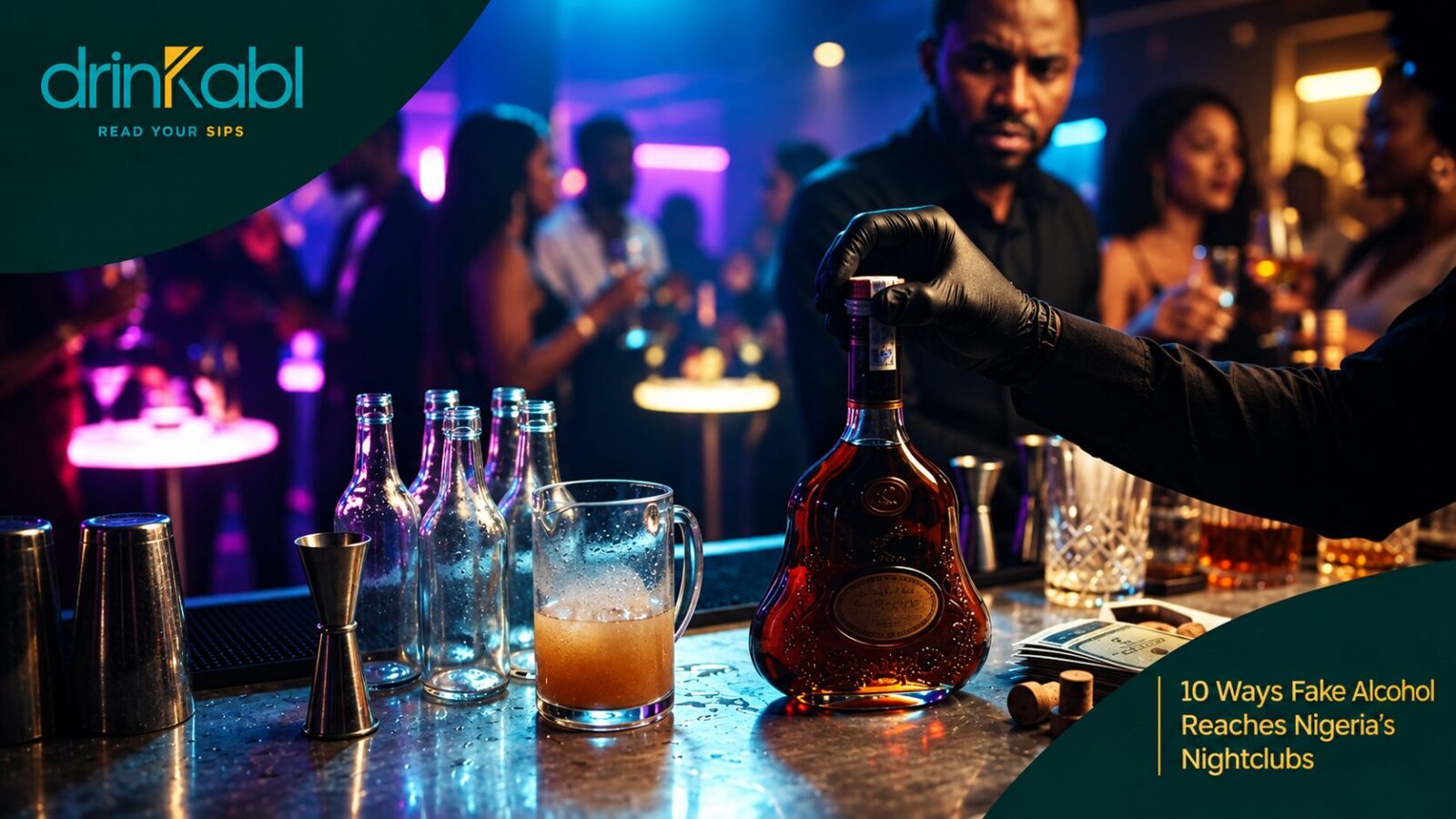
The bottle itself doesn’t have to be counterfeit for the alcohol inside it to be fake. In December 2024, NAFDAC raided a makeshift operation at Oke Arin Market and seized counterfeit products worth more than ₦180 million. The agency said the main suspect, Tochukwu Henry, confessed to refilling bottles labelled Rémy Martin with ST-Rémy contents. A bartender interviewed by PUNCH made a similar point: scanning an original bottle doesn’t confirm what’s actually in it.
3. Empty bottles become raw material
Once a premium bottle is empty, it still carries brand value for a counterfeiter. That’s part of why Quilox, during its 2024 anti-counterfeiting partnership with NAFDAC, said it used unique serial numbers on its bottles and destroyed them after use, specifically to stop them being recycled into fake products elsewhere. If refilled genuine bottles are circulating, then what a venue does with its empties becomes a legitimate anti-counterfeiting question, not an afterthought.
4. The wrong supplier lets the problem in
A club doesn’t manufacture what it sells; it buys. A bartender identified as Bankole told PUNCH that at a previous job near Elegushi Beach, as many as seven bottles in a carton of 12 were sometimes fake, a pattern he tied to venues buying outside manufacturer or certified-dealer channels. That figure is one person’s account, not a verified industry statistic, but the underlying question holds: can a venue actually prove where every bottle it stocks came from?
5. A longer distribution chain means less traceability
Counterfeit alcohol usually passes through more hands than just producer to consumer. It can move from illegal producer to intermediary to distributor to retailer, or through a hospitality supplier straight into a nightclub. The more links in that chain, the harder it gets to establish where a bottle actually originated, which is why NAFDAC’s April 2026 Lagos operation, described as involving both production and distribution through a retail outlet, matters more than the seizure total alone. Stopping a factory removes one source; tracing distribution shows where its products were headed.
6. A venue can be a victim, not a seller
A club selling counterfeit alcohol knowingly and a club deceived by its own supplier are not the same thing, even though the customer experience can look identical. Gabriel Egunjobi told PUNCH he fell seriously ill after his group bought a ₦260,000 bottle of vodka at a Victoria Island club, and that the venue later apologised, saying it too had been a victim of counterfeit supply. There’s no lab result cited to confirm what was in that bottle, but if the club’s explanation was genuine, the real question is how the counterfeit product got past its own purchasing controls.
7. Substitution can happen after the bottle arrives
Even a venue that buys from legitimate suppliers can have a problem if staff swap contents once a bottle is open. Nigerian evidence for this is thin, but Uganda’s Daily Monitor reported allegations from a former Kampala hospitality worker, Leah Kemigisha, that some venues served genuine liquor when a customer first arrived, then substituted cheaper liquid once the customer was intoxicated. It’s an allegation, not a proven pattern, but it points to a control question any venue should be able to answer: who has access to opened bottles, and is that inventory tracked?
8. Nightlife conditions work against detection
Nobody is inspecting a pour under laboratory lighting. Loud music, low light, shared bottles and rising intoxication all make careful scrutiny harder, a concern echoed by Kampala nightlife promoter Maxim Kizito, who alleged that customers in high-end venues were less likely to notice counterfeit premium spirits given the setting. That’s an industry allegation rather than a scientific finding, but the practical implication stands: the venue, not the customer, has to be the actual line of defence.
9. A high price signals cost, not authenticity
Consumers tend to assume an expensive bottle must be real, and nightclub pricing reinforces that instinct. But the ₦260,000 price tag in the Victoria Island case didn’t protect the customer from what he believed was a bad bottle, and the economics of counterfeiting explain why premium brands get targeted in the first place: refill a genuine Rémy Martin bottle with cheaper contents, as NAFDAC alleges happened at Oke Arin, and the markup can be substantial. A price tells you what the seller charged. It doesn’t tell you what’s in the bottle.
10. The consumer is often the first to notice, and the last to be believed
By the time a customer notices an odd taste or an unexpected reaction, the bottle has already made it through the entire chain. Entertainer Freedom Atsepoyi said in 2023 that he was hospitalised after drinking what he believed was fake alcohol at a club, and music executive Soso Soberekon made a similar claim in 2021. Both are first-person allegations, not lab-confirmed cases, and illness after drinking doesn’t automatically prove a drink was counterfeit. What usually decides whether an allegation becomes evidence is whether the bottle itself was kept, tested, or reported to NAFDAC, and most consumer complaints never get that far.
What this adds up to
Nigeria already has a regulatory baseline for this. NAFDAC’s Spirit Drink Regulations require registration before a spirit drink can be manufactured, imported or sold, and the agency runs an online portal where consumers can verify a product’s registration status. The gap isn’t a lack of rules; it’s how consistently those tools get used, and how far enforcement follows a seized bottle back to the supplier who sold it, rather than stopping at the factory that made it. Nigeria’s regulators have shown, seizure after seizure, that illegal alcohol production exists at real scale. What’s still largely undocumented is the route between those factories and the tables where the product finally gets poured, and that’s the question worth chasing next.