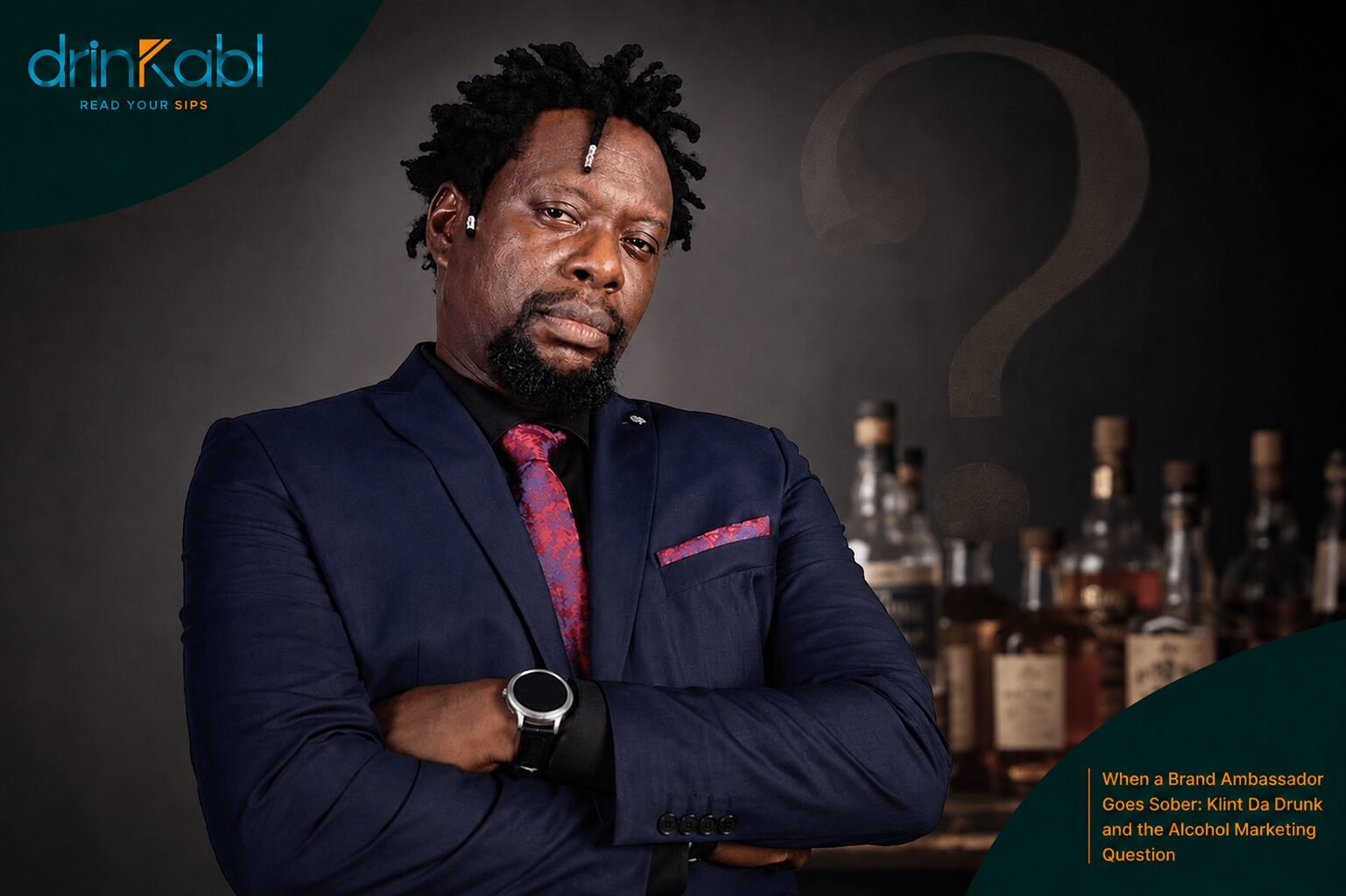

Nigerian comedian Afamefuna Igwemba, popularly known as Klint Da Drunk, says liquor brands that once worked with him have cut ties, arguing that his famous drunken stage character now reads as a negative portrayal of alcohol consumption.
The claim is notable because Klint has built his career on a character defined by drunkenness, even though his real relationship with alcohol is the opposite. In April, he disclosed that he does not drink at all, explaining in an earlier interview that he discovered an allergy to alcohol after bouts of drinking left him sick for days.
That contrast now sits at the centre of a commercial dispute. Klint says he previously worked with Lager Beer, Nigerian Breweries, Guinness and Glenfiddich, brands that understood the character and used him for promotional campaigns. He says that changed once the same brands began describing the persona as a liability rather than an asset, telling him it had come to represent excessive drinking rather than entertainment.
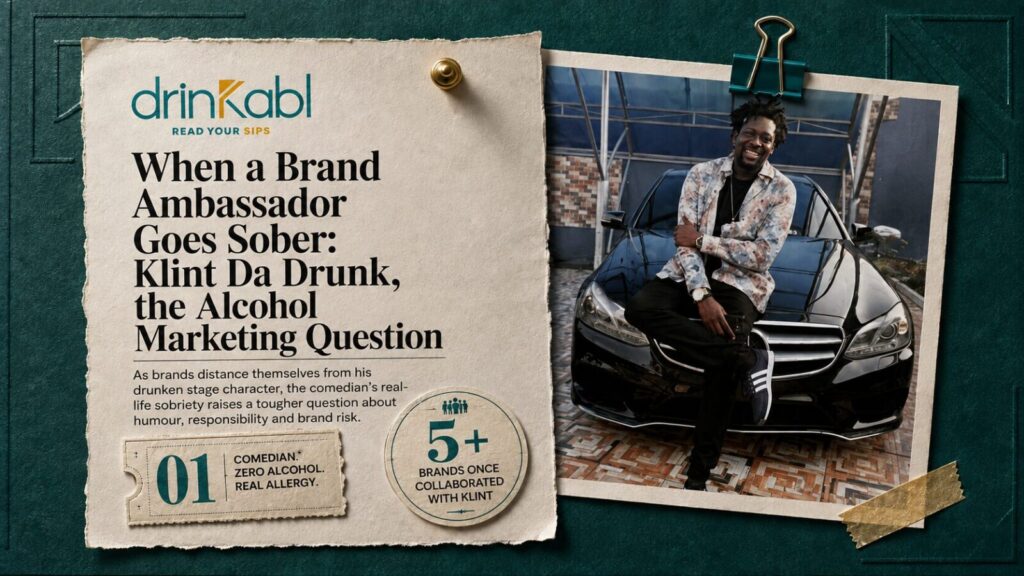
For Klint, the irony is hard to miss. He argues that the same exaggerated drunkenness brands now avoid could instead be repurposed as a warning. “I feel I should be the face of ‘Drink responsibly,'” he said, framing his real-life sobriety as proof that the act was always satire rather than endorsement.
His case touches a difficult line in alcohol marketing: how far a brand can lean on humour and exaggerated characters without appearing to normalise the behaviour it is meant to discourage responsibly. That question has grown more complicated as alcohol campaigns face closer scrutiny, not only from regulators but from consumers reacting in real time online.
Klint’s persona was always a performance device rather than a lifestyle endorsement, built to exaggerate social observation rather than promote drinking itself. But that distinction may not travel as cleanly to an audience. A consumer watching a comedy sketch does not necessarily separate performance from message the way a creative director or the performer does, and for brands operating in a regulated category, what an association communicates often matters more than what the talent intends.
This is where celebrity endorsements in the beverage industry get complicated. Cultural relevance does not automatically translate into brand fit. A face has to align with a company’s positioning, its responsible-consumption commitments and the audience it is trying to reach, and a persona built for laughs can just as easily become a liability once a brand’s risk calculus shifts.
There is another way to read the story, though. Klint’s pitch suggests that brands could treat personas associated with excess as an asset rather than a threat, using them to draw a sharper line between entertainment and real consumption. That would take deliberate creative execution, and a willingness from brands to run a campaign whose message is not simply “drink,” but “know where the line is.”
Nigeria knows Klint as the drunk who does not drink. He is now asking the alcohol industry whether that contradiction makes him more useful to a brand, not less, and whether audiences are ready to read the joke and the warning in the same breath.