
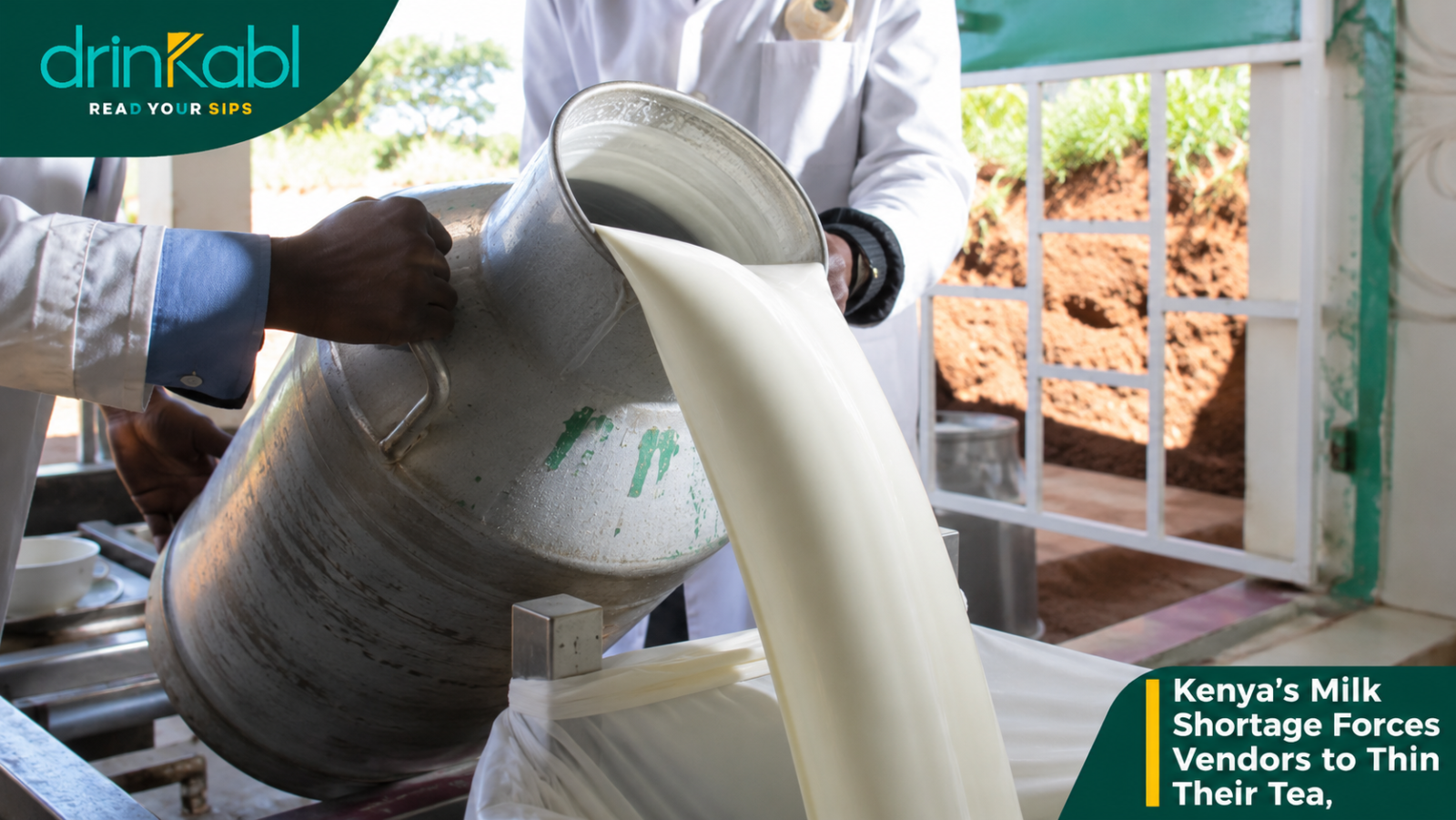

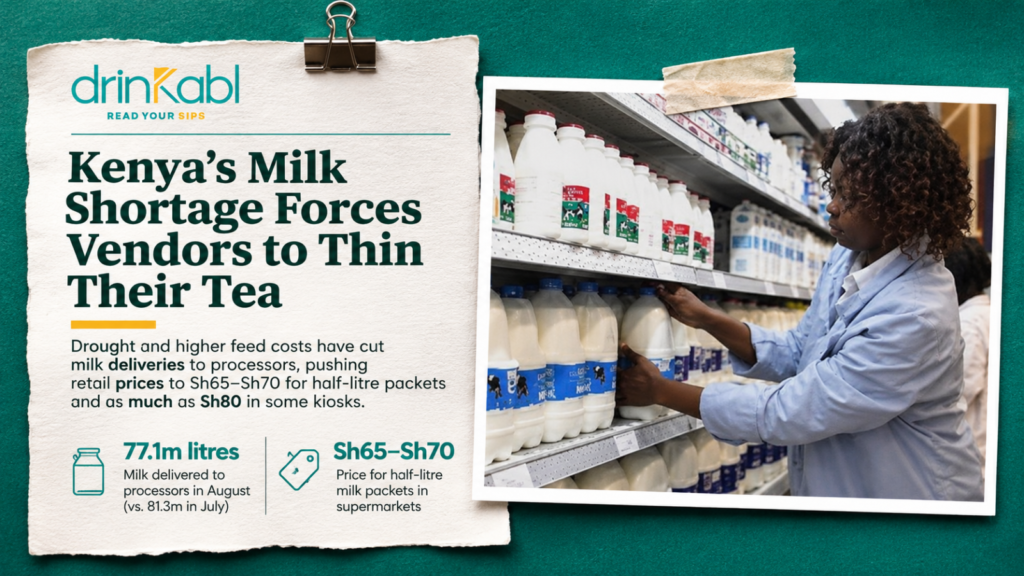
Kenya’s milk supply has tightened as drought and rising animal-feed costs reduce production, pushing formal deliveries to processors down to 77.1 million litres from 81.3 million litres. The squeeze is reaching consumers through higher retail prices, with half-litre packets selling for Sh65 to Sh70 in supermarkets and as much as Sh80 in some kiosks, raising concerns about affordability and the consistency of milk-based beverages.
Deliveries stood at 88.89 million litres in May, so August volumes were about 13 per cent lower, after a record 2025 when fresh milk output reached 5.5 million tonnes. Formal intake misses the roughly 80 per cent of milk sold through informal channels, yet its fall left some shelves without Brookside, New KCC and Tuzo packets in early September.
Kiosks absorb the cost
In Homa Bay, Pamela Otieno, who runs a food kiosk in Posta, cut the milk in her daily batch of up to 20 litres of tea from five packets to four and kept a cup at Sh20. Raw milk in the county has risen from Sh50 to Sh70 a litre, and some of her customers have started complaining.
Farmers find better buyers
The Kenya Dairy Board says the shortage has helped farmers who sell directly. One Kiambu farmer supplying Limuru Dairy gets Sh50 a litre from the processor but Sh80 from buyers at her gate. President William Ruto said on 20 October that New KCC would pay Sh65 a litre from October, plus a Sh2 quarterly bonus.
Officials split on the cause
David Ndii, chair of the President’s Council of Economic Advisers, said on 3 November that empty shelves reflect stronger demand, citing output up about 20 per cent. The Kenya Dairy Board instead blames drought and feed costs for falling deliveries. The demand claim has not been independently confirmed.
Quality checks and the rains
The board warned on 3 September against adding water or chemicals to milk, with penalties of up to Sh10,000, 12 months in jail, or both. A change in taste alone does not show adulteration, and a 2021 study of 493 samples in central Kenya found added water in 16.7 per cent, a figure that does not describe the market today.
The board has said supply could begin stabilising within a month if rainfall improves, and the official outlook projects above-average October to December rain across the main dairy counties. Pasture and herds need time to recover, so deliveries may lag the rains.