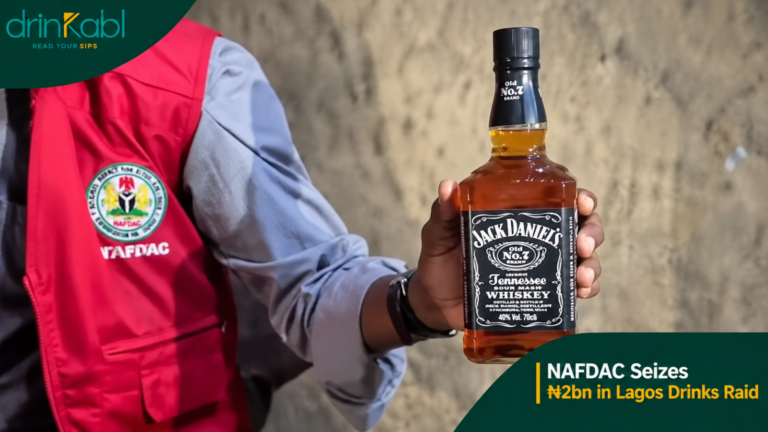


Nigeria’s sachet alcohol ban has stopped being a policy argument for indigenous distillers. It is now showing up on their balance sheets.
Intercontinental Distillers Limited (IDL) and Nigeria Distilleries Limited (NDL), two of the country’s most established spirits makers, are each working through what a full exit from sub-200ml packaging costs their business. Their situations differ, but together they show how deeply the transition could reshape Nigeria’s distilling industry.
NAFDAC sealed three factories in Ogun State in late July: IDL’s plant, an undisclosed NDL production site, and Shashi Distillery, according to a Nairametrics report. The agency said machines it had placed on hold in January were producing banned sachets and sub-200ml PET bottles again by the time officials returned.
IDL’s exposure runs deep
IDL has operated in Nigeria since the 1980s, producing Eagle Aromatic Schnapps, Chelsea London Dry Gin, Bull London Dry Gin, Squadron Dark Rum, Action Bitters and Confam Bitters. Its distillery sits on the Ota-Idiroko industrial corridor, and its brands reach the market through regional offices and 42 depot locations nationwide, the company says.
That scale changes the calculation. A disruption at the factory does not stay at the factory. It moves through distributors, wholesalers, retailers and every shelf where IDL’s brands sit. NAFDAC had already flagged the company once this year, placing machines on hold in January before finding, on a follow-up visit in July, that production had resumed, according to Vanguard.
IDL’s real challenge now is redesigning a major spirits portfolio around packaging it no longer controls.
NDL’s problem sits elsewhere
NDL’s case looks different. Its Seaman’s Schnapps brand already sells in larger formats, including registered 75cl and 20cl bottles, so the company has commercial experience outside the sachet segment.
But NAFDAC linked NDL to a separate, undisclosed facility where investigators say they found 100ml bottles, sachet packaging materials and active production equipment still running. Officials had inspected the company’s registered premises on Idiroko Road first and found nothing, before intelligence led them to the second site, PM News reported.
The real question for NDL is whether every part of its supply chain, not just its registered plant, has actually stopped making the old products.
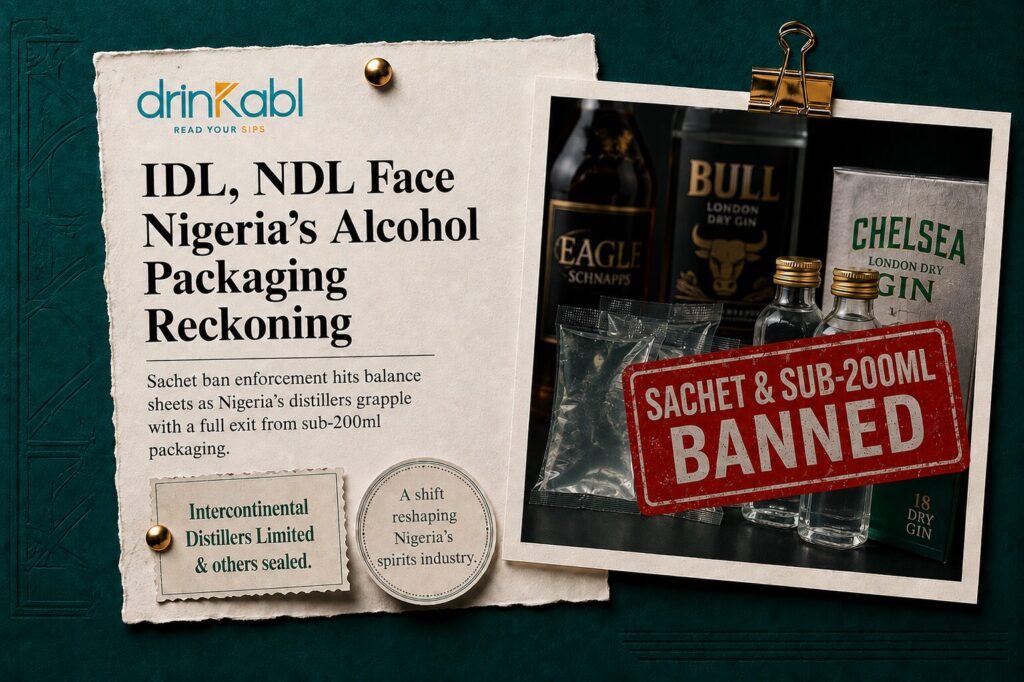
An industry redesigning its economics
Shashi Distillery, the third company NAFDAC named, had already been visited in January, when officials suspended sachet machines and removed packaging materials at the site.
Workers in the Ogun industrial corridor have raised concerns about closures tied to the crackdown, and manufacturers have warned that the shift threatens jobs and investment across the sector. It is a pattern Drinkabl.media has tracked beyond Nigeria too, in Kenya’s parallel move against small-format alcohol and in Nigeria’s push for alcohol warning labels at the international level.
A spirits brand can usually survive a move from sachet to bottle. What changes is the cost of the bottle itself, along with logistics, shelf space, consumer pricing and distributor margins.
For companies with real manufacturing assets and national distribution, that is a business redesign, not a packaging tweak. The sachet may be disappearing from Nigeria’s alcohol market. The brands built on it still have to find a way to survive without it.
READ MORE