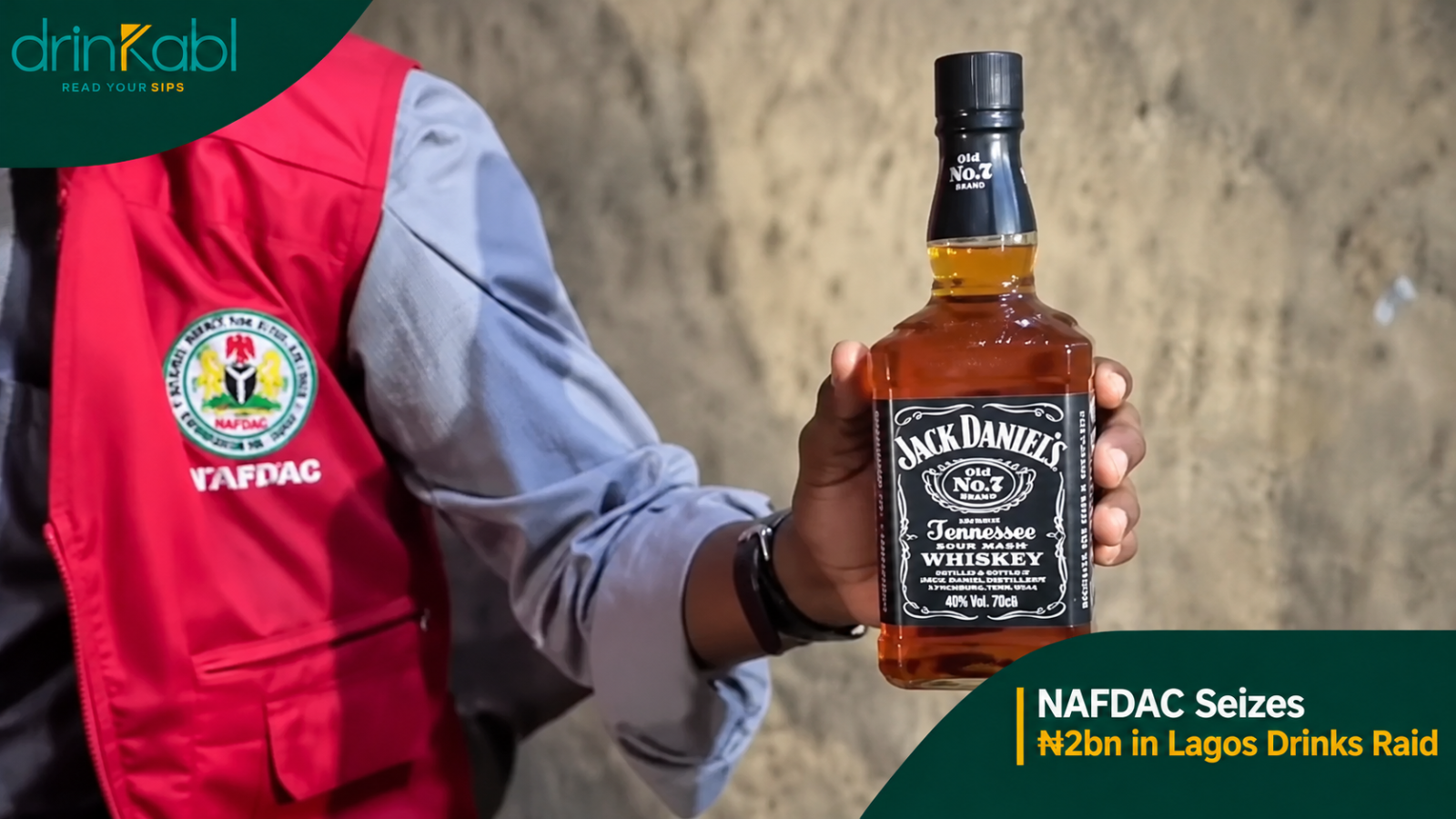

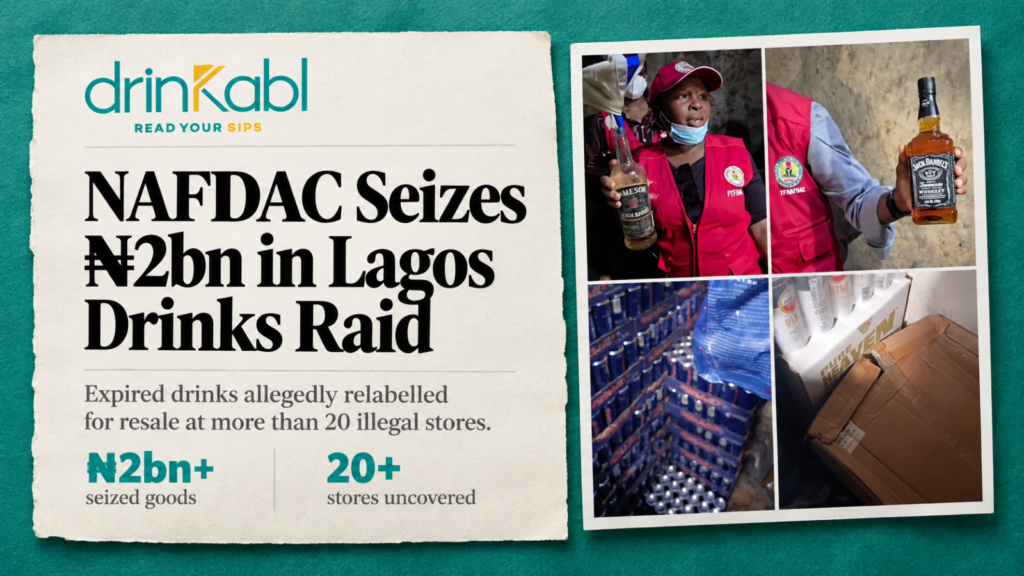
Nigeria’s food and drugs regulator arrested two men on 13 October 2026 at Zamfara Plaza in Lagos’s BBA Trade Fair Complex, where it says expired drinks were being relabelled for resale. The National Agency for Food and Drug Administration and Control (NAFDAC) also reports finding more than 20 illegal stores and seizing products valued at over ₦2 billion.
The raid was led by NAFDAC’s Investigation and Enforcement Directorate and followed surveillance of suspected counterfeiters in the Trade Fair International Market, the agency says. It says the stores were hidden in makeshift parking spaces and that suspects were found blending and counterfeiting popular alcoholic brands, revalidating expired drinks and stockpiling banned imported goods. The ₦2 billion covers everything seized, so it is not the value of expired drinks alone.
What officials recovered
Footage released by the regulator showed stacks of Bullet energy drink cans, a bottle of Martell cognac, and plastic bags of caps, seals and printed labels in what appeared to be a makeshift production space. Bottles of Don Julio and Jameson also appeared in the video. Brands visible on camera do not show that their owners’ products were altered, or that the companies had any part in the operation.
Officials also recovered drums, filters, a heating device and burners, along with imported bottle caps, and described several mini-factories working in poor conditions. Other suspects reportedly fled the scene. The agency says the seized goods will be moved to its warehouse and destroyed.
Bars in the chain
Reports of the raid describe two different flows. One account says the suspects bought expired stock from bars and nightclubs with help from bartenders, while another says they supplied the drinks back to venues through arrangements with some bar managers. NAFDAC has not named any bar or nightclub, so nothing public shows that a particular venue knowingly bought or sold altered drinks.
The alleged revalidation covered energy drinks as well as wine and whisky, so the risk is not limited to alcohol. Removing an expiry date takes away the one fact a buyer needs to judge shelf life, and refilling or resealing a container raises further questions about what is inside and how it was handled. The footage does not establish the contents of any recovered product, and laboratory results have not been reported.
The suspects’ side
One of the two men, who described himself as a drinks dealer in the market, said he only changes bottles because the original containers were damaged. That is his account and it has not been tested, and an arrest does not establish guilt. NAFDAC says both men will face administrative action and prosecution.
The agency says it will investigate where the products came from, what raw materials were used and who financed or directed the operation. It has not said how many of the affected products reached consumers, or how far the distribution network ran.
A repeat problem
NAFDAC said in December 2024 that it had seized items worth about ₦2 billion at counterfeit alcohol packaging centres in Lagos, after reports of illegal revalidation of expired alcoholic drinks at the same trade fair complex. The complex is in focus again almost two years later, though the agency has not said whether the cases are linked. An official said the agency is stepping up checks ahead of the festive season, when demand for drinks rises.
For manufacturers, the alleged use of familiar labels on drinks made outside authorised production creates reputational exposure even where the company has no part in it. Bars, clubs and distributors face a narrower question, which is whether expired stock is recorded and disposed of in a way that stops it returning to sale. Consumers who suspect a product can report it through NAFDAC’s complaints line, 0800-1-623322.