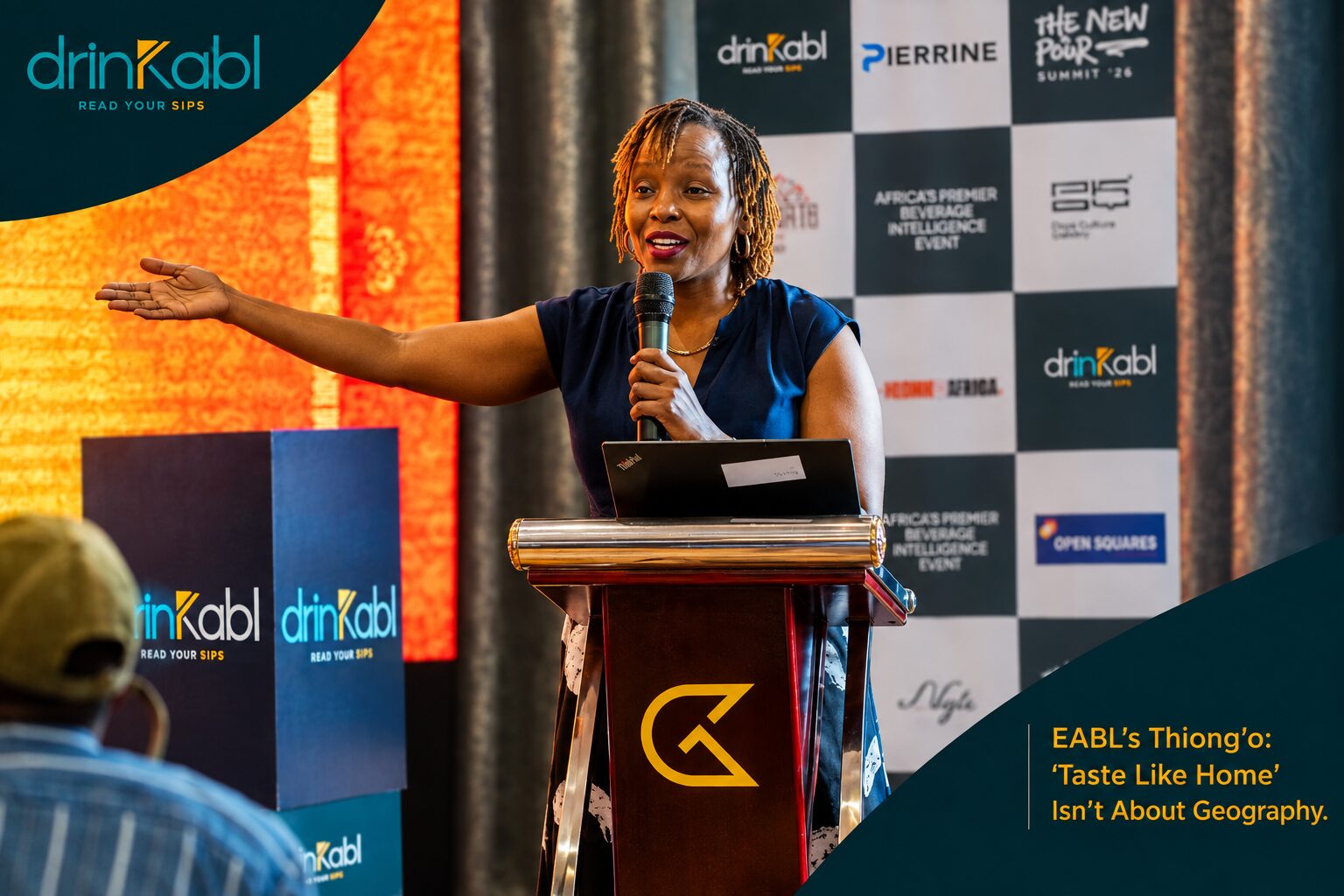

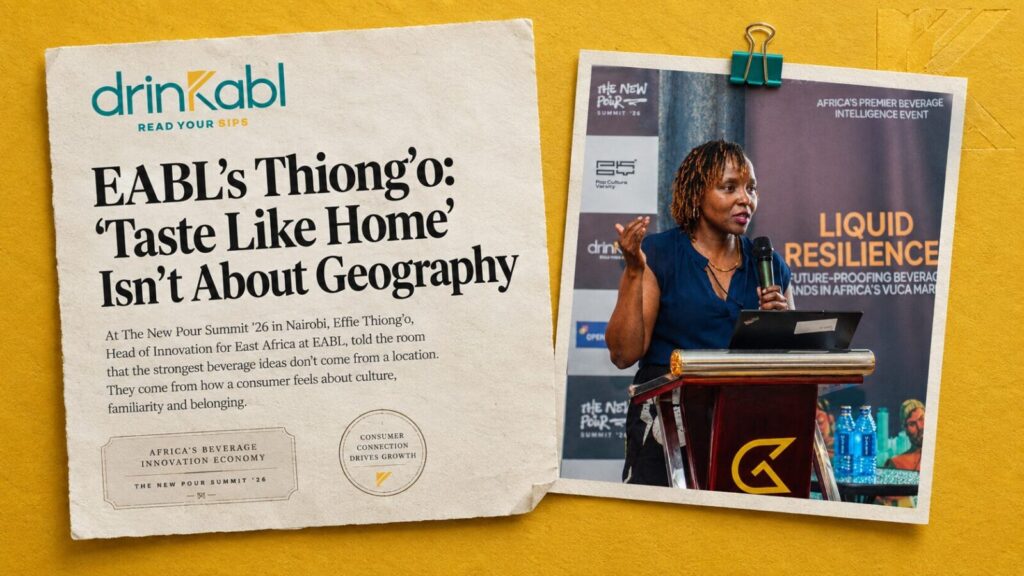
At The New Pour Summit ’26 in Nairobi, Effie Thiong’o, Head of Innovation for East Africa at EABL, told the room that the strongest beverage ideas don’t come from a location. They come from how a consumer feels about culture, familiarity and belonging.
“Taste like home is not geography,” she said. “It’s that sense of familiarity, warmth, and connection.”
It’s a short line, but it captures something real about where Africa’s beverage industry is heading. As consumers see more global brands and try more varied drinking experiences, companies on the continent aren’t really choosing between “global” and “local” anymore. The more useful question is how the two work together.
A masterclass built around scale
Thiong’o delivered her remarks during the summit’s Products & Innovation session, in a masterclass titled “The Innovation Formula for Glocal Scale.” The title says a lot about the problem she’s trying to solve: how do you build a drink that feels locally meaningful without making it too niche to scale? Her clearest answer so far sits inside one of EABL’s own innovation platforms.
The Manyatta example
EABL’s 2024 integrated report describes Manyatta as a “Curator of African Taste,” a cider line built around African flavours, packaging and the idea of a “Taste of Home.” It launched in four variants, all at 7% ABV.
The brand isn’t selling itself as just a flavoured cider. It’s trying to connect flavour to identity.
When Manyatta launched in 2024, Thiong’o said EABL’s job as an innovator was to spot underserved consumers and respond to what they actually wanted, in this case, more flavour and new drinking experiences. She framed the drink’s use of local spices as a source of African pride.
The launch also came with a cultural push called “Passionate Pages Flavoured by Manyatta,” built around a partnership with music group Vijana BaruBaru and the release of an EP. Manyatta entered the market wrapped in culture, not just as a new liquid on shelf.
Why “home” sells
Taste rarely exists on its own. A flavour can call up a place, a childhood memory, a family occasion. Packaging can signal where someone belongs. Music and storytelling do the same work.
The hard part is turning that emotional pull into something a shopper will actually pick up. Manyatta is EABL’s attempt to do exactly that, and Thiong’o’s framing explains the logic: if home is a feeling rather than a location, a brand doesn’t have to copy a specific regional taste to feel familiar. It can build that feeling through flavour, story, visuals and the moments people encounter the brand in.
Local, but built to scale
EABL’s broader portfolio shows the same thinking. Its 2024 report also pointed to Tusker Ndimu, a lemon beer built around a flavour tied to Kenyan culture, sitting alongside Manyatta’s African flavour play.
The takeaway isn’t that every African drink needs to brand itself as “African.” It’s that innovation has to answer a real question for the consumer: why this product, why this flavour, why now, and why should they care.
Consumers set the direction
That consumer-first approach came up elsewhere at the summit too. In a post-event reflection, EABL’s Caroline Makau pointed to consumer-centric innovation as a growth driver, naming culture and community as key reasons people choose one drink over another. She cited Manyatta and Kenya Cane Lemon Ginger as recent examples of EABL responding to shifting consumer needs and creating new drinking occasions.
That matters because African consumers aren’t one audience anymore. Urbanisation, younger buyers, tighter budgets and more exposure to global trends are splitting demand into smaller pieces. Beverage companies now need to know not just what people drink, but why, where, and what the product says about them when they do.
The bigger point
Thiong’o’s real contribution may be the distinction buried in her definition of home: it isn’t where a consumer comes from, it’s what makes them feel seen.
That changes how a brand can approach innovation. A flavour can feel familiar without being traditional. A brand can read as African without leaning on stereotypes. A product can pull from local culture while still being built for a much wider market.
The job for innovators, in Thiong’o’s telling, isn’t just asking what people want to drink. It’s figuring out what they want a drink to make them feel. At The New Pour Summit ’26, her answer to that question was simple: home.