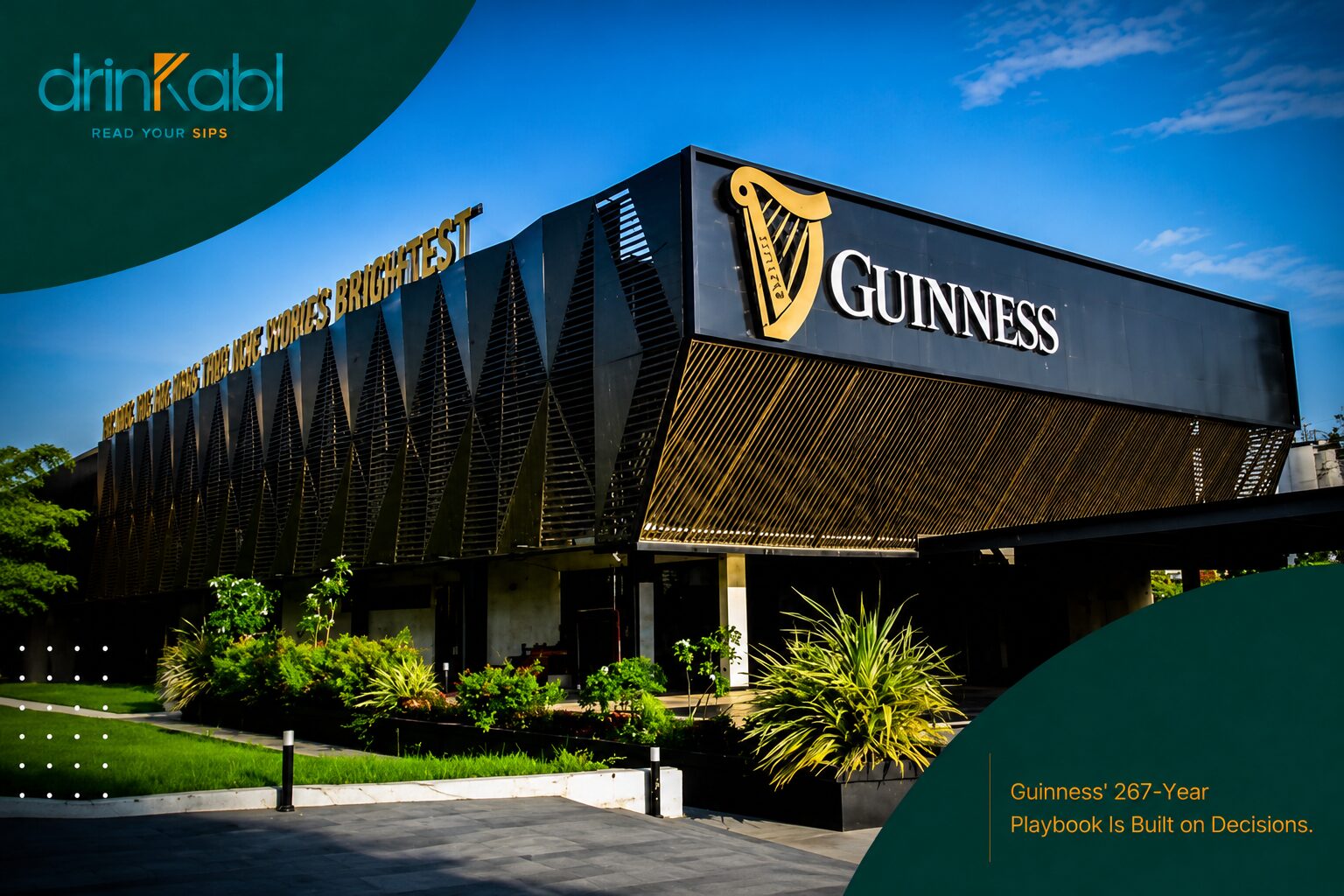

The stout’s advantage has come less from luck than from a long sequence of choices around brand, brewing, innovation and distribution.
Guinness has spent more than two and a half centuries turning individual business decisions into a durable beverage brand, and the company’s history offers a useful lesson for brewers competing in increasingly crowded markets.
Arthur Guinness signed the now-famous 9,000-year lease on the St James’s Gate site in Dublin in 1759, laying the foundation for what would become a global beer brand. The brand turned 266 in 2025; in 2026, it is 267 years into that lease. The agreement itself remains one of the most effective pieces of brand history in the drinks industry, turning a property document into shorthand for long-term thinking, as the Guinness Storehouse tells visitors.
The same pattern runs through the brand’s visual identity. The Guinness harp first appeared on a bottle label in 1862, giving the brewer a recognisable symbol as it expanded internationally, one so closely tied to the brand that Ireland’s government had to weigh its trademark implications when the Irish Free State was established.
Then came the decision to advertise, or rather, to wait. Guinness says the brewery went roughly 170 years without advertising before approving its first official campaign in 1929, on condition that the advertising matched the quality of the beer. That constraint helped build a distinctive advertising system rather than simply adding media spend to the business.
The more revealing decision was technological. Guinness spent years developing a way to reproduce its nitrogenated draught experience outside the pub, eventually introducing the widget in 1988. Diageo says five years of innovation went into the technology, which uses nitrogen to recreate the brand’s familiar surge and creamy head in a can. The lesson for beverage companies: the strongest brands do not treat innovation as a launch calendar. They build distinctive assets that keep working across formats and occasions.
Guinness has also repeatedly converted brand identity into consumer behaviour. The 1955 Guinness Book of Records began as a way to settle pub arguments and quickly became a bestseller. By 1974, Guinness World Records says the book had become the biggest-selling copyright book in history, with 23.95 million copies sold, an ability to turn a product into a ritual, a symbol, a conversation and eventually a wider consumer platform that remains commercially relevant today.
The Nigerian angle
Drinkabl.media has examined how Guinness Nigeria’s relationship with Diageo has shifted under Tolaram ownership. The distinction matters: Tolaram controls Guinness Nigeria, while Diageo retains ownership of the global Guinness brand and licenses it to the Nigerian brewer.
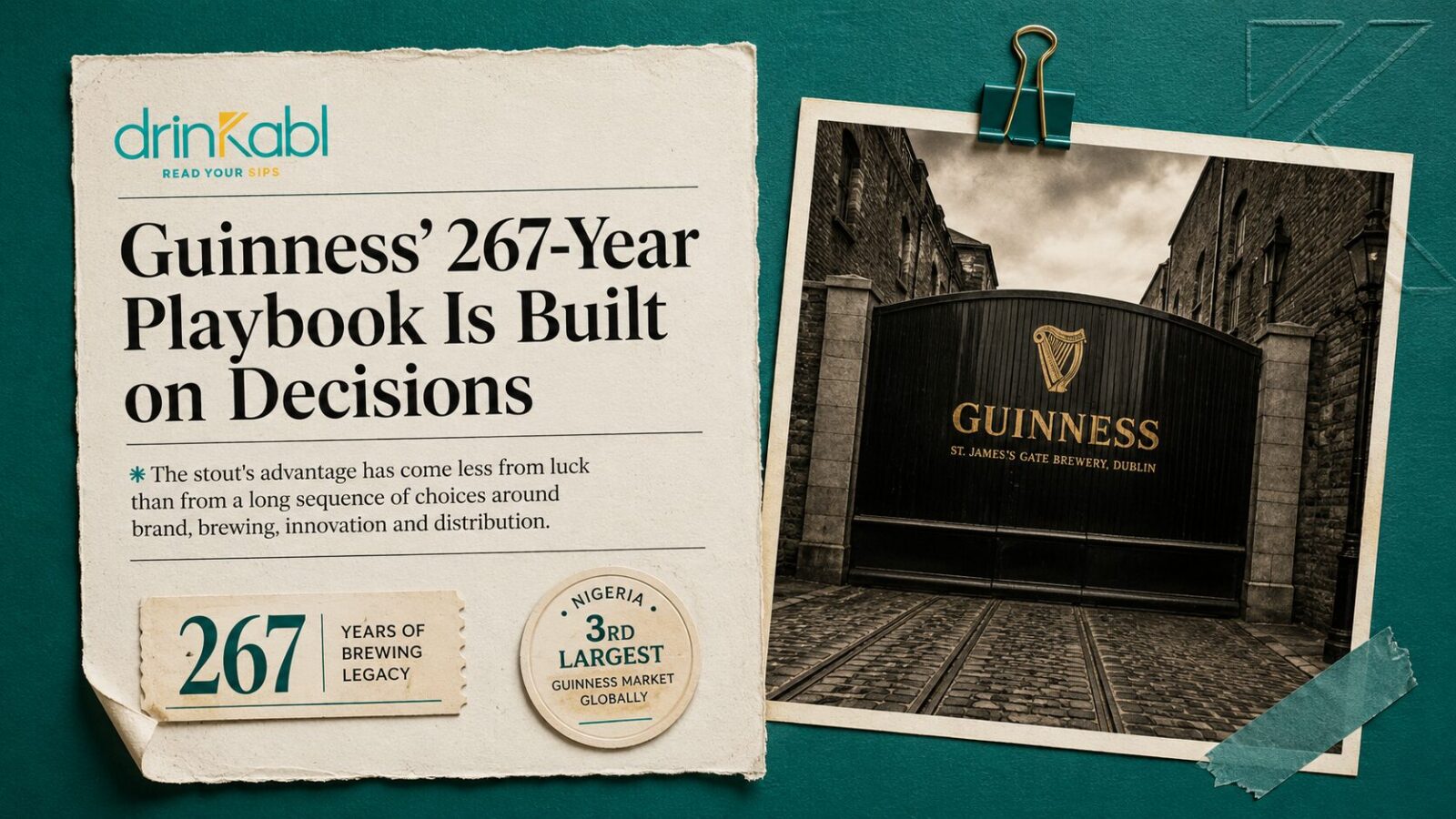
Guinness Nigeria is now operating in a market where brand strength has to coexist with pricing pressure, changing consumption habits and aggressive competition. Drinkabl’s reporting found that Nigeria has become the Guinness brand’s third-largest market globally, behind only Ireland and the UK, according to Guinness Nigeria.
The useful takeaway is not that every beverage company needs a 9,000-year lease. It is that durable brands accumulate advantage by making decisions that stay valuable long after the campaign, product launch or management team that introduced them has moved on.
READ MORE