
Soma Label gives Kenya’s beverage trade a digital check against counterfeit stamps as illicit alcohol continues to pressure legitimate producers.
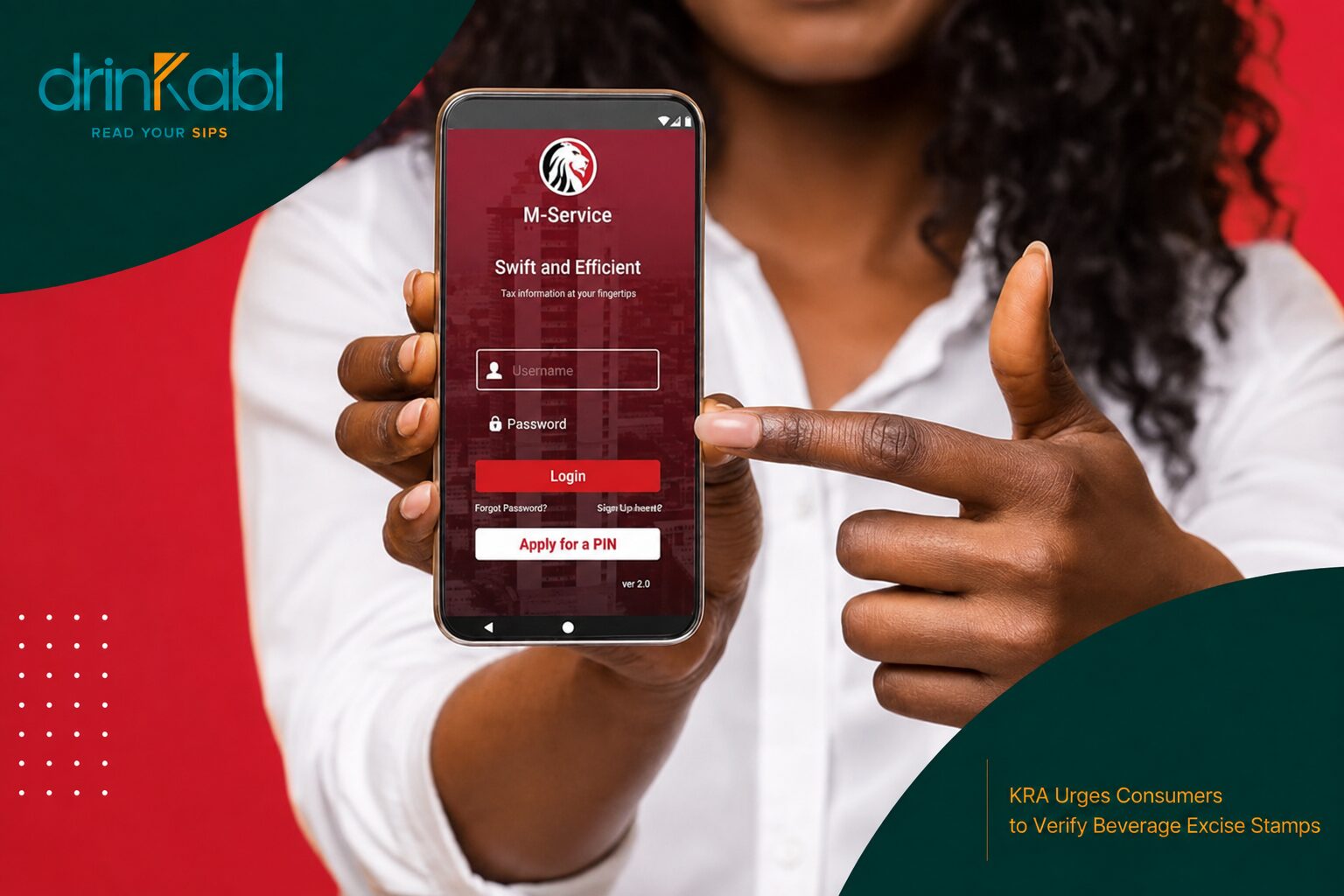
The Kenya Revenue Authority has renewed its call for Kenyan consumers to use Soma Label to verify excise stamps on alcoholic beverages and other excisable products. The push, highlighted by KRA on August 28, puts a consumer-facing verification tool at the centre of Kenya’s fight against counterfeit drinks.
For beverage companies, the significance is bigger than a consumer app. KRA’s excise system links secure stamps to a track-and-trace system, while Soma Label checks the stamp’s security features and can return product information when the stamp is authenticated. The app was updated on March 9, 2026, and has more than 100,000 Android downloads.
That matters in a market where counterfeit alcohol is competing with legitimate producers on price and distribution. The Anti-Counterfeit Authority told Parliament in May that illicit and counterfeit alcohol accounted for approximately 59% of Kenya’s alcohol market by volume and 21% by value. It also identified refilling genuine bottles, falsified labels, diverted ethanol and online distribution as enforcement challenges.
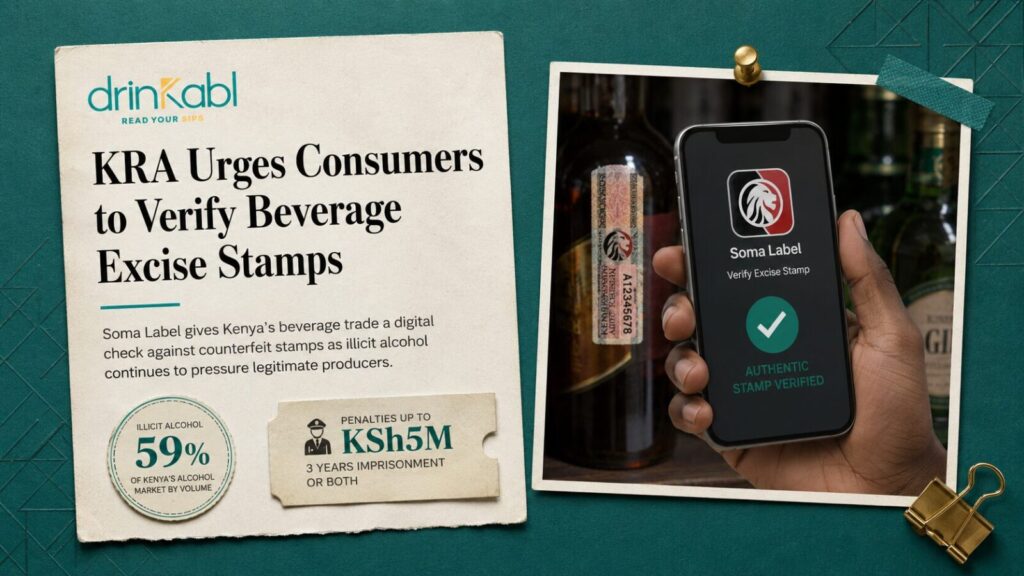
The commercial cost extends beyond lost sales. Counterfeiters can appropriate a brand’s packaging and reputation while avoiding the taxes, licensing and production controls carried by legitimate manufacturers. Kenya’s Excise Duty Act makes possession, sale and distribution of excisable goods bearing counterfeit stamps an offence, with penalties that can reach KSh5 million, three years’ imprisonment, or both.
Soma Label gives manufacturers another line of defence, but it does not replace supply-chain control. A verified excise stamp establishes the authenticity of the stamp and retrieves associated product information. It should not be treated as a laboratory test of the beverage’s composition or a blanket guarantee of product safety. KRA describes the system as an excise-stamp and track-and-trace mechanism.
The industry also has to contend with a changing excise regime. Kenya removed excise duty on bottled water from July 1, 2026, meaning newly manufactured or imported bottled water no longer requires an excise stamp. That makes accurate consumer messaging more important: a missing stamp does not mean the same thing across every beverage category.
For legitimate producers, the immediate opportunity is practical. Brands, distributors and retailers can use consumer education around Soma Label to strengthen purchasing confidence while directing suspicious stock to KRA and enforcement agencies. Drinkabl.media’s recent reporting on Kenya’s illicit alcohol market has already shown how the illegal trade competes through lower costs and informal distribution.
The next test is adoption. A verification system changes the market only if consumers use it, retailers accept scrutiny and legitimate supply chains make the process easy enough to become routine.