
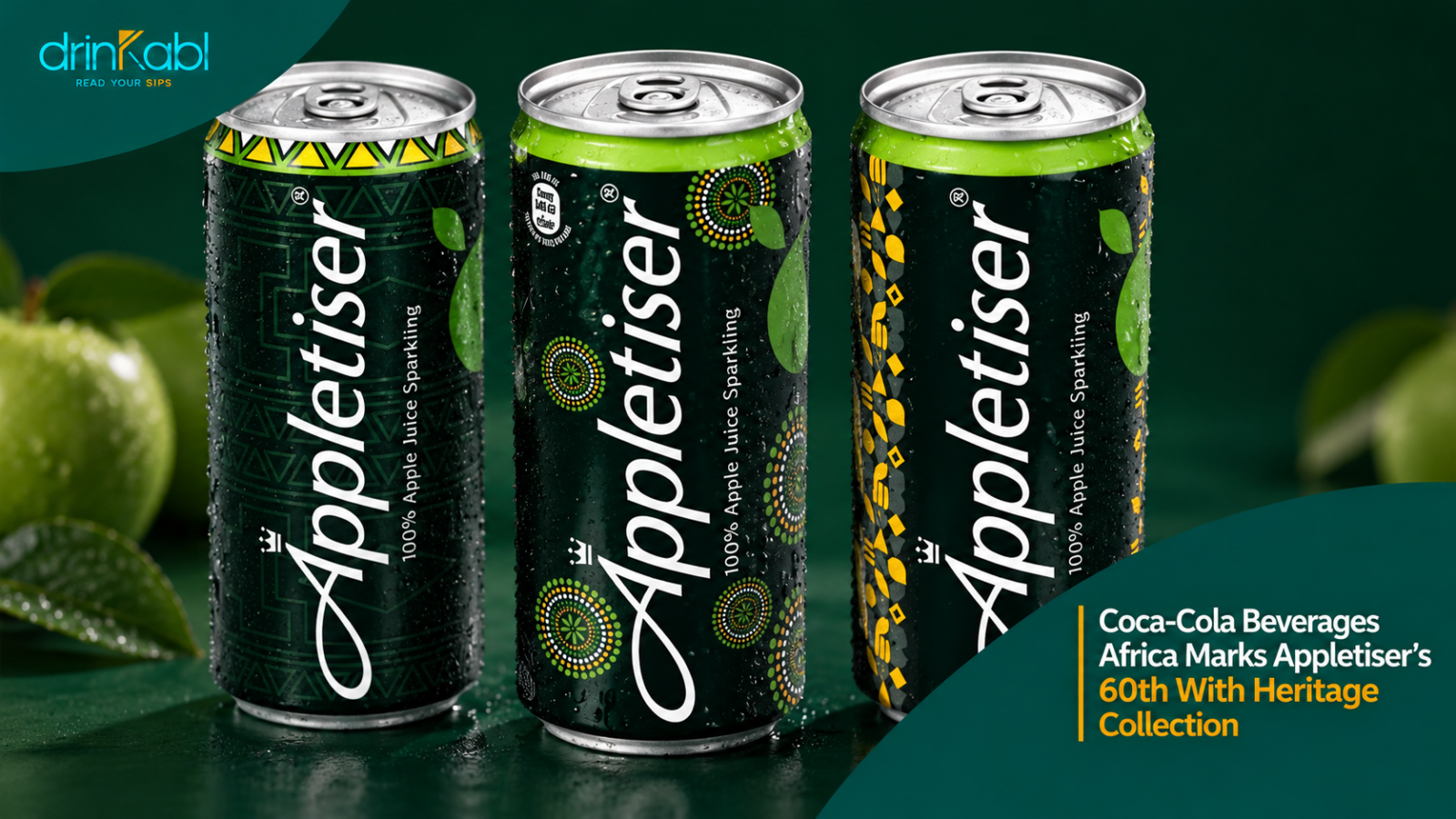

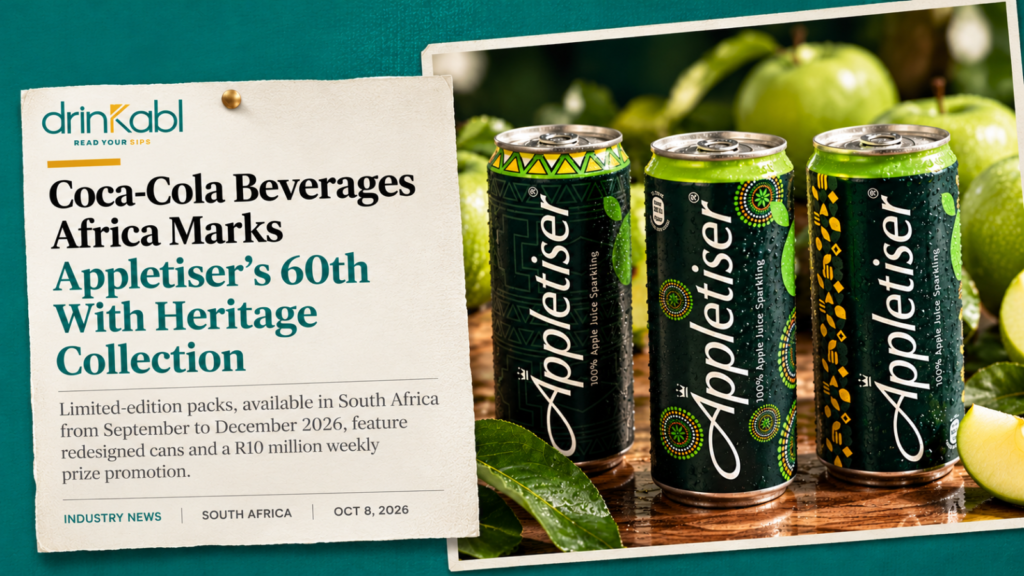
Coca-Cola Beverages South Africa has launched a limited-edition Appletiser Heritage Collection to mark 60 years of the sparkling apple drink, with the new packs available in South Africa from September through December 2026. The campaign combines redesigned packaging with an on-pack promotion offering consumers a share of R10 million in weekly prizes.
Appletiser was created in South Africa’s Elgin Valley in 1966 and remains positioned by Coca-Cola as a premium, non-alcoholic drink made with sparkling apple juice. The anniversary gives the company an opportunity to reinforce that South African provenance at a time when beverage brands across Africa are using local culture and identity to defend relevance and premium positioning.
Heritage becomes a sales tool
The Heritage Collection is available in 300ml cans and 1.25L PET bottles, giving the campaign both an individual-serve format and a larger take-home option. The R10 million weekly prize promotion adds a purchase incentive to what could otherwise have been a packaging-led anniversary exercise.
The timing also matters. The collection launched during South Africa’s Heritage Month, which runs through September and is built around the country’s cultural history and identity. Appletiser therefore enters a period when heritage already has commercial and cultural visibility, allowing the brand to connect its own origin story to a broader national conversation.
A local asset in Coca-Cola’s portfolio
Appletiser gives Coca-Cola something different from a global soft-drink brand adapted for a local market. The product originated in the Western Cape and has retained its South African identity while expanding beyond the country. Coca-Cola describes it as a premium drink, while its history remains tied to the fruit-growing region where Edmond Lombardi developed the product in the 1960s.
That distinction has commercial value as beverage companies look for stronger reasons for consumers to pay more. Drinkabl’s recent analysis of premiumisation found that inflation has complicated the idea of trading up, with consumers increasingly selective about the occasions on which they spend more. A brand with genuine provenance has another way to justify that choice beyond simply charging a higher price.
The African brand question
The strategy also points to a wider issue for multinational beverage companies operating in Africa. Local identity is becoming more commercially useful, but consumers can distinguish between brands with genuine roots in a market and brands that simply borrow local symbols for a campaign.
Appletiser has an unusually strong foundation for this approach because its South African origin predates Coca-Cola’s ownership of the brand. Coca-Cola’s own history records the drink as having been born in the Elgin Valley in 1966, while its current South African positioning continues to centre that origin.
What comes after December
The immediate campaign runs only through December, making the longer-term question whether the heritage positioning can generate demand after the limited packs disappear. The prize promotion can drive trial and repeat purchases during the campaign, but sustaining premium relevance requires the underlying brand story to remain meaningful beyond an anniversary.
For Coca-Cola Beverages South Africa, Appletiser is therefore more than a 60-year-old product being given new packaging. It is a test of whether genuine local provenance can continue to create commercial value for a mature beverage brand in a market where consumers are increasingly selective about what earns a premium.