
You probably do not think about ownership when you crack open a Star after work, grab a Pepsi at a party, pour Peak Milk into your morning tea, or reach for a bottle of Malta Guinness at a family gathering.
To most Nigerians, these are familiar local brands. But behind many of the country’s biggest drinks sit multinational corporations whose headquarters are thousands of kilometres away.
Nigeria’s beverage industry is built on local consumption but increasingly connected to global ownership networks. While the drinks are produced, distributed and marketed locally, a significant share of the industry’s profits ultimately flows to companies headquartered in Europe and North America.
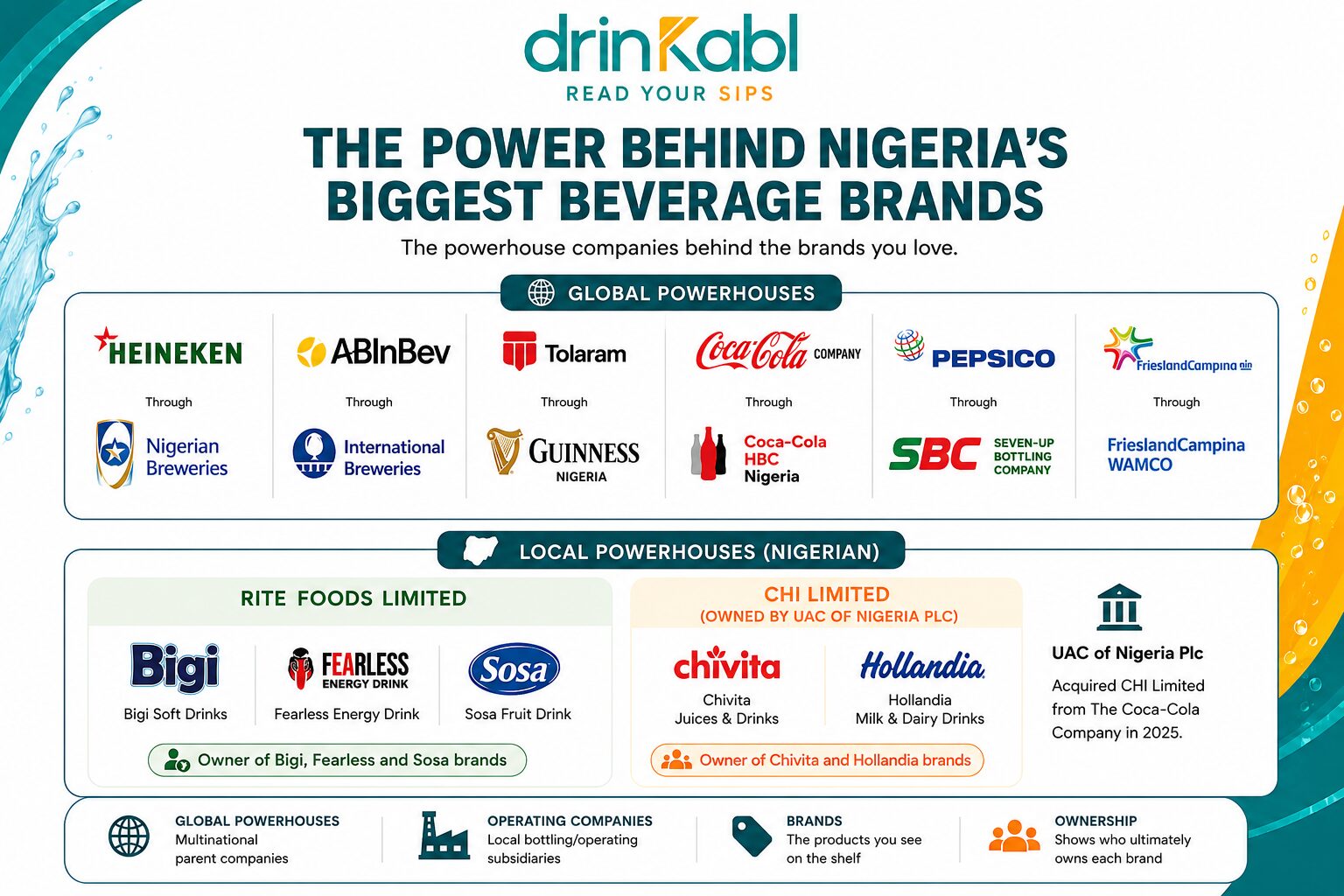
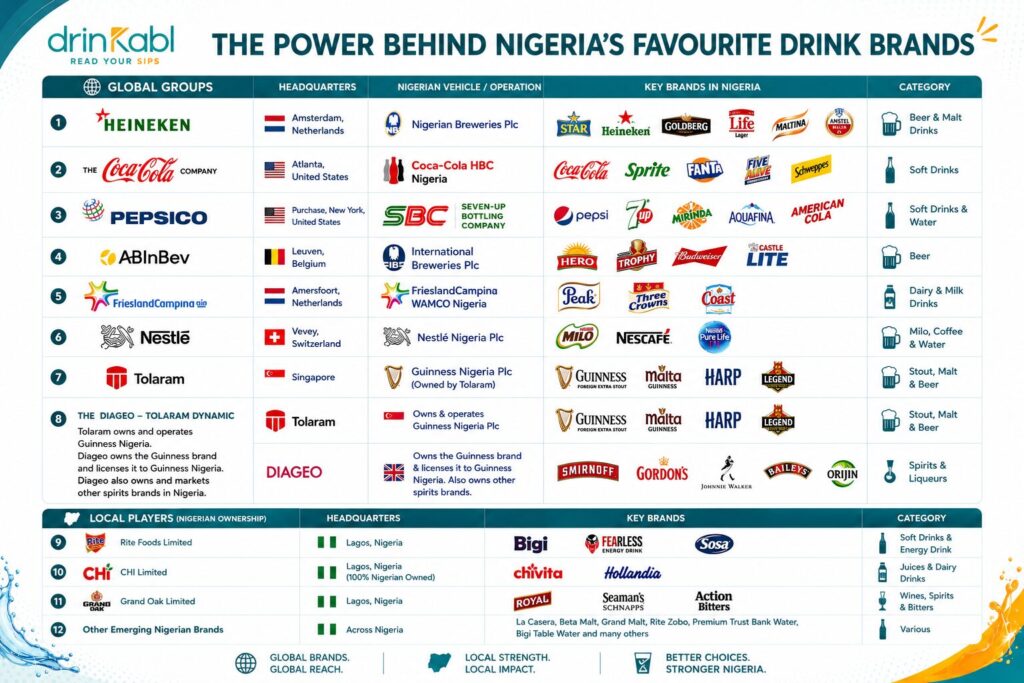
Here are the powerhouses behind many of Nigeria’s favourite drink brands.
1. HEINEKEN (Netherlands)
If there is one company that dominates Nigeria’s beer landscape, it is HEINEKEN.
Through Nigerian Breweries Plc, the Amsterdam-based brewer controls some of the country’s most recognised alcohol and malt brands, including Star, Goldberg, Heineken, Life Lager, Maltina and Amstel Malta.
For decades, Nigerian Breweries has maintained one of the most extensive manufacturing and distribution footprints in the country, making HEINEKEN the largest brewing force in Nigeria.
If you attended a wedding, concert, naming ceremony or football viewing centre recently, chances are a Dutch-owned brand was somewhere on the drinks table.
2. The Coca-Cola Company (United States)
Few beverage companies have embedded themselves into Nigerian consumer culture as deeply as Coca-Cola.
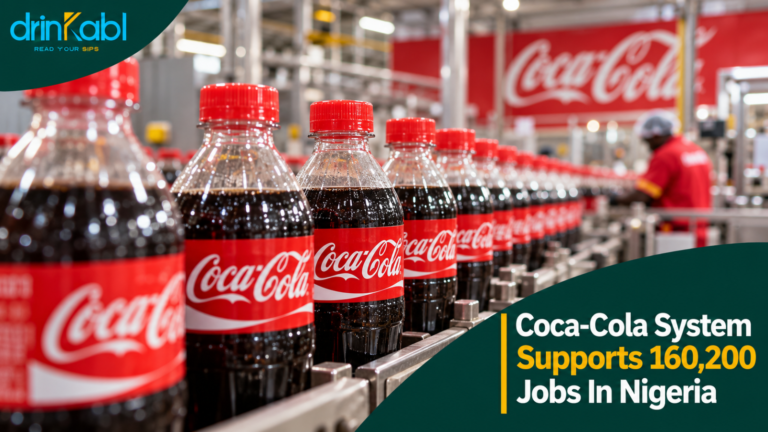
The Atlanta-based giant operates in Nigeria through Coca-Cola HBC, one of Coca-Cola’s largest bottling partners globally. Coca-Cola HBC acquired full control of Nigerian operations after purchasing the former Nigerian Bottling Company business.
Today, Coca-Cola HBC manufactures and distributes many of the country’s best-known soft drinks.
Together, Coca-Cola and its bottling system remain one of the most influential forces in Nigeria’s non-alcoholic beverage market. Key Nigerian brands: Coca-Cola, Sprite, Fanta, Five Alive, Schweppes
3. PepsiCo (United States)
Coca-Cola’s biggest rival in Nigeria remains PepsiCo.
The American beverage giant operates through Seven-Up Bottling Company, which produces Pepsi, 7UP, Mirinda, Aquafina and several other brands for the Nigerian market.
The rivalry between Pepsi and Coca-Cola has shaped Nigeria’s soft-drink sector for decades, with both companies investing heavily in manufacturing, distribution and consumer marketing. Key Nigerian brands: Pepsi, 7UP, Mirinda, Aquafina, American Cola
4. AB InBev (Belgium)
AB InBev is the world’s largest brewer and maintains a substantial presence in Nigeria through International Breweries Plc.
The company owns brands that carry strong regional identities despite being part of a global brewing empire.
Hero Lager remains particularly influential across the South-East, while Trophy Lager has built deep loyalty across the South-West. Key Nigerian brands: Hero Lager, Trophy Lager, Budweiser, Castle Lite
5. FrieslandCampina (Netherlands)
Nigeria’s dairy beverage market is heavily influenced by FrieslandCampina through its subsidiary, FrieslandCampina WAMCO.
The Dutch cooperative has spent decades building household trust through brands that have become staples in Nigerian kitchens. Peak Milk remains one of the most recognised dairy brands in the country, while Three Crowns continues to dominate parts of the health-conscious dairy segment. Key Nigerian brands: Peak Milk, Three Crowns, Coast Milk
6. Nestlé (Switzerland)
Although better known as a food company, Nestlé is one of Nigeria’s most influential beverage players.
Through Nestlé Nigeria, the Swiss multinational controls some of the country’s most consumed beverage products.
Milo alone gives Nestlé enormous reach across households, schools and sports sponsorships, while Nescafé and Nestlé Pure Life strengthen its presence across coffee and packaged water. Key Nigerian brands: Milo, Nescafé, Nestlé Pure Life
7. Guinness Nigeria, Tolaram and Diageo: A Shared Story
Guinness Nigeria represents one of the most interesting ownership structures in the industry.
Historically, Guinness Nigeria was controlled by Diageo, the British drinks giant behind Guinness, Johnnie Walker, Smirnoff and Baileys.
In 2024, Diageo sold its controlling stake in Guinness Nigeria to Singapore-headquartered Tolaram, the consumer goods group already known in Nigeria through Indomie and other investments.
Today, Tolaram controls Guinness Nigeria.
However, Diageo still owns the Guinness brand itself and continues to license it to Guinness Nigeria.
In simple terms: Tolaram owns and operates Guinness Nigeria. Diageo owns Guinness as a global brand.
The two companies therefore remain commercially linked even though ownership control has changed. Key Nigerian brands: Guinness Foreign Extra Stout, Malta Guinness, Harp Lager, Orijin (licensing arrangements vary by market)
The Indigenous Challengers
For all the multinational influence, some of Nigeria’s most ambitious beverage companies are now locally controlled.
Rite Foods
Rite Foods has emerged as the strongest indigenous challenger in mainstream beverages.
Backed by Nigerian capital through Ess-Ay Holdings, the company has built a portfolio capable of competing directly against global rivals. Key brands: Bigi, Fearless Energy Drink, Sosa Fruit Drink
CHI Limited
CHI Limited represents one of the biggest ownership shifts in recent years.
After years under foreign ownership, the company returned fully to Nigerian control in 2025 following UAC of Nigeria’s acquisition of the business from The Coca-Cola Company.
That transaction brought some of Nigeria’s strongest juice and dairy brands back under local ownership.
Key brands: Chivita, Hollandia
The Spirits Giants
Beer and soft drinks dominate headlines, but spirits remain a major part of Nigeria’s beverage economy.
Diageo continues to influence the market through brands such as Smirnoff, Gordon’s, Baileys and Johnnie Walker.
French giant Pernod Ricard competes through Jameson, Absolut and Ballantine’s.
Meanwhile, Nigerian-owned Grand Oak has built a significant position in wines and spirits, proving local companies can compete in categories traditionally dominated by multinational groups.
The Bottom Line
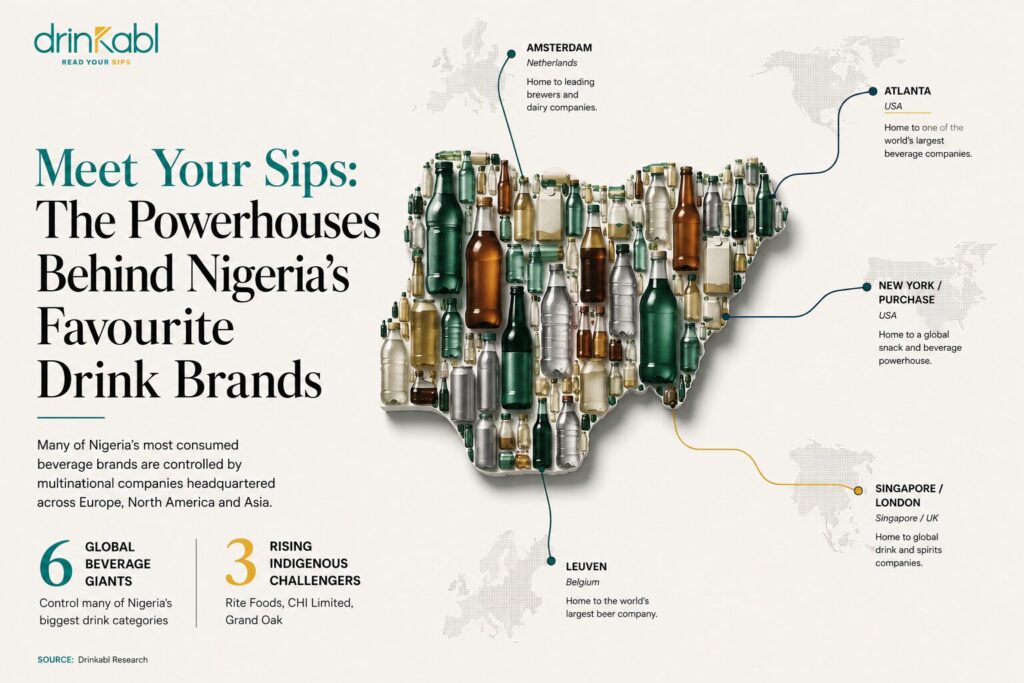
The ownership map of Nigeria’s beverage industry stretches from Amsterdam and Atlanta to Leuven, Vevey, London and Singapore.
Yet the story is no longer entirely foreign.
Companies such as Rite Foods, CHI Limited and Grand Oak demonstrate that indigenous businesses can build scale, defend market share and challenge global competitors.
The drinks may be local. The ownership is increasingly global. But the competition is becoming more Nigerian.
READ MORE