


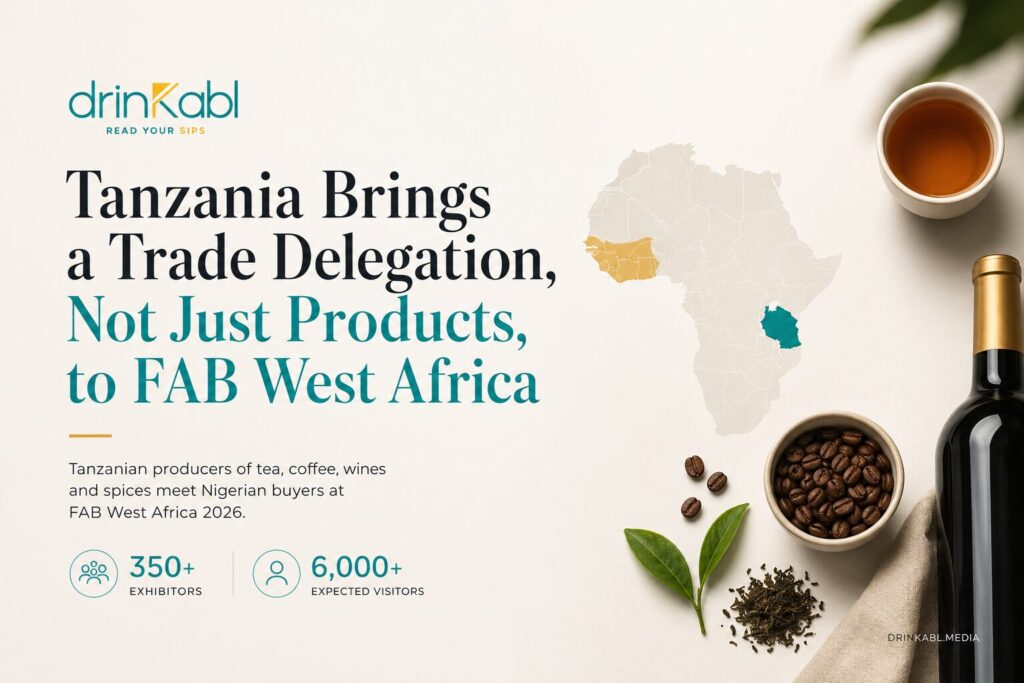
Tanzania’s High Commission opened its pavilion at FAB West Africa 2026 , deploying a private-sector delegation to pursue deals, not just display goods. The booth, at 3E06 in Hall 3 of Landmark Centre, Victoria Island, opens through June 11, at Africa’s largest food and beverage trade exhibition, drawing over 350 exhibitors and an expected 6,000-plus visitors.
The Tanzanian lineup centres on beverages: highland-grown tea and coffee, fine wines, and spices, all positioned for export to Nigerian importers, distributors, and the hospitality trade. Tanzania’s highland-grown teas and single-origin coffees carry distinct flavour profiles shaped by elevation and volcanic soil. The wines are a less familiar category for West African buyers, which makes the B2B meeting format more useful than a shelf placement would be.
The commercial pitch is access. Tanzanian producers are looking for Nigerian distributors, retailers, and hotel procurement teams. B2B meetings are structured throughout the three-day event, which removes the cold-approach problem that smaller East African exporters typically face at a regional show of this scale. Drinkabl.media’s recent coverage of East Africa’s beverage trade dynamics traced how fragmented last-mile infrastructure has historically limited the region’s export reach.
The AfCFTA framework gives the visit formal scaffolding, but the practical test is simpler: whether Nigerian buyers find Tanzanian products competitively priced after import logistics. FX conditions, port handling costs, and cold chain requirements will determine what actually lands on shelves or bar menus. The High Commission’s framing around investment in food processing and packaging suggests Tanzania is also targeting capital, not just purchase orders.
Nigeria is not an easy first market for East African beverages. Shelf access is consolidated, hospitality procurement is relationship-driven, and domestic alternatives are well-established. Drinkabl.media’s analysis of how faith, culture, and regulation are reshaping African beverage demand points to the structural complexity any new entrant faces in West African markets. Tanzania’s pavilion puts producers in the same room as the buyers who control that access. Whether the conversations convert to contracts is the question that outlasts the exhibition.
READ MORE