
Nigeria’s FMCG sector has spent the better part of a decade watching established multinationals set the pace on pricing, distribution, and shelf presence. Domestically owned manufacturers have, for the most part, operated in the margins, carving out share where they could. Rite Foods Limited chose a different path, building a portfolio from scratch that now challenges legacy players on volume, format, and consumer mindness. That trajectory has not gone unnoticed.
The pressure on indigenous brands to prove that homegrown manufacturing can compete on quality, not just price, reached a visible inflection point as Rite Foods began registering sustained gains across multiple beverage segments. Its Bigi carbonated soft drinks range found a large and loyal base in value-conscious consumers, while Fearless Energy Drink moved beyond novelty to become a structurally competitive product, partly by introducing a PET bottle format at a time when the segment was dominated by cans. The company’s Sosa Fruit Drink and sausage lines extended the brand into adjacent consumer occasions, broadening its footprint across everyday spending.
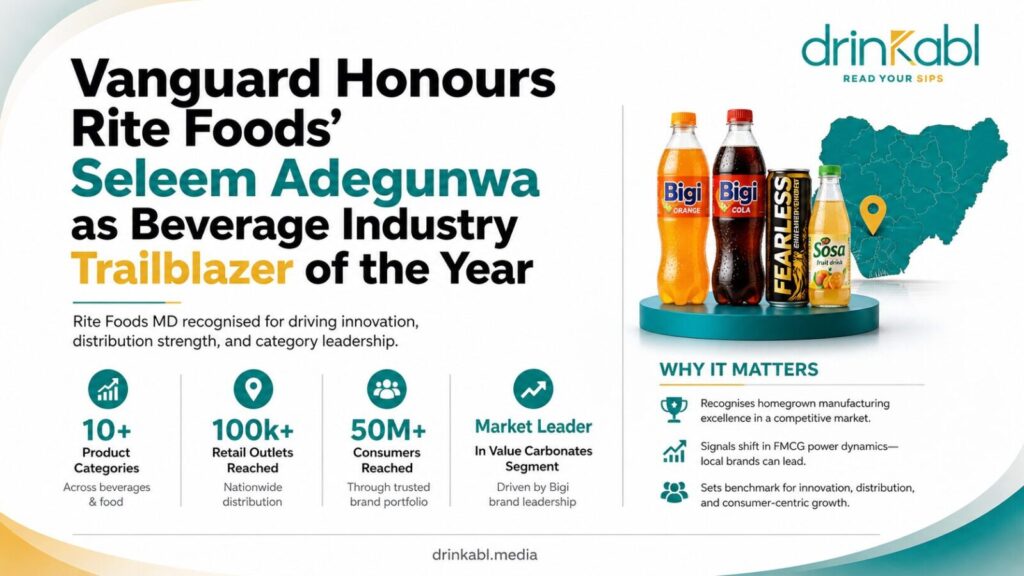
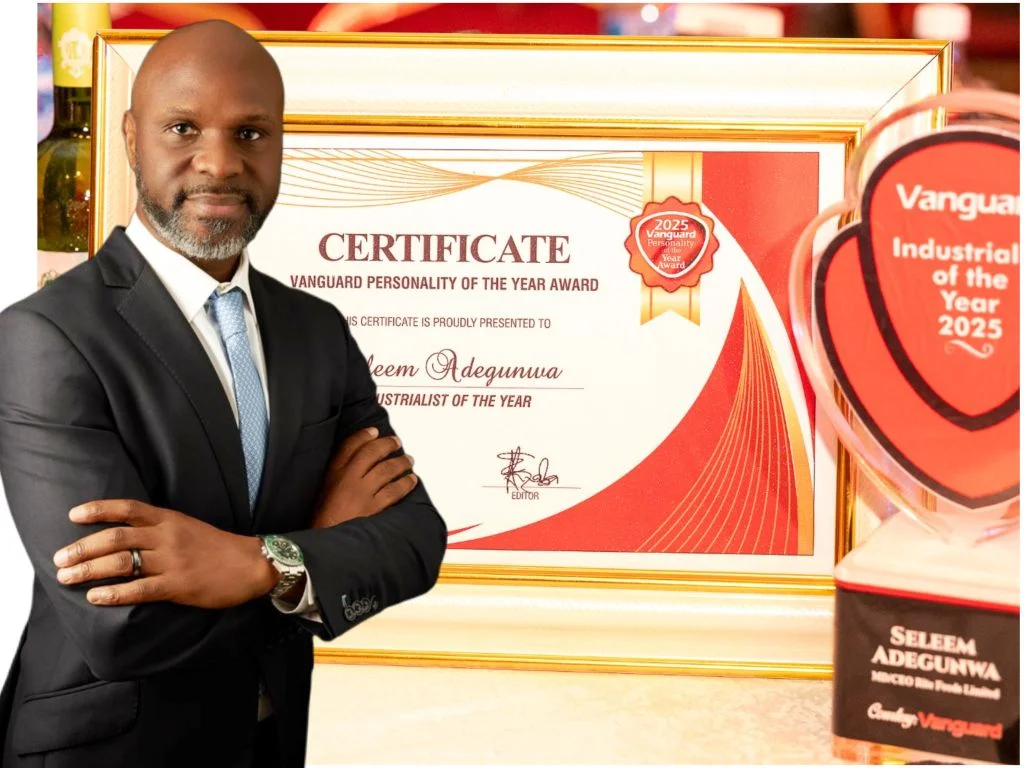
Vanguard Media Limited has named Seleem Adegunwa, Managing Director of Rite Foods Limited, as its Industrialist of the Year. The award was presented at a ceremony in Lagos at the end of April, drawing business leaders, policymakers, and sector stakeholders. Vanguard Editor Eze Anaba cited Adegunwa’s role in driving strategic expansion, strengthening nationwide distribution, and embedding a culture of continuous product development. The recognition coincided with World Creativity and Innovation Day.
Rite Foods operates from a manufacturing base in Ososa, Ogun State, and has built its competitive position around format innovation, aggressive distribution, and cultural engagement. The company’s long-running sponsorship of Nigerian Idol, covering Seasons 6 through 10, reflects a deliberate strategy of brand-building through entertainment, a channel that competitors with larger marketing budgets have also leaned on heavily. On the distribution side, Rite Foods has worked to extend reach across informal retail, where beverages volume in Nigeria is still largely decided. The Bigi range, in particular, has benefited from a pricing structure calibrated for the mass market, giving it resilience in an environment where currency pressure and rising input costs have squeezed real consumer spending.
For the broader FMCG sector, the recognition carries a specific signal. Nigerian-owned manufacturers have historically struggled to hold shelf position against entrenched foreign brands or well-capitalised joint ventures. Rite Foods has demonstrated that manufacturing quality, combined with insight-driven consumer engagement, can erode that advantage. Its growth in the energy drink segment is particularly telling: Fearless has secured space in a category once considered locked to international incumbents, partly through packaging differentiation and partly through distribution depth. That model, if sustained, puts competitive pressure on players across carbonates, juice drinks, and functional beverages, all categories where margins are tightening and consumer loyalty is increasingly portable.
The company’s Bigi range has helped shift how value-focused Nigerians engage with carbonated beverages, as noted by industry observers covering the non-alcoholic segment on Drinkabl.media. The recognition also arrives as the broader Nigerian FMCG space contends with fiscal pressures, including a proposed N10 per litre levy on non-alcoholic beverages that producers have publicly opposed. For a company that has built its value proposition around accessible price points, tax-driven cost increases would require careful portfolio management. Rite Foods’ response to that pressure, whether through reformulation, pricing adjustment, or category mix, will be a meaningful test of the operational maturity that the Vanguard award seeks to recognise.
Ekuma Eze, Head of Corporate Affairs and Sustainability, accepted the award on Adegunwa’s behalf and framed the recognition as confirmation of the company’s broader ambition. “This honour reflects the work we have done in challenging conventions and delivering products that resonate with consumers,” he said. “It reinforces our belief that Nigerian companies can compete at the highest level on quality, innovation, and leadership.”
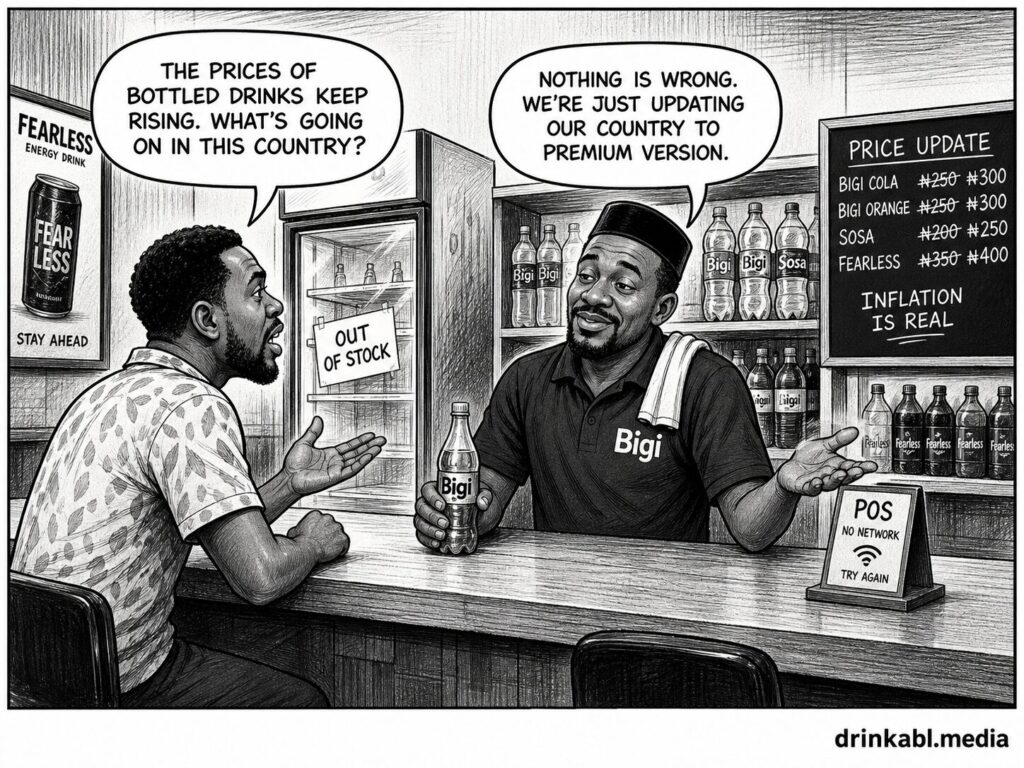
What comes next for Rite Foods will depend on how well the company translates award-season momentum into structural advantage. Distribution consolidation, portfolio depth, and the ability to absorb input cost shocks without sacrificing the value positioning that built the Bigi brand will define the next chapter. The FMCG sector in Nigeria is not short of ambition, but competitive staying power in beverages requires more than product innovation. It requires the kind of operational consistency and supply chain discipline that determines who holds shelf space when margin pressure peaks. Rite Foods, under Adegunwa’s direction, has built the foundations. The test is sustaining them.
Read More
How Nigeria’s beer wars reshaped competitive intelligence across the industry is covered in this piece on Drinkabl.media.
The illicit alcohol economy in Lagos, and what it means for legitimate FMCG operators, is examined in this report.
UAC of Nigeria’s fourfold profit surge following its C.H.I. acquisition offers a parallel look at how portfolio consolidation is reshaping the local packaged goods market, covered here.