

Tanzania’s formal spirits sector has been building toward a confrontation with its informal market for years. Per-capita alcohol consumption across East Africa has grown steadily, yet a substantial share of that volume has moved through unregistered channels, depriving governments of tax receipts and exposing consumers to products of uncertain composition. That pressure has sharpened, and Dar es Salaam is now responding on two fronts simultaneously.
The Tanzanian Ministry of Industry and Trade has spent recent months reconfiguring its regulatory posture, tightening enforcement against illicit products while signalling to domestic manufacturers that the commercial environment will reward formal investment. The convergence of those two signals created the conditions for a high-profile product launch with explicit government backing.
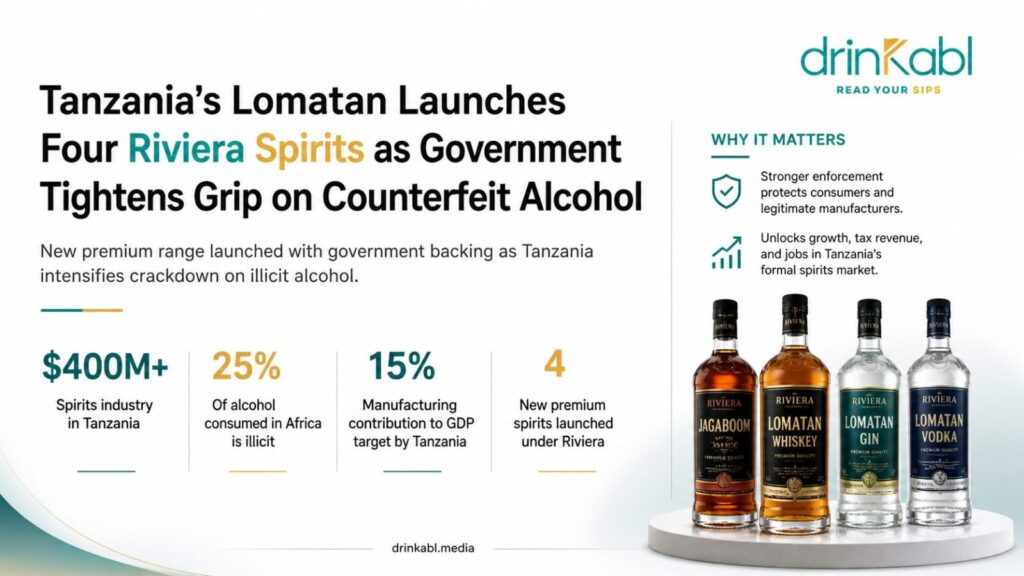
Lomatan, a locally owned Tanzanian manufacturer, has introduced four new premium spirits under its Riviera brand: Jagaboom, Lomatan Whiskey, Lomatan Gin, and Lomatan Vodka. The products, developed with technical input from German partners, were launched at an event in Dar es Salaam attended by Minister of Industry and Trade Judith Kapinga, whose presence underscored the government’s interest in the formal beverages sector as a vehicle for industrial policy.
Lomatan has built its position in Tanzania’s alcoholic beverage market at a moment when the country’s $400 million-plus spirits industry is under active restructuring. Multinationals that once commanded the premium segment now face local competitors with lower cost structures, established distribution relationships, and, increasingly, government backing. The Riviera launch positions Lomatan directly in the premium tier, rather than competing on price at the entry level, a strategic choice that reflects confidence in Tanzania’s emerging middle-income consumer base. Coverage of comparable local manufacturing advances in Africa’s beverages sector can be found across Drinkabl.media’s alcoholic category.
“This investment demonstrates that Tanzanians have the capacity to compete and invest in any sector,” said Minister Judith Kapinga at the Dar es Salaam launch event.
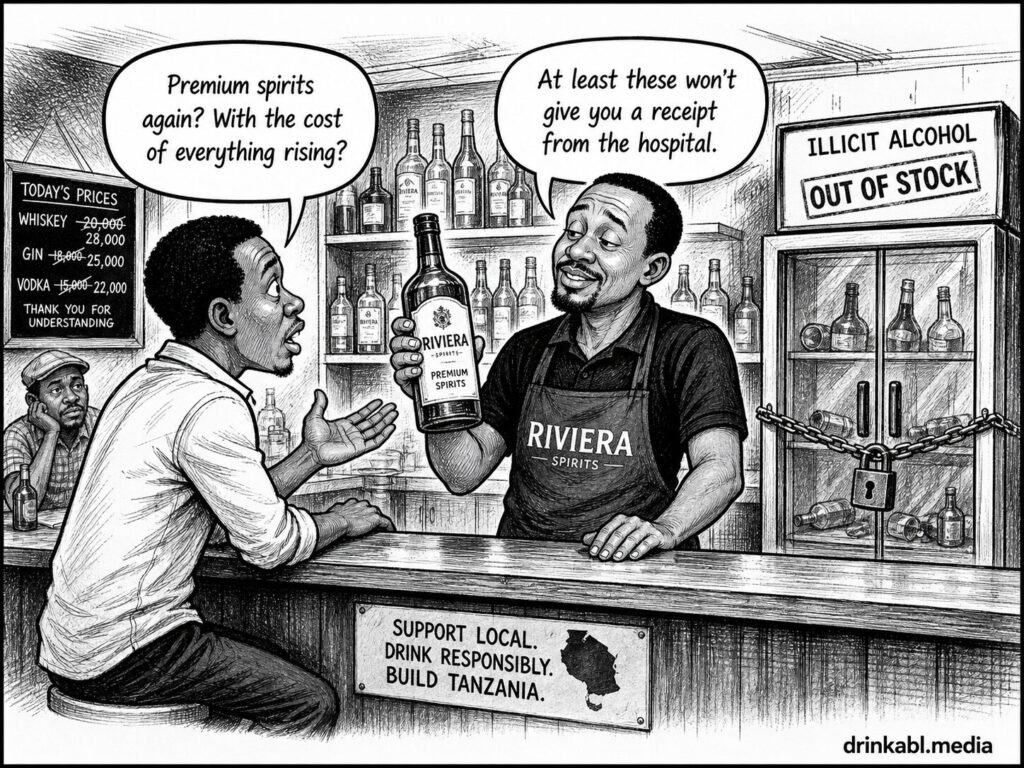
The launch also served as a platform for the government’s anti-counterfeiting campaign. Lomatan founder Loveness Mamuya framed unregulated alcohol consumption in unambiguous terms, calling it economic sabotage against public health, and called on citizens, particularly women, to actively report and refuse unsafe products. The Fair Competition Commission has pledged to accelerate enforcement against illicit producers, giving formal manufacturers a more level competitive surface and strengthening the investment case for further domestic production. For broader context on how illicit trade and regulatory gaps are shaping Africa’s industry landscape, prior reporting from Drinkabl.media offers relevant parallels.
“True patriotism means protecting the health of drinkers,” said Loveness Mamuya, founder of Lomatan, urging consumers to reject counterfeit products and support certified local manufacturers.
The implications extend well beyond Lomatan. Tanzania’s Industrial Development Strategy targets a manufacturing contribution of 15 percent of GDP, up from around 8 percent, and the beverages sector fits that ambition cleanly: it generates jobs across production, distribution, and retail, contributes excise and corporate tax, and creates demand for upstream inputs. The WHO estimates that illicit alcohol accounts for roughly 25 percent of total consumption across Africa, meaning the addressable market for formal producers is meaningfully larger than current registered volumes suggest. Earlier research into how health priorities and youthful consumer demand are reshaping African production is available via Drinkabl.media’s analysis.
For Lomatan, the next test is distribution depth. Premium positioning in the formal market requires sustained on-trade and off-trade placement, consumer trial, and brand-building investment over time. The German technical partnership suggests the company is prepared to defend quality at a level that can sustain premium pricing, but the broader regulatory environment must hold if the economics are to work. With government enforcement now explicitly tied to protecting legitimate producers, Tanzania’s formal spirits market has a structural argument for growth that did not exist in the same form two years ago.
Read More
Goldberg Brings Football Fans Back to Bars With Rewards Campaign Across Nigeria
33 Export Lager Returns to Nigeria With New Bottle Design and Consumer Events
How Nigeria’s First Craft Brewery Survived a Mass-Market Beer Market to Build a Global Name
Beta Glass Changes Hands as Helios Bets Big on Nigeria’s Booming Beverage Sector