
as Documentary Highlights Rising Disease Burden
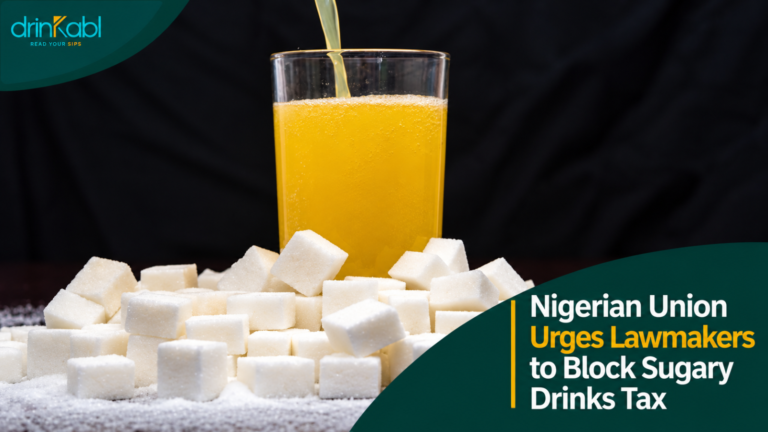
Corporate Accountability and Public Participation Africa called on the Federal Government Wednesday to replace Nigeria’s flat N10-per-litre Sugar-Sweetened Beverage excise with a percentage-based tax of at least 20% of retail price, speaking at the Lagos media screening of its new documentary, Sweet Poison.
The 20-minute film, which premiered on TVC News on May 5 and has since aired across multiple platforms, documents the links between rising SSB consumption, non-communicable diseases, and plastic pollution. It draws on testimony from people living with diabetes, traders, fishermen, students, medical professionals, and policymakers. The screening drew a broad cross-section of health and environmental advocates who left little ambiguity about their ask: the current tax framework is not working, and the government needs to act.
CAPPA Executive Director Akinbode Oluwafemi made the fiscal case plainly. Nigeria’s SSB tax, introduced through the Finance Act 2021 and implemented from June 2023, charges N10 per litre on non-alcoholic, carbonated, and sweetened beverages. With a 50cl bottle of soda now retailing at roughly N400, that levy represents well under 3% of the retail price,a figure the documentary cites directly, attributing it to health and policy experts interviewed in the film.
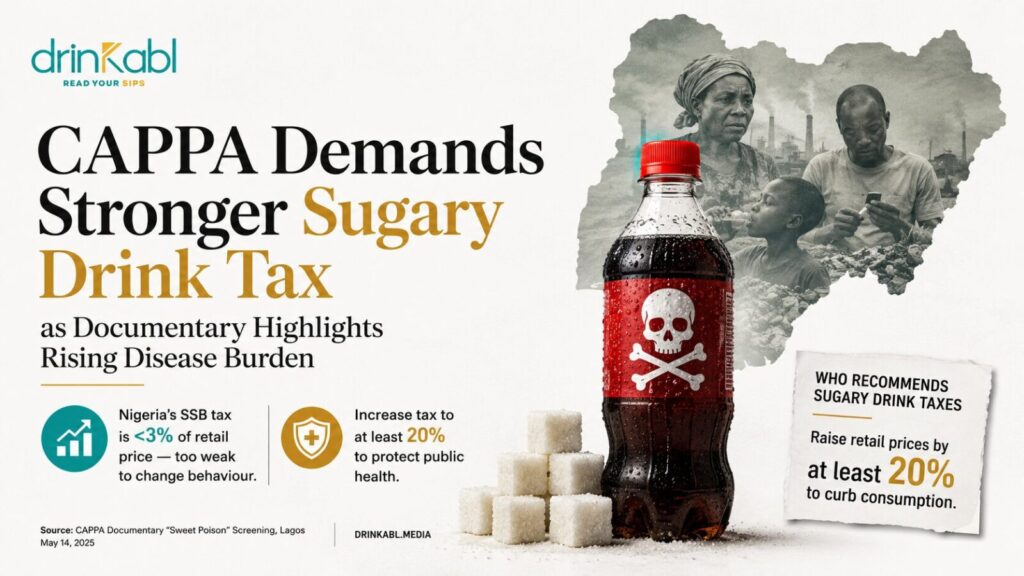
“Evidence increasingly shows that the current N10-per-litre excise duty is too weak to reduce consumption or discourage harmful industry practices significantly,” Oluwafemi said at the screening. “If we are serious about protecting public health, then Nigeria must move toward a stronger and smarter SSB tax framework, one that truly reflects the scale of the crisis before us.”
He also pressed for revenue earmarking, arguing that tax proceeds should fund health promotion and nutrition programmes rather than disappear into general revenues. “CAPPA believes that a higher excise tax tied to the retail price of sugary drinks, alongside proper earmarking of revenues for health promotion and nutrition programmes, is not just sensible fiscal policy; it is a necessary public health intervention,” he said.
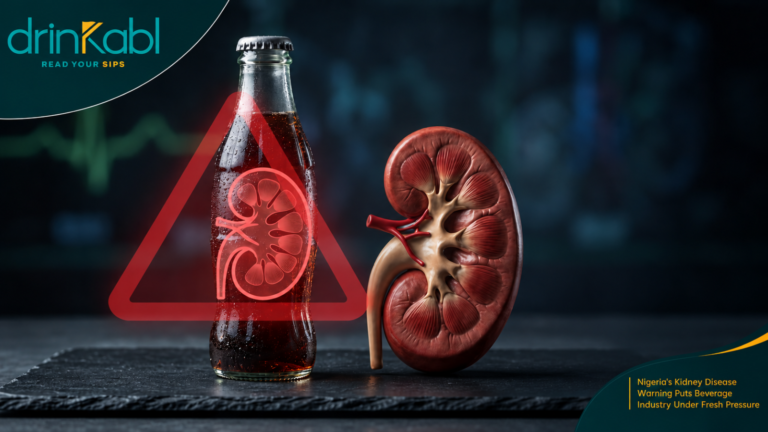
The broader health picture Oluwafemi painted was not abstract. Nigeria is seeing steady increases in Type 2 diabetes, hypertension, obesity, stroke, kidney disease, and cardiovascular complications, and these are no longer conditions confined to older adults. Dr Adeolu Adebiyi, Regional Senior Advisor for the Food Policy Program in Africa at the Global Health Advocacy Incubator, said at the event that young Nigerians are now presenting with stroke, cardiovascular disease, and cancer, illnesses once associated with old age. He attributed the shift to changing dietary patterns, celebrity endorsements, and aggressive marketing by food and beverage companies — noting that many parents are reinforcing these habits without realising the consequences.
That reckoning inside Nigeria’s non-alcoholic beverages market, documented by this publication in May 2026, has been building quietly. Manufacturers have been expanding zero-sugar and reduced-sugar portfolios in response to shifting consumer awareness, but advocates at Wednesday’s screening argued that voluntary reformulation without fiscal pressure is insufficient.
Dr Saheed Babajide, Lagos State Chairman of the Nigerian Medical Association, kept his position brief and direct. “Government should allocate that tax to the health sector,” he said at the event.
The film’s environmental dimension attracted equal attention. Dr Leslie Adogame, Executive Director of Sustainable Research and Action for Environmental Development, said the documentary joined dots that are rarely connected in public discourse. “From the day a soft drink is placed on the market to when it reaches its end of life, what you begin to confront is an increase in public health and environmental footprint of a country,” he said. He went further on plastics: “The plastic you’re holding, which is the major packaging material for the food and beverage sector, is made up of carbon and chemicals. And scientists have shown that you have about 13,000 hazardous, dangerous chemicals in plastics.”
The framing that landed hardest came from Prof. Adelaja Odukoya, Dean of the Faculty of Social Sciences at the University of Lagos, who described the documentary’s subject as fundamentally political. “Sweet Poison is not merely a documentary about sugar. It is a documentary about who exercises power, who profits from it, and who pays the price,” he said at the screening.
CAPPA’s push for a revised SSB framework aligns with the World Health Organization’s recommendation that sugary drink taxes raise retail prices by at least 20% to meaningfully curb consumption. Nigeria’s Finance Act has not been amended since the tax took effect. Whether the 2026 budget cycle or a standalone amendment provides an opening for that revision is the question advocates are now watching.
Read More
Nigeria’s Non-Alcoholic Drinks Market Faces a Sugar Reckoning