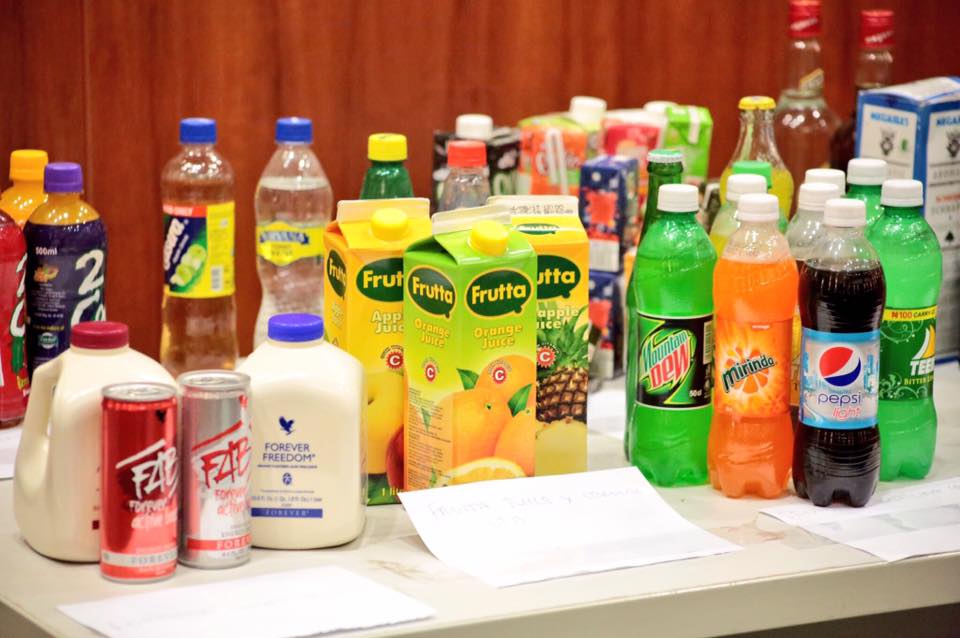

As health concerns, regulation, and changing consumer habits reshape beverage demand, manufacturers are expanding zero-sugar and reduced-sugar portfolios across soft drinks, malt, energy, and flavoured water categories.
Nigeria’s non-alcoholic beverage market is entering a more complicated phase as consumers increasingly scrutinise sugar content in everyday drinks while manufacturers race to protect volume growth in a high-inflation economy.
For years, flavour, affordability, and distribution reach largely determined success in Nigeria’s soft drinks market. That equation is changing. Rising diabetes awareness, sugar taxes, urban wellness trends, and younger consumers reading labels more closely are forcing beverage companies to rethink formulations and positioning.
The shift is visible on supermarket shelves. Zero-sugar cola variants now sit beside legacy full-sugar brands. Flavoured sparkling water is gaining space in premium retail outlets. Malt drinks are experimenting with lighter formulations. Even energy drink makers are cautiously testing sugar-free alternatives.
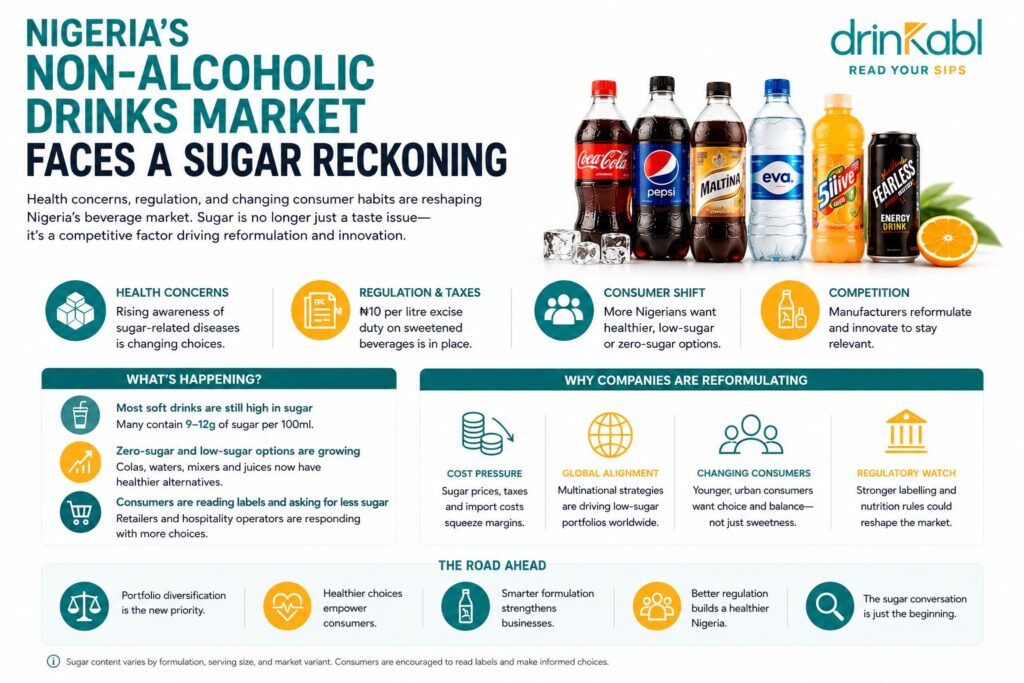
Nigeria already applies a ₦10 per litre excise duty on non-alcoholic, carbonated, and sweetened beverages under federal fiscal policy, a measure introduced partly to discourage excessive sugar consumption while raising government revenue. Major manufacturers including Nigerian Bottling Company, Seven-Up Bottling Company, and Nestlé Nigeria have since accelerated low-sugar and no-sugar product visibility across retail channels.
Sugar Is Becoming a Competitive Metric
Sugar content in beverages is typically measured in grams per 100ml on product labels. In practical terms, many mainstream soft drinks sold in Nigeria still contain between 9g and 12g of sugar per 100ml, placing a standard 50cl bottle well above daily recommended sugar intake thresholds if consumed frequently.
The pressure is not coming only from regulators. Urban middle-class consumers, fitness communities, and younger professionals are reshaping purchasing behaviour, especially in Lagos, Abuja, and Port Harcourt. Retailers say shoppers increasingly ask for “zero sugar,” “light,” or “less sweet” options rather than simply requesting a brand name.
That does not mean Nigerians are abandoning sugary drinks entirely. Far from it. Full-sugar carbonated soft drinks still dominate mass retail volume because they remain affordable, familiar, and widely distributed. What is changing is portfolio balance. Beverage companies no longer treat sugar-free products as niche experiments.
Major Non-Alcoholic Beverages and Their Sugar Content
| Beverage | Category | Estimated Sugar Content | Manufacturer / Parent Company | Nigerian Market Positioning | Industry Note |
|---|---|---|---|---|---|
| Coca‑Cola | Carbonated soft drink | Approx. 10.6g per 100ml | The Coca‑Cola Company | Mass market | One of Nigeria’s most distributed soft drinks |
| Pepsi | Carbonated soft drink | Approx. 11g per 100ml | PepsiCo | Mass market challenger | Strong youth and entertainment marketing presence |
| Fanta Orange | Carbonated soft drink | Approx. 12g per 100ml | The Coca‑Cola Company | Mainstream flavoured soda | High sweetness profile typical of orange soda category |
| Sprite | Carbonated soft drink | Approx. 9g per 100ml | The Coca‑Cola Company | Broad-market soft drink | Lower sugar than some cola competitors but still high overall |
| Maltina | Malt drink | Approx. 7g–9g per 100ml | Nigerian Breweries | Family malt segment | Competes heavily on nutrition and family positioning |
| Amstel Malta | Malt drink | Approx. 6g–8g per 100ml | Nigerian Breweries | Premium malt segment | Marketed as a smoother, lighter malt option |
| Fearless | Energy drink | Approx. 11g per 100ml | Rite Foods | Youth energy category | Competes aggressively on price and local distribution |
| Predator Energy | Energy drink | Approx. 11g per 100ml | Monster Energy | Value energy segment | Expanding African market footprint |
| 5 Alive Pulpy Orange | Juice drink | Approx. 10g per 100ml | The Coca‑Cola Company | Juice drink segment | Combines fruit concentrate with added sugars |
| Chivita | Juice / juice drink | Varies by variant | CHI Limited | Premium juice positioning | Sugar levels differ significantly across packs and formulations |
The figures above are based on publicly available nutrition labels, manufacturer disclosures, and retail packaging data. Sugar content can vary by formulation, serving size, market variant, and reformulation cycle.
The Rise of Zero-Sugar and Low-Sugar Alternatives
The fastest-growing conversation in Nigeria’s beverage market is no longer flavour alone. It is formulation.
Manufacturers increasingly promote “zero sugar,” “no added sugar,” or “low calorie” messaging as they try to capture urban consumers who want familiar brands without the sugar load attached to them.
Non-Sugar or Zero-Sugar Beverage Options in Nigeria
| Beverage | Category | Sugar Status | Manufacturer / Parent Company | Market Positioning | Industry Note |
|---|---|---|---|---|---|
| Coca‑Cola Zero Sugar | Carbonated soft drink | Zero sugar | The Coca‑Cola Company | Mainstream zero-sugar cola | Competes directly with Pepsi’s sugar-free variants |
| Pepsi Black | Carbonated soft drink | Zero sugar | PepsiCo | Youth-focused zero cola | Positioned around bold flavour without sugar |
| Sprite Zero | Carbonated soft drink | Zero sugar | The Coca‑Cola Company | Light refreshment segment | Growing visibility in supermarkets and quick-service outlets |
| Aquafina | Bottled water | No sugar | PepsiCo | Mainstream bottled water | Water demand continues rising amid wellness trends |
| Eva Water | Bottled water | No sugar | Nigerian Bottling Company | Everyday hydration market | Strong national retail penetration |
| Nestlé Pure Life | Bottled water | No sugar | Nestlé | Family hydration segment | Benefits from Nestlé’s health-oriented positioning |
| Schweppes Tonic Zero | Mixer / sparkling drink | Low or zero sugar depending on variant | The Coca‑Cola Company | Premium mixer category | Linked to hospitality and cocktail culture |
| La Casera Zero | Carbonated soft drink | Reduced or zero sugar depending on variant | The La Casera Company | Value soft drink segment | Reflects broader reformulation trend |
Water remains the cleanest commercial winner in the low-sugar shift. Nigeria’s packaged water segment continues expanding because it crosses income brackets more effectively than premium wellness beverages.
Still, zero-sugar soft drinks face a perception challenge. Many Nigerian consumers remain sceptical about artificial sweeteners, with some preferring “less sugar” to “no sugar.” Taste retention is therefore becoming a technical and commercial battleground for beverage formulators.
Why Beverage Companies Are Reformulating
Cost pressure is part of the equation.
Sugar prices, currency depreciation, imported concentrate costs, and excise duties are squeezing margins across Nigeria’s beverage sector. Reformulation can help manufacturers reduce exposure to some raw material costs while repositioning brands toward health-conscious consumers.
Multinational beverage groups are also aligning Nigerian portfolios with broader global strategies. Globally, companies including The Coca‑Cola Company and PepsiCo have expanded reduced-sugar portfolios in response to tighter regulation and changing consumer preferences across Europe, North America, Asia, and parts of Africa.
Nigeria is not yet a fully health-driven beverage market. Price still wins many purchasing decisions. But beverage executives increasingly recognise that younger urban consumers want optionality. They may buy a full-sugar malt at a party and switch to flavoured water during the workweek. The market is fragmenting rather than moving in one direction.
Retailers Are Seeing Different Buying Patterns
Modern trade outlets and supermarkets report stronger visibility for smaller pack sizes, zero-sugar variants, and flavoured water products than was typical five years ago.
Neighbourhood kiosks and open-market retailers still move large volumes of mainstream sugary drinks because affordability and impulse buying dominate those channels. Yet even there, distributors say consumers increasingly recognise sugar-free variants by name.
Hospitality operators are adjusting too. Restaurants, lounges, and quick-service chains increasingly stock sugar-free mixers and low-calorie options because customers now ask for them directly.
Market Snapshot
| Segment | Current Direction | Commercial Signal |
|---|---|---|
| Full-sugar carbonated drinks | Still dominant by volume | Mass affordability remains critical |
| Zero-sugar cola | Expanding in urban retail | Strong branding war between multinational players |
| Bottled water | Rapid growth | Health positioning and broad accessibility |
| Energy drinks | Growing but sugar-heavy | Youth demand remains strong |
| Malt beverages | Reformulating gradually | Balancing nutrition image with sweetness expectations |
| Flavoured sparkling water | Emerging premium niche | Early-stage urban wellness category |
| Juice drinks | Under greater sugar scrutiny | Consumers increasingly reading labels |
Nigeria’s beverage market is not moving toward a sugar-free future overnight. The more immediate shift is portfolio diversification. Companies are trying to defend traditional high-volume brands while quietly building positions in lower-sugar categories that could matter far more over the next decade.
The next pressure point may come from regulation. Public-health advocates continue to push for stronger sugar-labelling standards and broader nutrition disclosure requirements, a development beverage manufacturers are watching closely because it could reshape formulation economics, retail marketing, and consumer perception across the sector.
For more Africa-focused beverage intelligence, drinks business analysis, and market reporting, visit Drinkabl Africa at Drinkabl.media