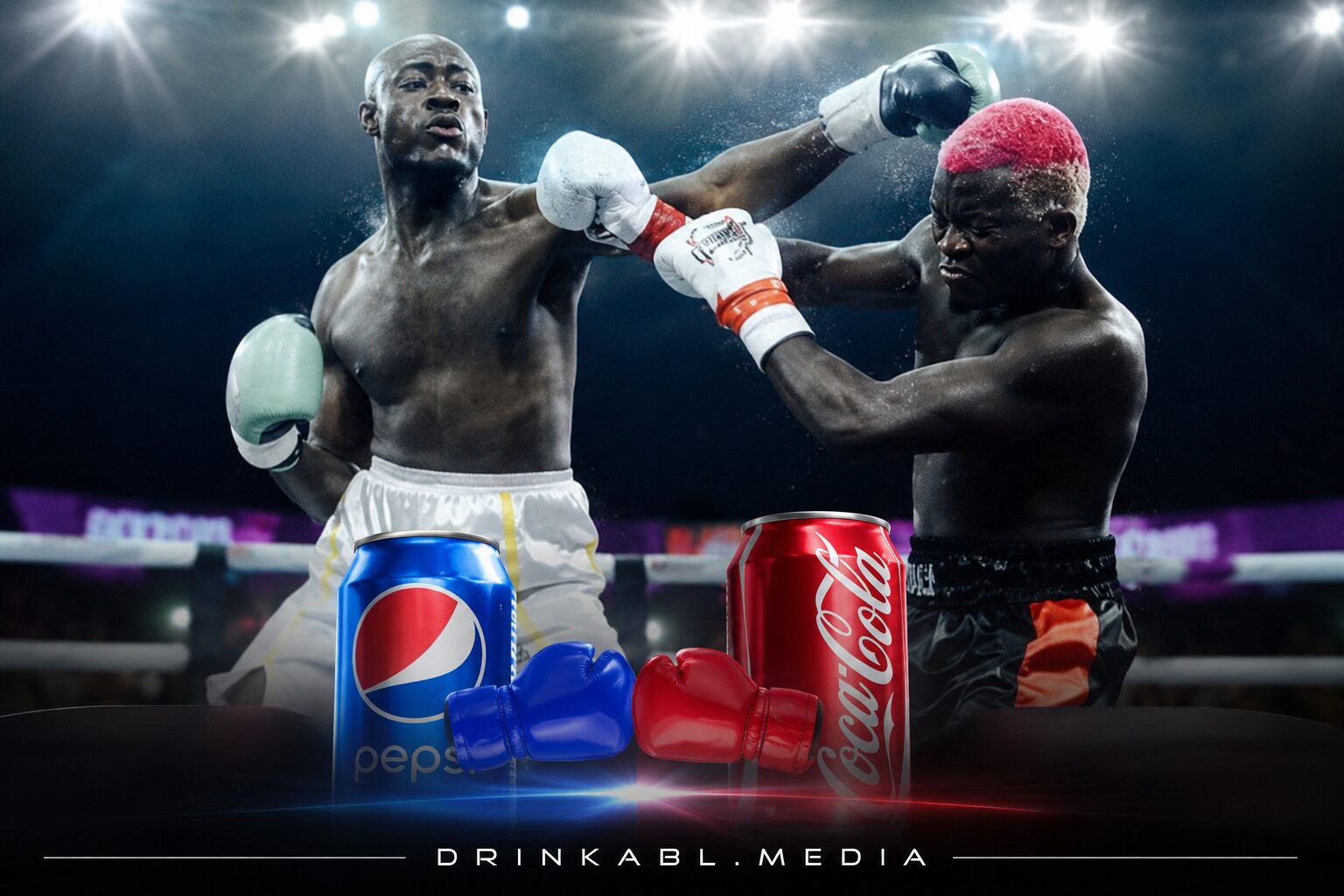

Carter Efe beat Portable by unanimous decision on May 1 at the Balmoral Hall, Federal Palace Hotel, Lagos, and the business has not stopped moving since.
All three judges scored Chaos in the Ring 4 at 27–30 in Efe’s favour. Lagos socialite E-Money confirmed his pre-fight pledge of ₦50 million for the winner. Portable went straight to Instagram Live to dispute the result, accused Efe of using his height and reach illegally, and demanded ₦200 million in streaming revenue from the organisers. Efe declared himself “Carter Mayweather” at the post-fight press conference, then jumped on a livestream with Kcee and E-Money to call out Wizkid, saying he would like Wizkid’s son Boluwatife ringside for the occasion. Wizkid, being Wizkid, has not said a word.
Portable named Davido and Zlatan Ibile as his next targets on TikTok. Zlatan mocked the loss on X and performed a diss chant with Efe at a Lagos club. Then the newest twist landed: Efe went online to complain that the ₦50 million has not actually shown up. “Dem never give me my money oo. I nearly die for that fight, I never see the N50 million,” he said in the video now making the rounds.
So the loser says he was robbed. The winner says he has not been paid. The audience has not stopped talking. Nobody has logged off. This is not confusion. It is a distribution model that Coca-Cola and Pepsi spent more than a century perfecting, and these two are running it whether them know am or not.
The Cola Wars did not start with flashy TV ads. Coca-Cola, founded in 1886, had close to a monopoly on the carbonated soft drink market for decades. Pepsi went bankrupt twice, in 1923 and 1931, and actually tried to sell itself to Coca-Cola. Coca-Cola said no both times. The rival they refused to buy became the engine that kept them relevant for the next hundred years. Imagine if they had just settled it.
Pepsi’s first serious foothold came during the Great Depression, and the play was embarrassingly simple. They offered a 12-ounce bottle for the same five cents Coca-Cola charged for six ounces. By 1939, Pepsi’s profits had reached $5.7 million. The product was not the point. Value was.
The real fight came later. In 1975, Pepsi launched the Pepsi Challenge: blind taste tests where a measurable share of participants picked Pepsi over Coke. Coca-Cola’s own internal studies reportedly confirmed that roughly 58% of participants preferred Pepsi’s sweeter formula. That result shook Coca-Cola badly enough to do the unthinkable. On April 23, 1985, they changed their formula for the first time in 99 years. New Coke lasted 79 days before Coca-Cola quietly brought the original back. The market leader had panicked in public, and Pepsi had not even needed to win outright to benefit. Portable going live after the final bell to declare he was robbed runs the same play. The scorecards don’t matter. Who controls the conversation the next morning is what counts.
By the 1980s, neither company was really selling drinks anymore. They were selling identity and belonging, the same way Portable’s chaos energy and Carter Efe’s digital reach are really about audience ownership, not boxing belts. Pepsi signed Michael Jackson in 1983 for a reported $5 million, at the time a record for a celebrity endorsement. The signing was not about Jackson’s fame. It was about a message: Pepsi belonged to the younger, hungrier generation. When Pepsi took that campaign into Atlanta, Coca-Cola’s home city, during its 1989 Super Bowl push, that was not carelessness. That was intent. Carter Efe calling out Wizkid on a livestream is the same move. Whether Wizkid responds is beside the point. The callout alone is the content, and the PepsiCo file on this publication has tracked how the company keeps finding fresh arenas to run that same challenger energy today.
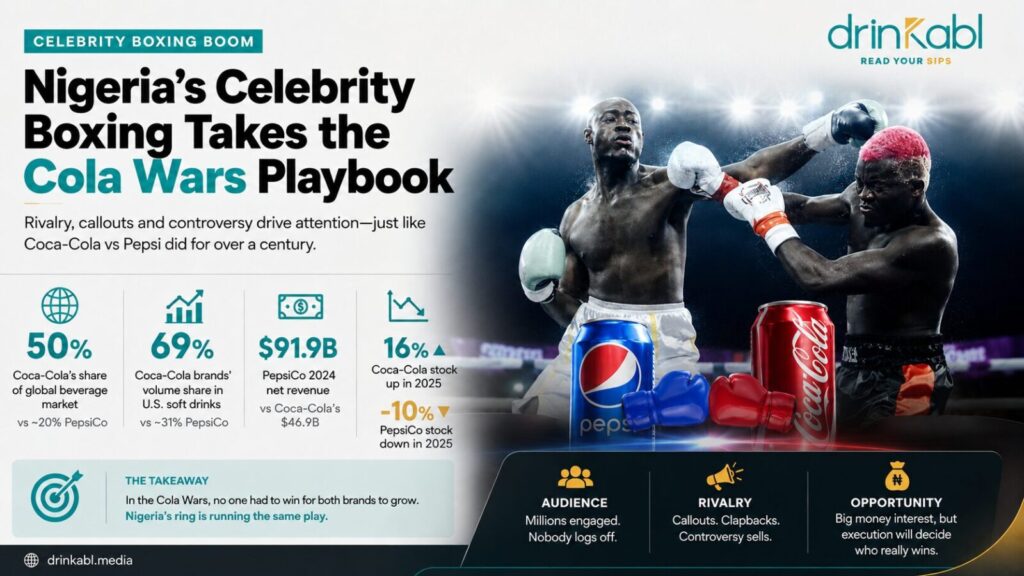
The current numbers are not close. Coca-Cola commands roughly 50% of the global beverage market against PepsiCo’s approximately 20% share of that same segment, according to industry analysts. In the US carbonated soft drink market specifically, Coca-Cola’s brands hold close to 69% of volume. PepsiCo’s full-year 2024 net revenue reached $91.9 billion against Coca-Cola’s smaller total, but that gap exists almost entirely because of Frito-Lay snacks, which account for roughly 55% of PepsiCo’s revenue. Coca-Cola chose to be a beverage company. PepsiCo chose to be something bigger and more complicated. In 2025, Coca-Cola’s stock rose approximately 16% while PepsiCo’s declined roughly 10%, according to market analysts, partly from soft North American operations and a product recall in its Quaker Foods division. Neither company is settling the argument. Neither is planning to.
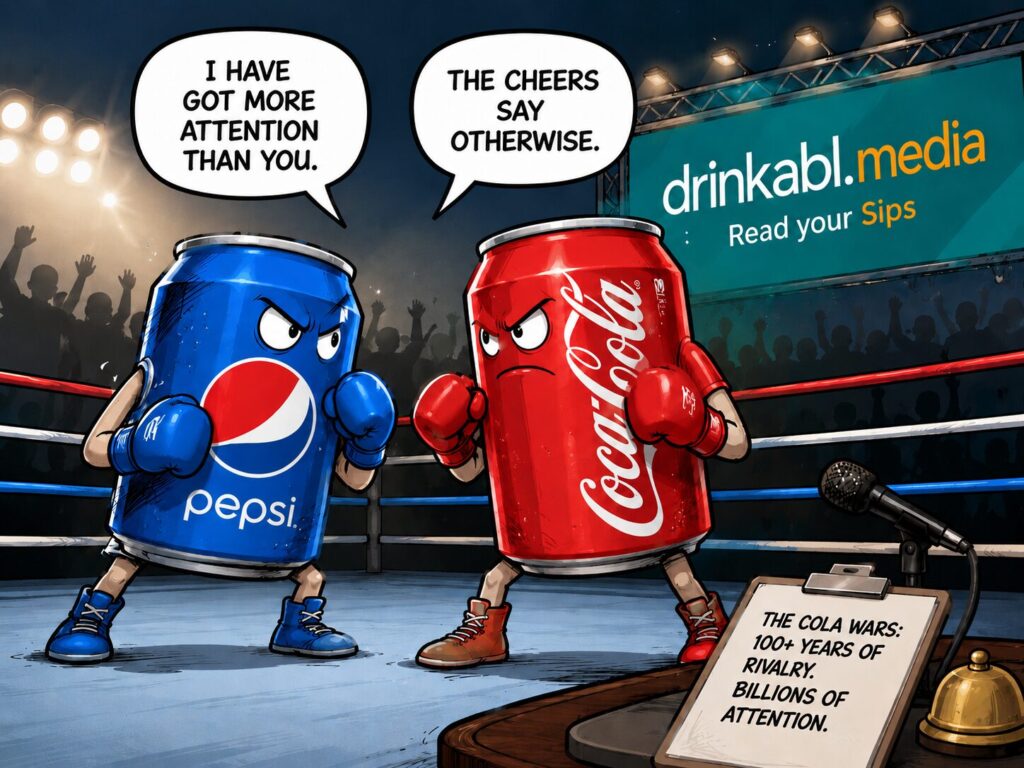
That stubbornness is the whole business. Victory ends stories. A rivalry that nobody wins creates infrastructure: every provocation brings attention, every response extends the cycle, every callout builds anticipation for the next card. A music executive named Soso Soberekon has separately claimed a group of investors is prepared to put $1 billion on the table for a Davido-versus-Wizkid boxing match in Nigeria’s largest stadium. That number may be packaging. The hunger it reflects is not. Nigeria’s celebrity boxing scene already has the audience. What it is still missing is the operational backbone to consistently turn that audience into money, which is exactly what Carter Efe’s unpaid prize is telling the market right now. Whether DAZN’s first major push into Nigeria converts a viral night into sustained subscribers, and whether winners actually collect, will answer the question that really matters. The next event announcement is where that answer starts.
Read More