
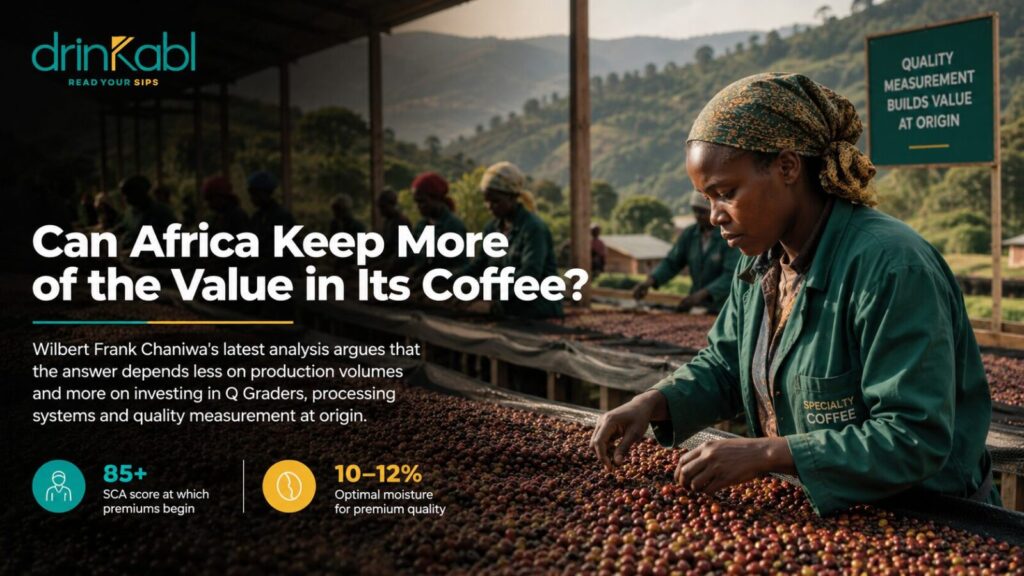
Wilbert Frank Chaniwa’s latest analysis argues that the answer depends less on production volumes and more on investing in Q Graders, processing systems and quality measurement at origin.
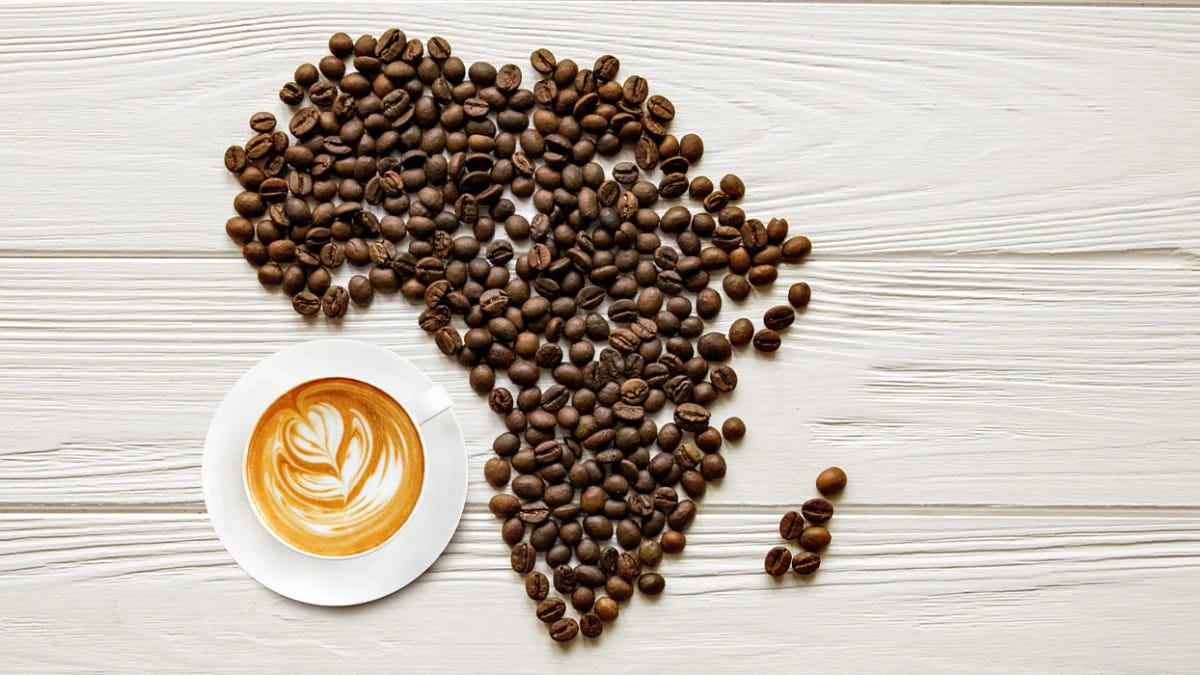
Africa is the birthplace of arabica coffee and the source of some of the most prized lots reaching European and Japanese specialty markets. It is also the part of the supply chain that captures the least value from the cup it makes possible.
That tension sits at the centre of a detailed analysis published last month by Wilbert Frank Chaniwa, an agribusiness researcher at RIC Hospitality Brands. Chaniwa mapped African coffee’s quality standards, pricing mechanics, and institutional gaps across eight producing nations. What he found is a continent with extraordinary natural resources held back by persistent structural problems.
Ethiopia, Kenya, and Rwanda anchor the continent’s specialty trade. Ethiopian G1-grade Yirgacheffe and washed Kenyan AA beans regularly command strong premiums above the ICE arabica C Market price. The Nairobi Coffee Exchange auction system fuels competitive bidding among roasters in Scandinavia, Japan, and North America. Rwanda’s Bourbon-variety arabicas, grown above 1,500 metres in volcanic highlands, completed one of the fastest quality turnarounds in agricultural history: commodity-grade in the early 2000s, now a regular feature in third-wave roasteries across London and Copenhagen.
The SCA’s 100-point grading system sets the commercial ceiling. Lots scoring 85 or above attract significant premiums; anything clearing 90 enters auction territory. Below 80, coffee prices against the C Market, where Africa’s Robusta producers from Uganda, Côte d’Ivoire, and the DRC compete mainly on volume, often at margins that barely cover production costs.
Chaniwa’s analysis frames the value gap as a skills and infrastructure problem as much as a market one. Sorting ripe cherries by hand, controlling fermentation, drying beans to the correct 10-12% moisture level, and storing them properly are the compounding decisions that separate a 78-point commercial lot from an 85-point premium one. Training qualified Q Graders in origin countries, rather than keeping evaluation expertise concentrated in consuming markets, is the lever most consistently under-funded. The African Fine Coffees Association held its 22nd annual conference in Addis Ababa in February 2026 with a specific focus on expanding this grassroots quality infrastructure across its 11-member country network.
The distance between evaluation expertise and growing communities remains the most expensive problem in the chain. A Burundian washing station operator managing fermentation by hand-feel rather than calibrated temperature monitoring is not producing below their potential through neglect. They are producing below their potential because the training and measurement tools are in Nairobi or Amsterdam.
Drinkabl.media’s May coverage of Habesha Breweries’ Ethiopian market push traced similar dynamics in a different category: brand value created at origin, captured downstream. Coffee’s version of that problem runs the full length of the supply chain, from selective harvesting through to retail shelf placement in Stockholm.
For buyers now seeking 84-point minimums as market standard, per recent reporting in Perfect Daily Grind, the pressure on African producers to close the quality and traceability gap is growing. The question for the next auction cycle is whether institutional investment in origin-level Q Grader networks and cooperative washing station infrastructure keeps pace with buyer expectations, or whether Africa continues to export the raw material for other people’s margins.
READ MORE