
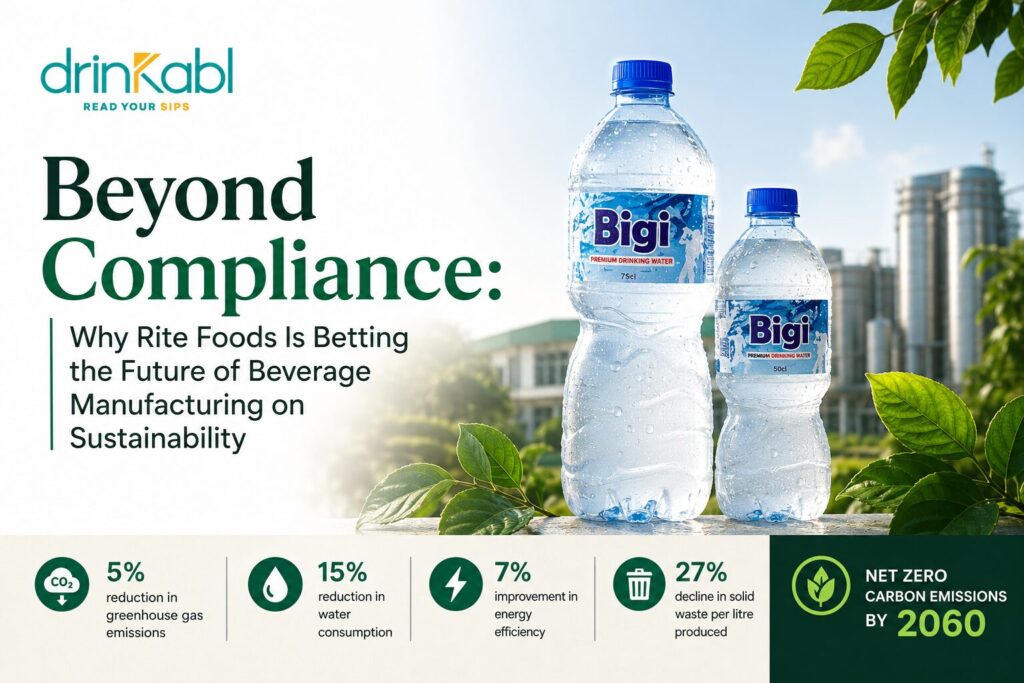
Rite Foods has committed to achieving net-zero carbon emissions by 2060, backing the pledge with measurable gains across carbon, water and energy performance in its 2025 Sustainability Report, presented in Lagos.
The company is positioning the target as more than an environmental obligation. It is becoming part of its long-term competitive strategy.
“Our commitment is that by 2060, we should have come to net zero carbon as a company,” said Ekuma Eze, Head of Corporate Affairs and Sustainability at Rite Foods.
The Numbers Behind the Pledge
Rite Foods reduced its greenhouse gas emissions by five percent between 2024 and 2025, while carbon intensity fell by 23 percent over the same period.
The company also reported a 15 percent reduction in water consumption, a seven percent improvement in energy efficiency and a 27 percent decline in solid waste generated per litre of beverage produced.
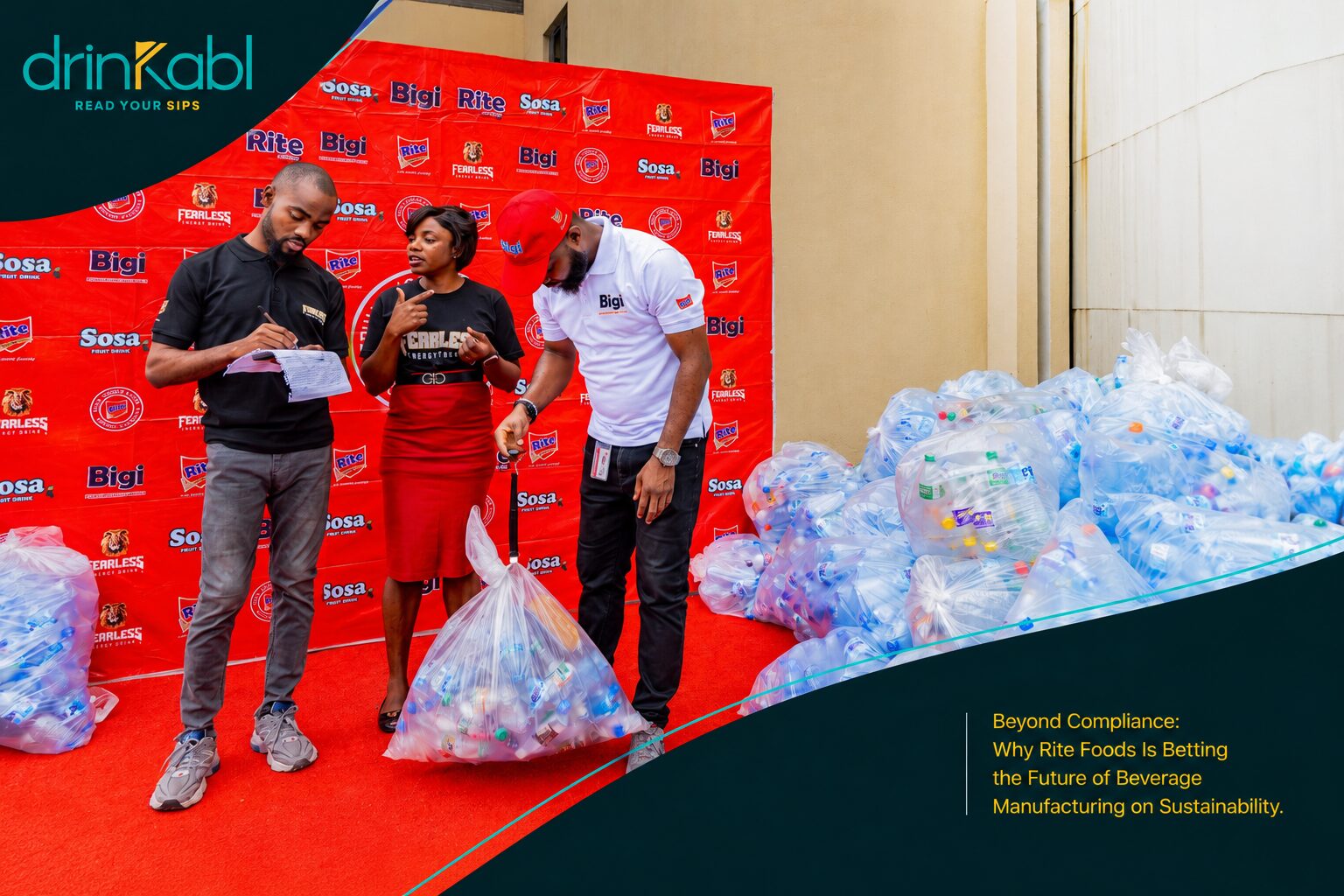
On packaging and circularity, more than 42 tonnes of plastic waste were recovered through its Rite on the Beach initiative, while another 558.2 tonnes were collected through the Food and Beverage Recycling Alliance. Some of the recovered materials were repurposed into school bags distributed to more than 2,000 pupils.
Beyond environmental performance, the company disclosed a 50 percent increase in community investment to ₦581.92 million, alongside higher staff training hours and continued workforce expansion.
Unlike many privately owned businesses, Rite Foods also subjected parts of its sustainability report to independent limited assurance by Ernst & Young despite no regulatory requirement to do so. Collectively, the disclosures suggest the company is seeking not only to improve operational performance but also to strengthen transparency and stakeholder confidence.
A Business Decision, Not Just a Compliance Exercise
The significance of the report extends beyond environmental metrics. Across global beverage markets, sustainability is increasingly influencing how companies compete.
International investors now routinely evaluate ESG performance when allocating capital. Major retailers and multinational customers are demanding lower-carbon supply chains. Financial institutions are expanding sustainability-linked lending, while governments continue tightening environmental regulations.
For beverage manufacturers, these developments mean environmental performance is no longer isolated from commercial performance. Reducing energy consumption lowers production costs. Using less water improves resource security. Recovering packaging waste supports compliance with emerging circular economy policies. Greater transparency strengthens investor confidence.
In that context, sustainability becomes a business strategy rather than a corporate responsibility programme.
Is 2060 Ambitious Enough?
Rite Foods’ commitment reflects Nigeria’s own national climate target. The more important question is not the destination — it is the pathway.
While the company has reported measurable reductions in operational emissions, achieving net zero over the coming decades will require continued investment in renewable energy, cleaner manufacturing technologies, lower-carbon logistics, sustainable packaging and closer engagement with suppliers across its value chain.
For beverage companies, the most difficult emissions to reduce often lie outside factory walls, particularly those generated through agriculture, transportation, refrigeration and packaging. How companies address those indirect emissions will ultimately determine whether long-term climate commitments can be achieved.
A Shifting Competitive Landscape
Rite Foods is not alone in strengthening its sustainability agenda. Globally, beverage manufacturers are accelerating climate investments.
The Coca-Cola system has expanded renewable energy deployment and packaging recovery programmes while pursuing science-based emissions reductions. Heineken has committed to achieving net-zero production emissions and continues investing in renewable thermal energy across its breweries. Diageo’s Society 2030 programme is driving investments in water stewardship, regenerative agriculture and decarbonisation across its operations.
Closer to home, Nigerian Breweries has continued investing in energy efficiency, water conservation and circular packaging initiatives as part of its broader sustainability strategy.
Companies are no longer competing solely through product innovation, marketing or distribution. They are also competing on how efficiently they use energy, manage water, reduce waste and prepare for a lower-carbon economy.
What Comes Next
Rite Foods has demonstrated measurable progress, but the next phase will be watched more closely. Will emissions continue to decline as production volumes grow? Can renewable energy replace a larger share of fossil fuel consumption? How will the company address emissions across its broader supply chain?
And perhaps most importantly, will sustainability begin to influence purchasing decisions, investment flows and competitive positioning within Nigeria’s beverage industry?
Those questions point to a broader transformation taking place across African beverage manufacturing. The companies that adapt earliest may discover that sustainability is no longer simply about protecting the environment — it is becoming another source of competitive advantage.
Read More on Drinkabl.media: