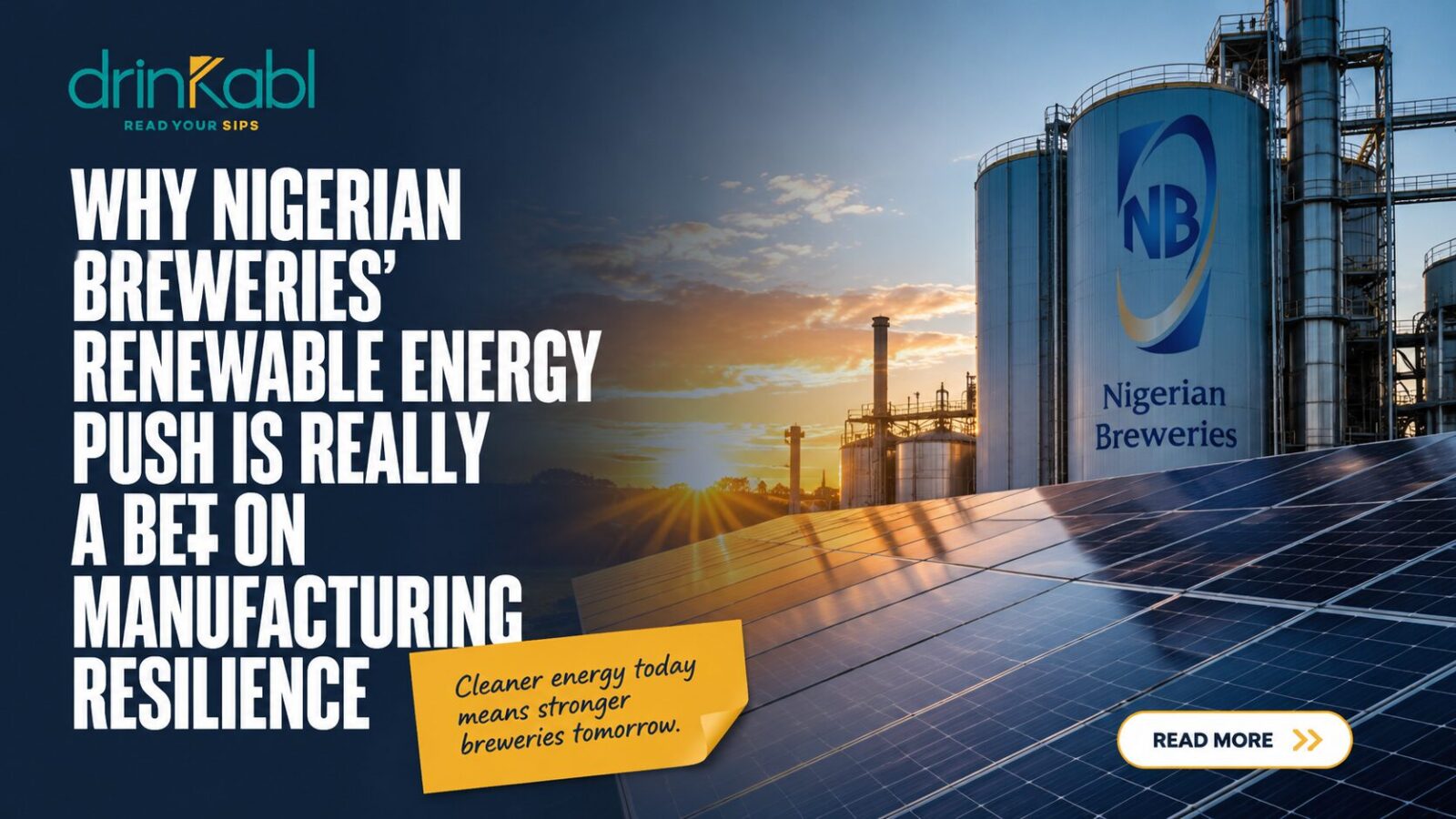

Behind the sustainability headline, Nigeria’s largest brewer is quietly redesigning its energy strategy around cost stability and production risk.
At first glance, Nigerian Breweries Plc‘s latest announcement about transitioning its Kudenda Brewery to renewable hydropower appears to be another corporate sustainability milestone. The brewer describes the move, undertaken in partnership with energy infrastructure company Konexa, as part of its journey toward net-zero carbon emissions and its ambition of “brewing a better world.”
Yet beneath the environmental messaging lies a more consequential business story. For Nigeria’s largest brewer, renewable electricity is becoming less about environmental credentials and more about protecting production, stabilizing costs and building resilience in one of Africa’s most challenging manufacturing environments.
That distinction matters. As inflation, foreign exchange volatility, rising diesel prices and an unreliable national grid continue to pressure manufacturers across Nigeria, energy has evolved from a utility expense into one of the industry’s most strategic assets. Breweries, whose operations depend on uninterrupted power for brewing, refrigeration, packaging and quality control, are among the manufacturers most exposed to energy disruptions.
Against that backdrop, Nigerian Breweries’ transition to renewable hydropower at Kudenda should be viewed not as an isolated sustainability initiative, but as another step in a broader redesign of its energy strategy.
More Than an ESG Announcement
The company’s latest update follows a partnership first announced in 2022, when Nigerian Breweries and Konexa signed a long-term renewable electricity agreement covering the Kakuri and Kudenda breweries in Kaduna State. Rather than constructing and operating its own generation assets, the brewer opted for a long-term power purchase model that enables it to procure renewable hydropower while Konexa develops and manages the supporting energy infrastructure.
The arrangement reflects a growing trend among industrial manufacturers seeking to improve energy reliability without assuming the capital and operational burden of owning power plants.
While Nigerian Breweries has highlighted the environmental benefits of the project, including lower carbon emissions and reduced environmental impact, it has not disclosed the volume of electricity the hydropower project will supply, the percentage of each brewery’s energy demand it will cover, or the expected reduction in greenhouse gas emissions. Likewise, the company has not quantified potential savings from reduced diesel consumption or lower electricity costs.
Those figures would offer investors and industry observers a clearer picture of the project’s commercial significance.
A Multi-Year Energy Transition
The Kudenda project is not occurring in isolation. Over the past several years, Nigerian Breweries has steadily expanded renewable energy initiatives across its operations as part of its environmental strategy. These have included solar installations, hybrid renewable energy systems, wastewater-to-energy projects, water stewardship initiatives and programmes aimed at reducing operational waste and emissions.
Viewed collectively, the projects suggest the brewer is systematically diversifying its energy sources rather than relying predominantly on grid electricity and diesel-powered backup generation.
That strategy mirrors a wider shift taking place across Africa’s beverage industry.
Brewers and beverage manufacturers increasingly view renewable energy investments as instruments of operational resilience. Stable electricity supports production planning, reduces exposure to fuel price volatility and helps mitigate the operational risks associated with grid interruptions—an issue that continues to affect manufacturers across Nigeria.
The competitive question If renewable electricity enables the company to achieve more predictable operating costs over the long term, could energy strategy become a source of competitive advantage?
The Competitive Question
Nigerian Breweries is not the only beverage producer pursuing sustainability goals, but the pace and breadth of its renewable energy investments raise an important competitive question.
Energy represents a significant component of brewery operating expenses. Any sustained reduction in electricity costs—or greater certainty around future energy pricing—could improve production efficiency, support stronger operating margins and provide greater flexibility in capital allocation.
Whether those benefits ultimately materialize will depend on the scale of renewable adoption across the company’s brewery network and how effectively renewable power integrates with existing operations.
What Investors Should Watch
The latest announcement leaves several important questions unanswered.
Industry observers will be watching to see how much of Nigerian Breweries’ total electricity demand will eventually be supplied by renewable sources, how the transition affects operating costs and whether the company reports measurable reductions in carbon emissions and diesel consumption in future sustainability disclosures.
There is also growing interest in whether renewable energy will become a broader competitive differentiator within Nigeria’s beverage sector, where manufacturers continue to grapple with rising production costs and persistent energy uncertainty.
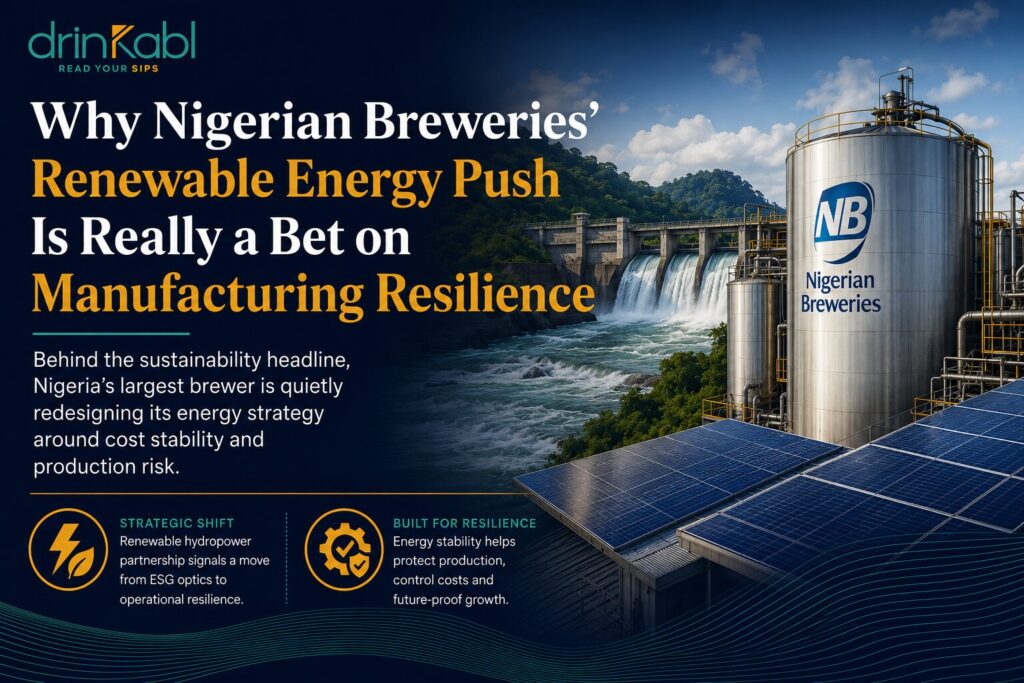
For now, Nigerian Breweries has presented the Kudenda transition primarily as another milestone in its sustainability journey. The more compelling story, however, may be that one of Africa’s largest brewers is quietly reshaping its business around a new competitive reality: in today’s manufacturing landscape, securing reliable, affordable and cleaner energy is no longer simply an environmental objective. It is increasingly a prerequisite for long-term growth.
As more beverage manufacturers confront the same pressures, the next chapter may not be defined by who brews the most beer, but by who can produce it most efficiently.
Read More
- Nigerian Breweries Seeks To Expand Portfolio with N7.01 Billion Acquisition of Heineken Subsidiaries
- Sustainability Beyond Compliance: Why Rite Foods Is Betting the Future of Beverage Manufacturing on Sustainability Beer
- Champion Breweries Bets on Scale as Group Transformation Lifts First-Half Revenue to ₦35.7bn