
Capital Moves In as Africa Tightens Its Beverage Market
Last week, Africa’s beverage industry offered a reminder that the biggest changes in the market don’t always arrive as new products on supermarket shelves. From Nigeria to Kenya and South Africa, the week was defined by capital, regulation, distribution and corporate power, not new drinks.
Coca-Cola reaffirmed a major investment commitment in Nigeria. Kenya intensified its campaign against illicit and counterfeit alcohol. Nigeria moved further into enforcement of its restrictions on small-format alcohol. Shoprite advanced plans to expand its liquor footprint in South Africa, while global spirits player Sazerac moved to acquire Germany’s Berentzen. At the corporate level, Diageo announced a new CFO as the spirits giant continues its transformation.
Taken together, these developments point to a beverage market becoming more structured, but also more contested.
This week’s top lines:
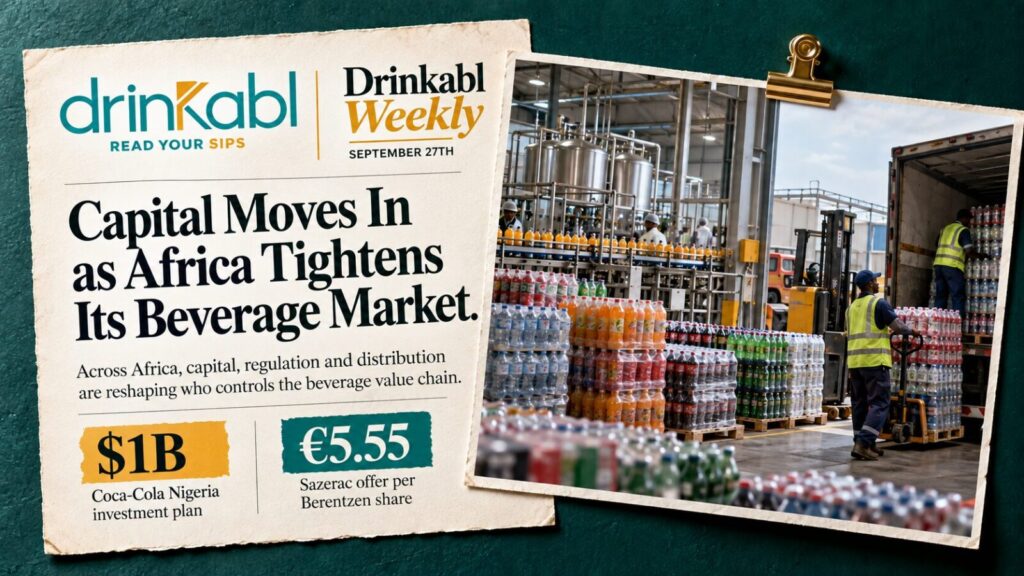
- Coca-Cola reaffirmed plans to invest up to $1 billion in Nigeria over five years, on top of the $1.5 billion already committed over the past decade.
- Kenya’s counterfeit-alcohol crackdown widened from county-level seizures to calls for coordinated national enforcement.
- Sazerac tabled a €5.55-a-share offer for Germany’s Berentzen-Gruppe, a 68% premium.
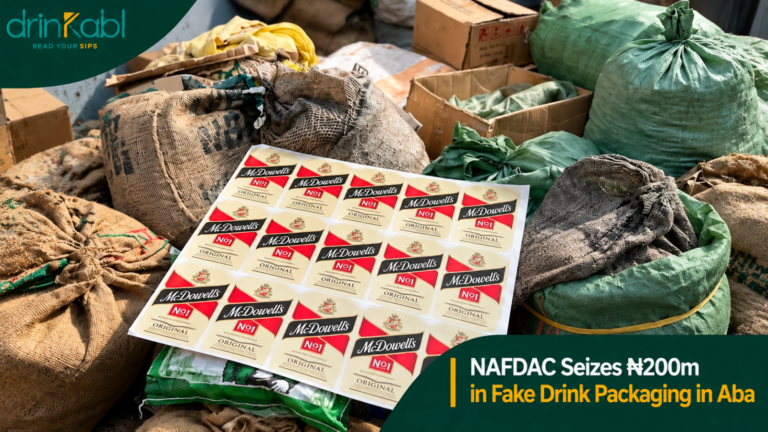
- Edo State began enforcing Nigeria’s sachet and sub-200ml alcohol ban, backed by a NAFDAC mop-up operation.
- Diageo named WPP finance chief Joanne Wilson as its next CFO, effective 2027.
- South Africa’s Competition Commission recommended approval of Shoprite’s acquisition of liquor chain PicardiRebel.
- US-based Milo’s Tea neared $1 billion in annual retail sales, built entirely on distribution rather than scale acquisitions.
Here are the stories that mattered.
1. Coca-Cola Reaffirms $1 Billion Nigeria Investment
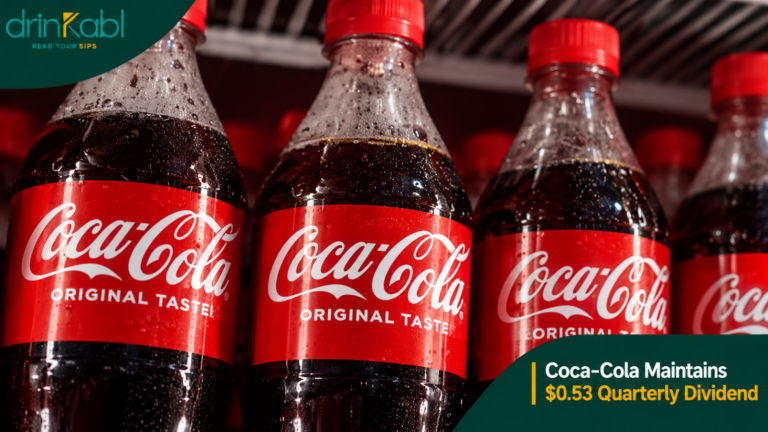
Coca-Cola’s Nigerian system put one of the biggest capital commitments in Africa’s beverage market back in focus last week, reaffirming plans to invest up to $1 billion in Nigeria over five years, subject to a predictable and enabling business environment.
The investment programme is being channelled into manufacturing capacity, infrastructure and the wider Coca-Cola value chain, an addition to the $1.5 billion the company says it has already invested in the country over the past decade.
The scale is significant. Coca-Cola’s Nigerian system says it supported about 160,200 jobs across its value chain and generated approximately $1 billion in value-added economic activity in 2024.
For Nigeria’s beverage industry, the announcement is about more than Coca-Cola. It signals that despite inflation, energy costs, foreign-exchange pressures and other operating challenges, the country’s enormous consumer market continues to attract long-term manufacturing capital. The bigger question is whether other beverage manufacturers will follow the money.
Why it matters: Nigeria remains one of Africa’s most important beverage markets, and investment at this scale has implications for manufacturing capacity, employment, packaging, logistics and local supply chains.
2. Kenya Steps Up Its War on Illicit Alcohol
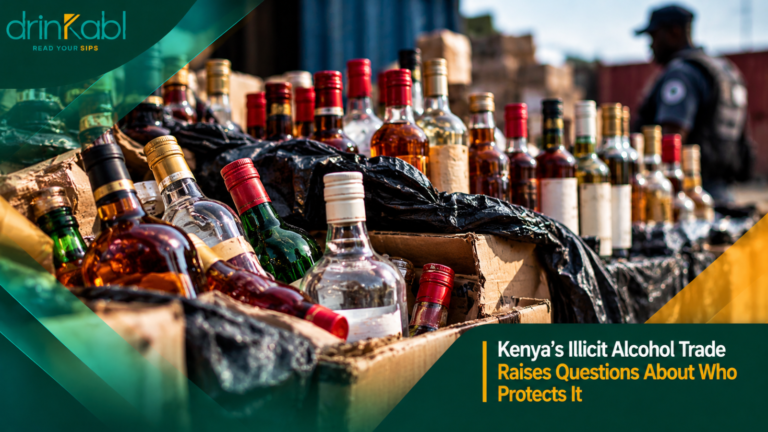
Kenya’s long-running battle against illicit alcohol intensified last week. The issue moved beyond individual seizures as lawmakers demanded answers over counterfeit alcohol allegedly carrying fake excise stamps and quality marks.
Authorities subsequently carried out seizures in several counties, including operations targeting suspected illicit liquor in Nandi and Murang’a, part of a pattern of enforcement that industry groups say has left illicit drinks accounting for an estimated 60 percent of all alcohol consumed in the country.
By Friday, government officials had called for a more coordinated response involving agencies including the Interior Ministry, Kenya Revenue Authority, the Anti-Counterfeit Authority and the Kenya Bureau of Standards. That shift matters because it changes the character of the enforcement effort.
Illicit alcohol is no longer being treated simply as an alcohol-control problem. It increasingly sits at the intersection of public health, taxation, product standards, counterfeiting and national enforcement. For legitimate beverage companies, that distinction matters, every bottle of counterfeit alcohol represents not only a potential safety problem but also competition against manufacturers that pay taxes, comply with standards and operate through formal distribution systems.
Why it matters: Kenya’s response could eventually reshape how alcoholic beverages are manufactured, taxed, distributed and verified across the market.
3. Sazerac Moves for Germany’s Berentzen
US spirits company Sazerac made one of the week’s biggest global beverage moves when it launched an offer to acquire all shares of German drinks company Berentzen, tabling a bid worth €5.55 ($6.37) a share, a 68 percent premium on Berentzen’s three-month average share price before takeover talks were confirmed.
Berentzen’s executive and supervisory boards backed the proposed transaction, calling it an “outstanding opportunity” for the 250-year-old distiller, whose portfolio includes Puschkin vodka and its namesake fruit spirits.
The move fits a wider pattern in global beverages: major companies are looking beyond their traditional markets for established brands, distribution platforms and opportunities to diversify portfolios. For Sazerac, the acquisition would provide greater exposure to European brands and markets. For the wider industry, it is another reminder that consolidation remains a powerful force in spirits, the global beverage market is increasingly shaped not only by what companies launch, but by which brands they choose to buy.
Why it matters: Africa is part of this same global consolidation environment. Changes in ownership of international beverage businesses can eventually affect portfolios, distribution strategies and investment priorities in African markets.
4. Nigeria’s Sachet-Alcohol Ban Enters the Enforcement Phase
Nigeria’s restrictions on small-format alcoholic beverages became much more tangible last week as Edo State’s Consumer Protection Committee ordered sellers, dealers and manufacturers to withdraw and dispose of all sachet gin within seven days or face sanctions, in Benin City and beyond.
NAFDAC also carried out a mop-up operation targeting sachet alcoholic products and drinks below the 200ml threshold nationwide, part of what the agency has described as a sustained campaign rather than a one-off exercise.
The significance lies in the transition from policy to enforcement. For manufacturers and distributors, a regulatory restriction becomes materially different once products begin disappearing from markets and inventories. For retailers, the implications extend to stock management and product availability. And for consumers, the question becomes what replaces the products being removed.
Nigeria’s small-format alcohol debate has always involved competing concerns around public health, accessibility, informal trade and enforcement. Last week’s actions demonstrate that the government is increasingly willing to move the debate from regulation into the marketplace.
Why it matters: The next phase will be watching whether enforcement remains state-specific or becomes more widespread across Nigeria.
5. Diageo Names Joanne Wilson as Its Next CFO
Diageo announced last week that Joanne Wilson, currently CFO of WPP, will become its next Chief Financial Officer, succeeding Nik Jhangiani.
Wilson is expected to join Diageo’s Board and Executive Committee in 2027. Her previous career includes senior roles at Britvic, Tesco and KPMG. The appointment comes as Diageo works through a broader transformation programme under chief executive Sir Dave Lewis, aimed at accelerating a turnaround following recent sales declines in North America and Asia Pacific.
That makes the announcement particularly relevant to the beverage industry. Executive appointments at companies of Diageo’s scale can influence capital allocation, portfolio decisions, operating priorities and market strategy. And Diageo’s importance to Africa is considerable, given its longstanding connection to brands and businesses across the continent, including Guinness and East African Breweries.
Why it matters: One of the world’s largest spirits companies is changing its financial leadership while navigating a period of strategic transformation.
6. Shoprite Pushes Deeper Into South Africa’s Liquor Market
South Africa’s Competition Commission recommended that the Competition Tribunal approve Shoprite Checkers’ proposed acquisition of PicardiRebel, an established liquor chain operating 34 stores, including one wholesaler, across the country.
PicardiRebel will be folded into Shoprite’s existing LiquorShop network, which already runs 352 outlets. The recommendation, subject to conditions requiring Shoprite to commit capital toward refurbishing the acquired stores, moves the transaction closer to completion.
For the beverage industry, the important issue is not simply that one retailer is buying another; it is the increasing concentration of distribution and retail power. Manufacturers can make the product, but access to consumers increasingly depends on who controls the shelves, stores, wholesale networks and delivery infrastructure. Shoprite’s expansion therefore deserves to be watched from the perspective of beverage manufacturers as much as from the perspective of retail.
Why it matters: South Africa’s liquor market is becoming another example of how distribution can be as strategically important as production.
7. Milo’s Tea Nears $1 Billion in Annual Retail Sales
US beverage company Milo’s Tea is on track to cross $1 billion in annual retail sales by the end of this year, a year ahead of its original target, according to the company and industry data trackers.
The family-owned brand has expanded its retail reach to more than 55,000 stores nationwide, growing its case volume tenfold under CEO Tricia Wallwork while sustaining a compound annual growth rate above 20 percent.
It is a particularly interesting beverage story because it demonstrates the power of distribution and repeat consumption. Milo’s did not need to become a global Coca-Cola-sized corporation to build a billion-dollar retail business; instead, it expanded its geographic reach while building strength around a relatively focused beverage proposition.
For African beverage companies, the lesson is relevant. The next major beverage success story does not necessarily have to come from a multinational, a well-positioned local or regional brand with strong distribution can build significant scale.
Why it matters: Distribution, availability and consumer loyalty remain some of the most powerful growth engines in beverages.
What Last Week Really Told Us
Look at the stories together and a pattern emerges: the beverage industry’s biggest battles are increasingly happening outside the bottle.
Coca-Cola is putting capital into manufacturing. Kenya is tightening control over what enters the legitimate alcohol market. Nigeria is removing certain small-format alcoholic products from distribution. Shoprite is strengthening its position in liquor retail. Sazerac is expanding through acquisition. Diageo is changing senior financial leadership as it restructures. And Milo’s Tea is demonstrating what can happen when distribution expands faster than a company’s traditional boundaries.
The common thread is control. Who controls production? Who controls distribution? Who controls retail? Who controls the legitimate alcohol market? And who has enough capital to buy the brands and platforms it needs rather than building everything organically?
For Africa’s beverage industry, these questions will become increasingly important. The continent’s beverage market is still expanding, but the next phase will not simply be about selling more drinks. It will be about who can manufacture efficiently, navigate regulation, reach consumers reliably and build enough scale to compete. That is where the real industry story is developing.
Threads to Watch
- Coca-Cola’s $1 billion pipeline: Whether the reaffirmed investment translates into visible capacity expansion, and whether competitors follow with commitments of their own.
- Kenya’s enforcement coordination: Whether a joint task force spanning the Interior Ministry, KRA, KEBS and the Anti-Counterfeit Authority materialises, or whether enforcement stays fragmented across counties.
- Nigeria’s sachet ban: Whether Edo State’s enforcement push spreads to other states, and how compliant manufacturers respond to shrinking shelf space for small-format products.
- Sazerac–Berentzen: The offer needs acceptance from holders of at least 50 percent of Berentzen’s shares plus one; completion is targeted for the fourth quarter of 2026.
- Diageo’s transformation: How the leadership handover from Nik Jhangiani to Joanne Wilson lands alongside Diageo’s ongoing $1.2 billion restructuring programme.
- Shoprite–PicardiRebel: Final sign-off now rests with South Africa’s Competition Tribunal, alongside Shoprite’s committed store-refurbishment conditions.
The Drinkabl Takeaway
Last week’s beverage news was less about what people were drinking and more about who controls the systems that get those drinks to them.
Capital is moving into manufacturing. Regulators are tightening the formal market. Retailers are consolidating distribution power. Global spirits companies are acquiring brands and reshaping portfolios.
For beverage businesses operating in Africa, the message is clear: the competitive battlefield is expanding from the product itself to the entire value chain.