

A meme, a meal, and a brand that got it
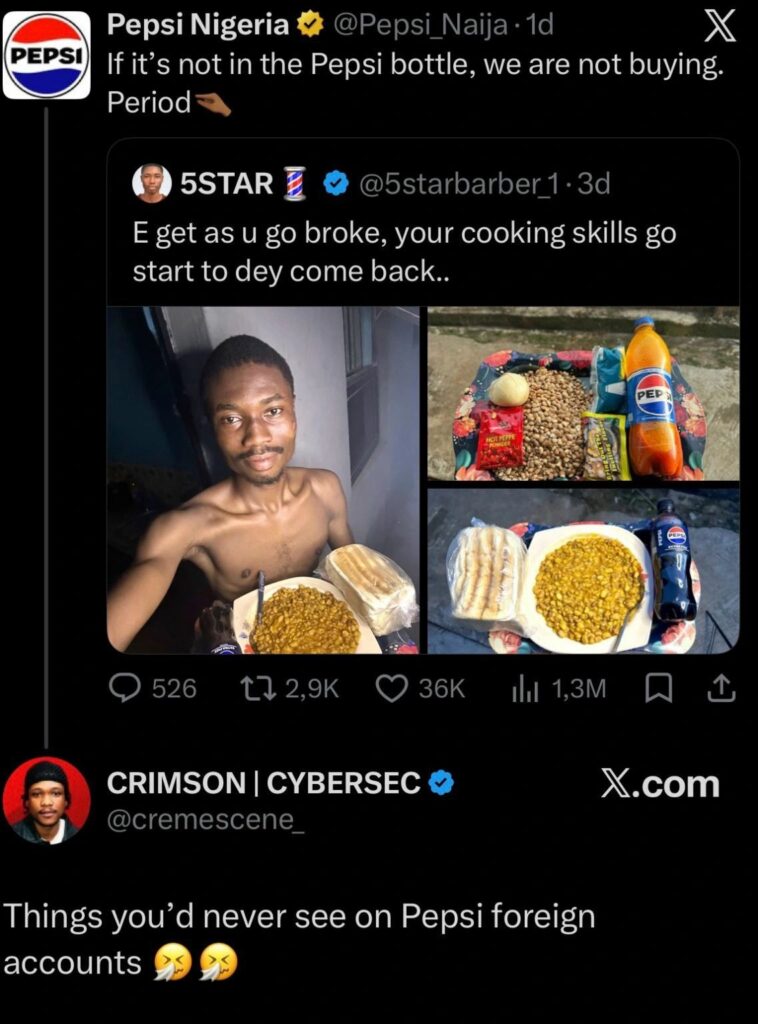
It started with a post. A shirtless guy, a tray of beans with cooking ingredients, and a Pepsi bottle repurposed to hold palm oil. Next to it, the finished meal – beans and bread paired with a chilled bottle of Pepsi. The caption read: “E get as u go broke, your cooking skills go start to dey come back.”
Pepsi Nigeria replied with one line: “If it’s not in the Pepsi bottle, we are not buying. Period .”
1.3 million views later, the post had done what most ad campaigns wish for: authenticity. It felt real, it spread fast, and it made people talk. This is Coca-Cola’s “Together Tastes Better” campaign, but unscripted and Nigerian. It sounded like cruise. It is cruise…and it is a snapshot of how Nigerians live with soda daily.
Soda as a daily companion
Globally, soft drinks are marketed around moments like parties, sports or holidays. In Nigeria, they’re woven into the rhythm of the day. Soda isn’t reserved for parties, restaurants or special moments only. It shows up with roadside rice and beans at 7am, with amala and gbegiri in the afternoon and with suya at night. It could even be paired with garri if possible.
The advent of the PET bottle gave rise to better accessibility, wider distribution and reach. Soda became handy and at some point, seemed to be marketed as a replacement for water. Soda just made food go down better and a chilled bottle somehow became a cue for “food is ready”.
According to a research report by Corporate Accountability and Public Participation Africa (CAPPA) on Sugar-Sweetened Beverage (SSB), Nigeria is ranked among the top global consumers of soda with approximately 38.6 million liters sold annually. The highest consumption comes from the young population of 15 – 35 year olds who are active and need a sugar rush more often.These are consumers who value shareability and utility. For them, soda is accessible, affordable, and functional. It is not a treat. It is a companion.
Repurposed bottles: from waste to word-of-mouth
The viral image showed a Pepsi bottle being used as a palm oil container. To a global brand team, that’s a compliance headache. In Nigeria, it is normal. Plastic containers, including PET bottles get a second, third, and fourth life. In the average household, it is not uncommon to see an ice cream container filled with egusi or ogbono soup and a bottle of Eva filled with vegetable oil. The dual reality of plastics is a norm. This is the real world.
And this matters for brand awareness. The bottle is designed to be discarded or recycled but every time that bottle sits on a kitchen table or on a market shelf, the logo is visible. It is unpaid outdoor advertising that outlives the drink itself. More importantly, it signals familiarity. When a brand becomes part of your kitchen, it stops being foreign. It becomes “ours.” That kind of penetration is hard to buy, but easy to earn if you pay attention to how people actually use your product.
Why Pepsi Nigeria’s reply worked
Global Pepsi accounts don’t post like this. It breaks the polished, aspirational rulebook that avoids anything that looks brand unsafe. Pepsi Nigeria broke the rule and won because it applied cultural context. The reply was in Nigerian Twitter language: colloquial, funny, and grounded in a reality people recognize. It felt like a friend replying, not a corporation broadcasting.
This is the difference between maintaining a perception of professional communication and coming down to your customer’s level. Nigerian consumers don’t expect distance. They expect proximity. Global brands often err on the side of polish but local reference wins on the street.
The branding lesson: From billboard to the stool
The mistake many global brands make in Nigeria is importing the playbook without adapting it. The lesson here isn’t to encourage repurposing bottles, it is to observe how your product is actually used and reflect that back to people. This way, trust is built, ownership shifts and reach grows organically.
Soda in Nigeria is more than a beverage category. It is part of the food culture, the hustle, and the humour. The repurposed bottle isn’t a branding failure. It is proof that the brand has made it into daily life.
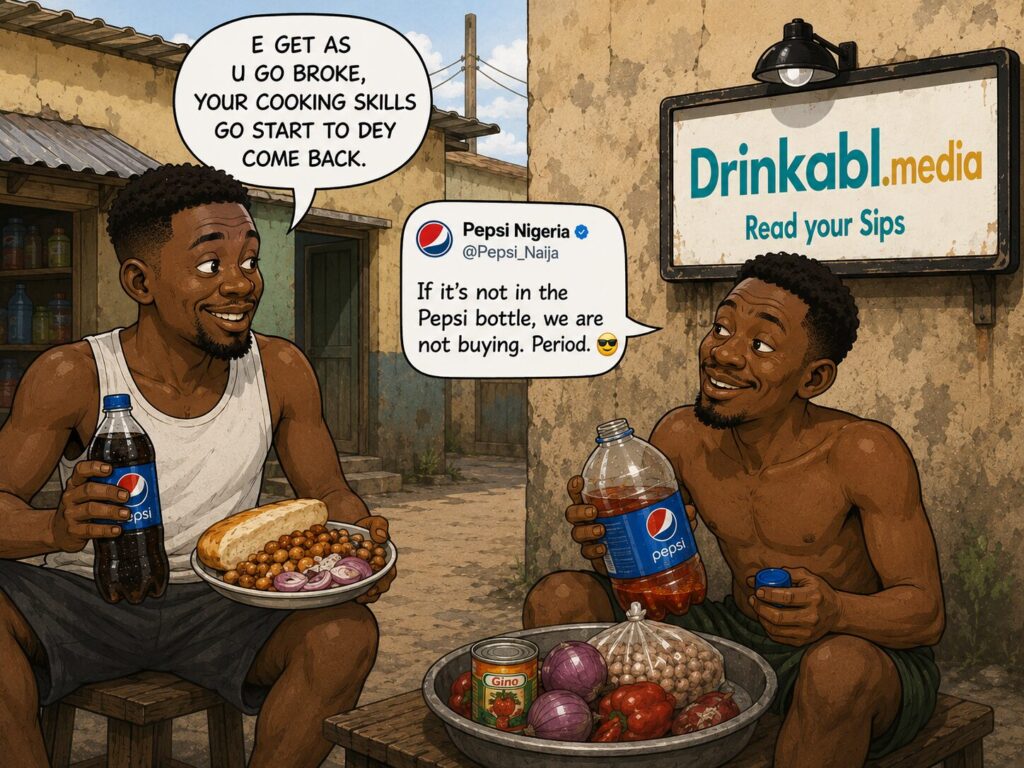
Brands that want to win in Nigeria must integrate the billboard and the stool. Maintain professional communication but also talk like the person eating beans and bread across from you because in Nigeria, the brands that win are the ones that feel like part of the meal, not just what’s served with it.
Poll
When you see a branded container repurposed for other things, what does it say to you?
- Smart hustle – it’s just practical. Nothing goes to waste
- Strong Brand love – branding on point
- Needs fixing – brands should discourage repurposing for hygiene reasons
- Just funny – don’t overthink it
Let us know in the comment box! we would like to hear your thoughts
3 Responses
Smart hustle – it’s just practical. Nothing goes to waste
Smart hustle, nothing goes to waste
Smart hustle – it’s just practical. Nothing goes to waste