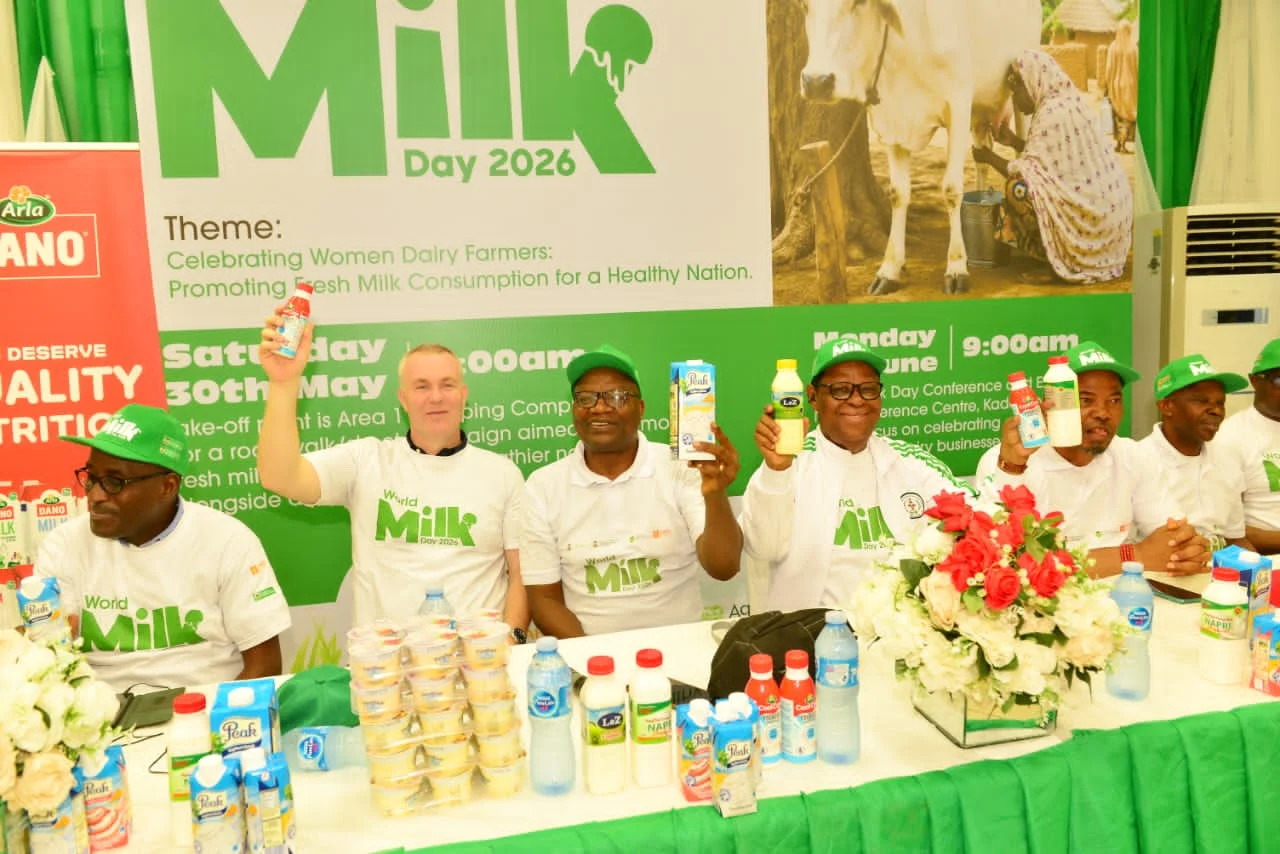

This year’s World Milk Day theme, “Celebrating Women Farmers,” lands with particular weight across Africa, where women smallholders form the backbone of a dairy sector that still cannot produce enough milk to meet its own demand.
Africa spent $7.5 billion on dairy imports in 2023. The continent’s milk output grew from 45.5 million to 53.2 million tonnes between 2013 and 2023, a 17% increase over the decade, yet that growth has not matched accelerating urban consumption. In West Africa, fat-filled milk powder accounts for roughly two-thirds of dairy imports and close to 70% of consumption in most capital cities, consistently undercutting local supply on both price and logistics.
The structural problem runs deeper than volume. Africa holds roughly one-fifth of the world’s cattle population but contributes a small fraction of global milk output. Most African breeds were historically raised for meat and mobility rather than sustained milk production. Low per-animal yields, poor feed access, fragmented collection systems and limited cold-chain infrastructure all compress what reaches processors and retailers. Women smallholders manage a significant share of that fragmented base, often without access to the financing, veterinary services or extension support that would raise their productivity.
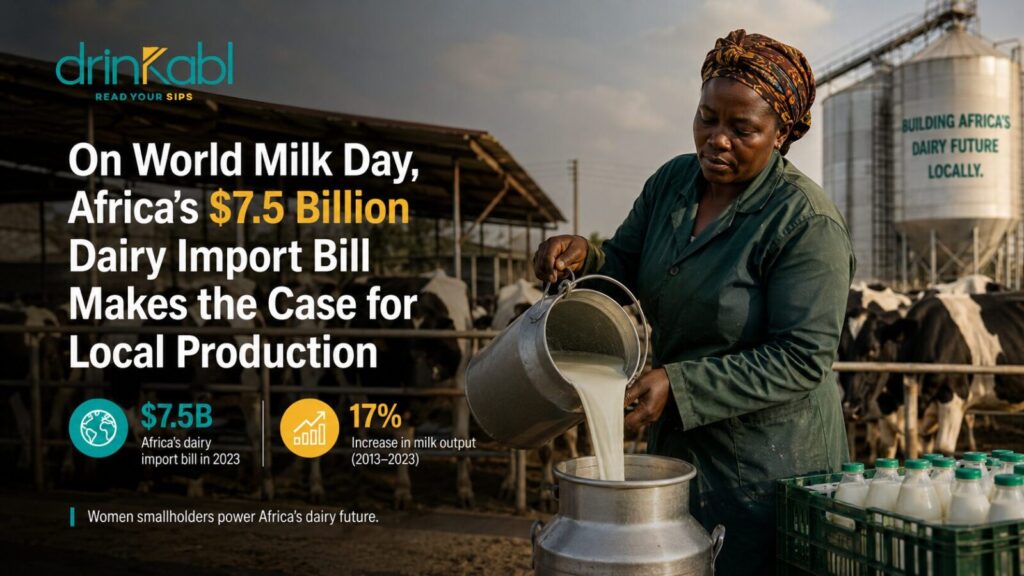
Nigeria illustrates the bottleneck most clearly. The country produces approximately 700,000 tonnes of milk annually against estimated demand of 1.6 million tonnes, leaving it reliant on imports for roughly 60% of national consumption at a cost of more than $1.5 billion a year. The Federal Ministry of Livestock Development confirmed those figures at its own World Milk Day conference in Abuja last June and has since published a six-pillar National Livestock Growth Acceleration Strategy targeting 1.4 million tonnes of annual production by 2030. The plan includes genetic upgrades, pasture development and public-private partnerships with Danone, FrieslandCampina and Nestlé, which already operate milk collection systems in-country.
Drinkabl.media’s recent coverage of Nestlé Nigeria’s Lagos Nutrition Summit showed manufacturers leaning harder on supply chain gaps as the commercial case for continued backward integration. That argument is getting institutional support: the Campaign launched jointly by the EU, the Danish Dairy Board and Nigeria’s Federal Government in May 2026 is a three-year consumer education initiative, funded by international dairy interests who view West African demand as significant enough to compete for directly.
The production side has not kept up with institutional momentum. Multiple administrations have announced Nigeria’s supply targets, and each time, delivery has fallen short. The more honest test this decade will be at the cold-chain and collection-network level. Getting milk from smallholder farms to the processors and retailers that need it remains a gap nobody has reliably closed, and that is where the FAO’s celebration this year will eventually face its real reckoning.
READ MORE