
Grain Investments as Nigeria’s Nutrition Burden Deepens
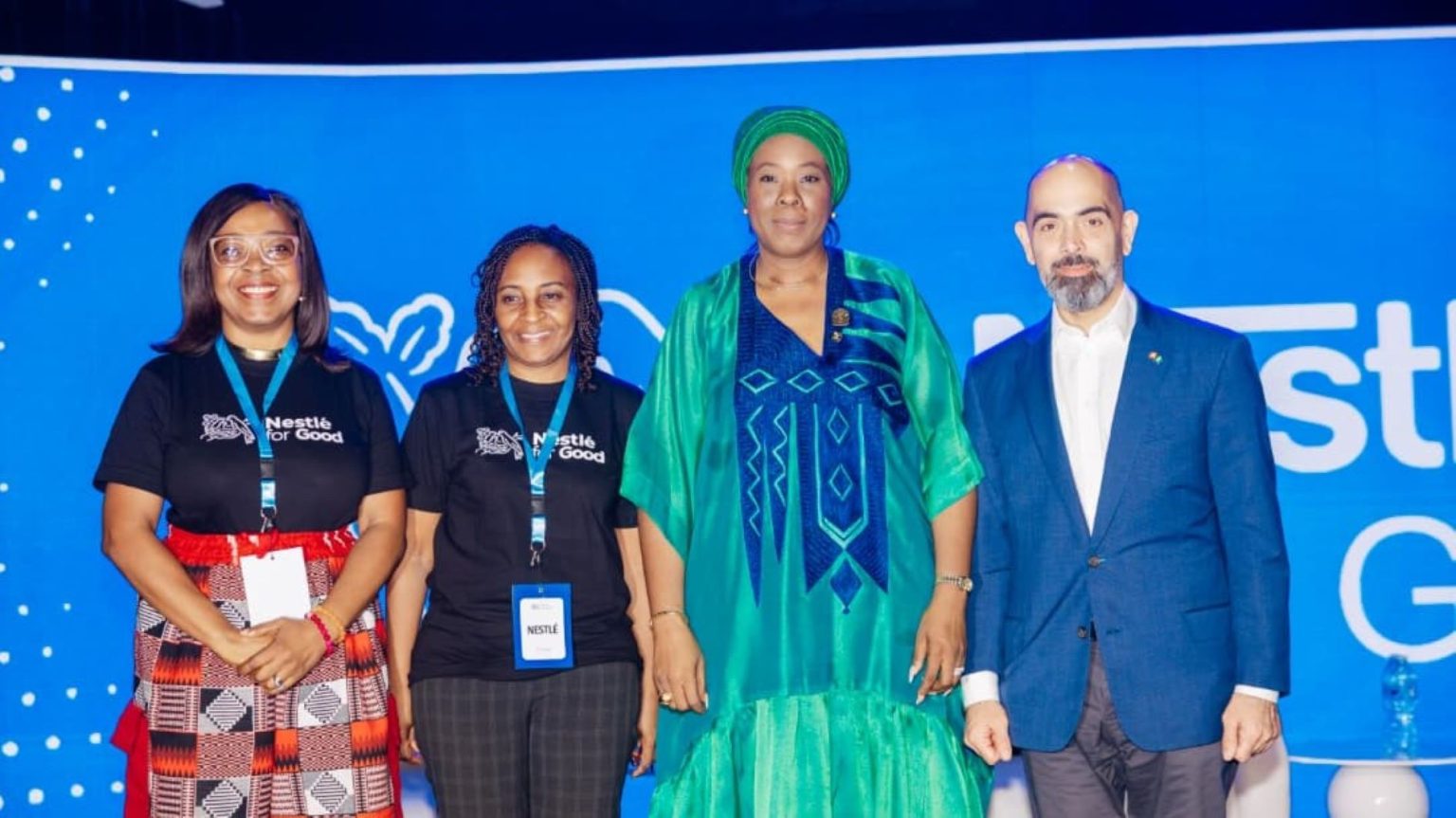
Nestlé Nigeria brought together government officials, healthcare professionals, and development partners in Lagos on May 29 for its annual Nestlé for Good Summit, using the occasion to outline how its supply chain investments connect to the country’s worsening nutrition picture.
Managing Director Wassim Elhusseini told attendees that the company’s operational commitments, including grain quality improvement, dairy development, women’s empowerment, and youth upskilling, are the practical expression of its Creating Shared Value framework, not a separate corporate programme. “Delivering good food consistently and at scale depends on strong systems across the value chain, from responsible sourcing and manufacturing to distribution, livelihoods, capability development, and environmental sustainability,” he said at the summit.
The government side offered context Nestlé did not supply itself. A Lagos State health official noted that Nigeria is contending with undernutrition and overnutrition simultaneously, with obesity and diet-related conditions including diabetes and cardiovascular illness growing alongside persistent deficiencies in early-childhood nutrition. That dual burden, rarely acknowledged in corporate nutrition forums, sharpens the terms on which investments in food systems need to be evaluated.
“Delivering good food consistently and at scale depends on strong systems across the value chain, from responsible sourcing and manufacturing to distribution, livelihoods, capability development, and environmental sustainability.” — Wassim Elhusseini, MD, Nestlé Nigeria
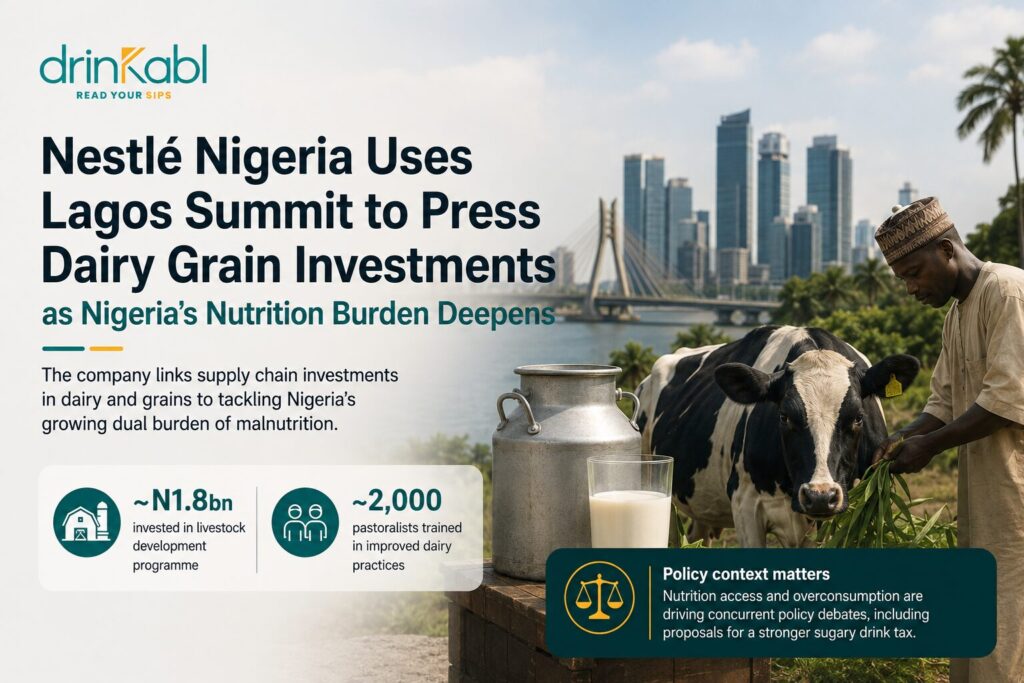
Nestlé Nigeria’s dairy work offers the clearest illustration of the operational stakes. The company has invested approximately N1.8 billion across a livestock development programme centred on a demonstration farm in Gwagwalada, Abuja, and has trained roughly 2,000 pastoralists in improved dairy practices in partnership with the International Fertilizer Development Centre. Nigeria’s dairy sector remains heavily dependent on imported reconstituted milk powder, driven by infrastructure gaps in cold storage, roads, and electricity. Nestlé’s approach involves building the domestic supply chain beneath its own products rather than relying entirely on imports.
Drinkabl.media’s coverage of CAPPA’s push for a stronger sugary drink tax, published the same week, captures how the policy environment around food and nutrition in Nigeria is running on two tracks simultaneously: one focused on improving dietary access, the other on containing overconsumption. Nestlé’s beverage portfolio, which includes products that would fall under an expanded SSB tax framework, sits directly across both tracks.
The summit’s impact showcase featured beneficiaries from women’s empowerment, youth development, and environmental programmes. Victoria Uwadoka, Nestlé Nigeria’s corporate communications and sustainability lead, said the initiative ties together three pillars: nutrition, thriving communities, and environmental stewardship. Drinkabl.media’s May coverage of Ovaltine’s Lagos factory and its push into Ghana traced a parallel story in local production and West African distribution, with similar supply chain logic driving both moves.
Whether the dairy investments and community programmes translate into measurable supply chain depth, and whether the regulatory environment stabilises enough to reward that investment, are the questions sitting behind the summit’s stated commitments.
READ MORE