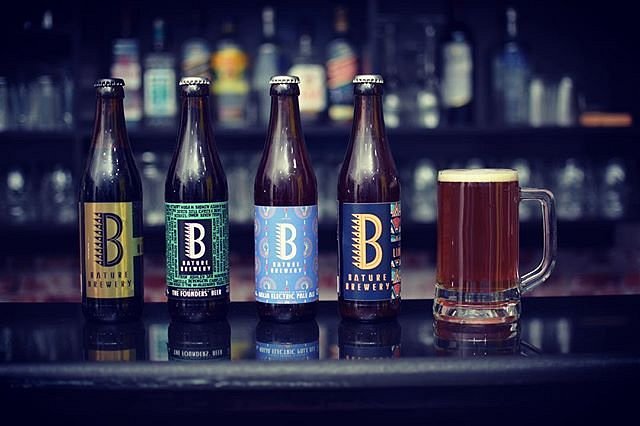

Nigeria’s beer market was never short of volume. When Bature Brewery was founded in 2017, Nigerians were already consuming roughly 16 million hectolitres annually, a figure that has only climbed since. What the market lacked was not beer. It was choice.
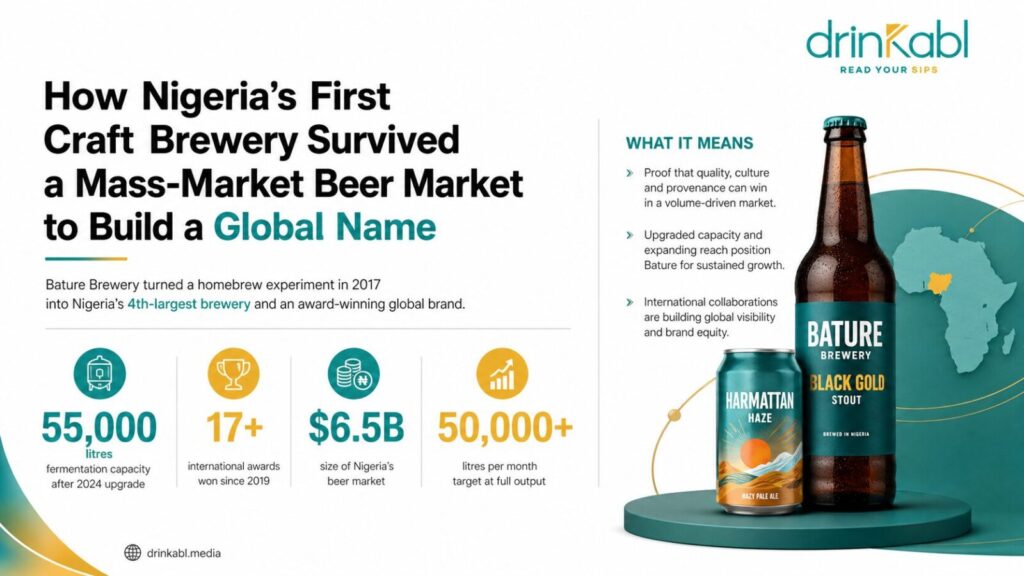
Two expatriates living in Abuja noticed it first. They scoured the city for something beyond the standard lager, found nothing that satisfied them, and retreated to their apartment kitchen to brew their own. That experiment became the seed of a business that now holds more than 17 international awards and describes itself as Nigeria’s fourth-largest brewery by volume.
Kevin Conroy and James Turley formalised their home operation into a proper company in late 2017, each committing $10,000 as initial capital. An additional $20,000 came through a crowdfunding campaign, with Conroy crediting a low-budget promotional video, featuring local artists and influencers, as the key driver of contributions. Even at that stage, the logistics resisted them. The bottling supplier in Lagos carried a minimum production run of 300,000 units. Bature needed a fraction of that. Conroy flew to Lagos and negotiated directly with the supplier, offering a promise of significantly larger future orders if the brewery succeeded.
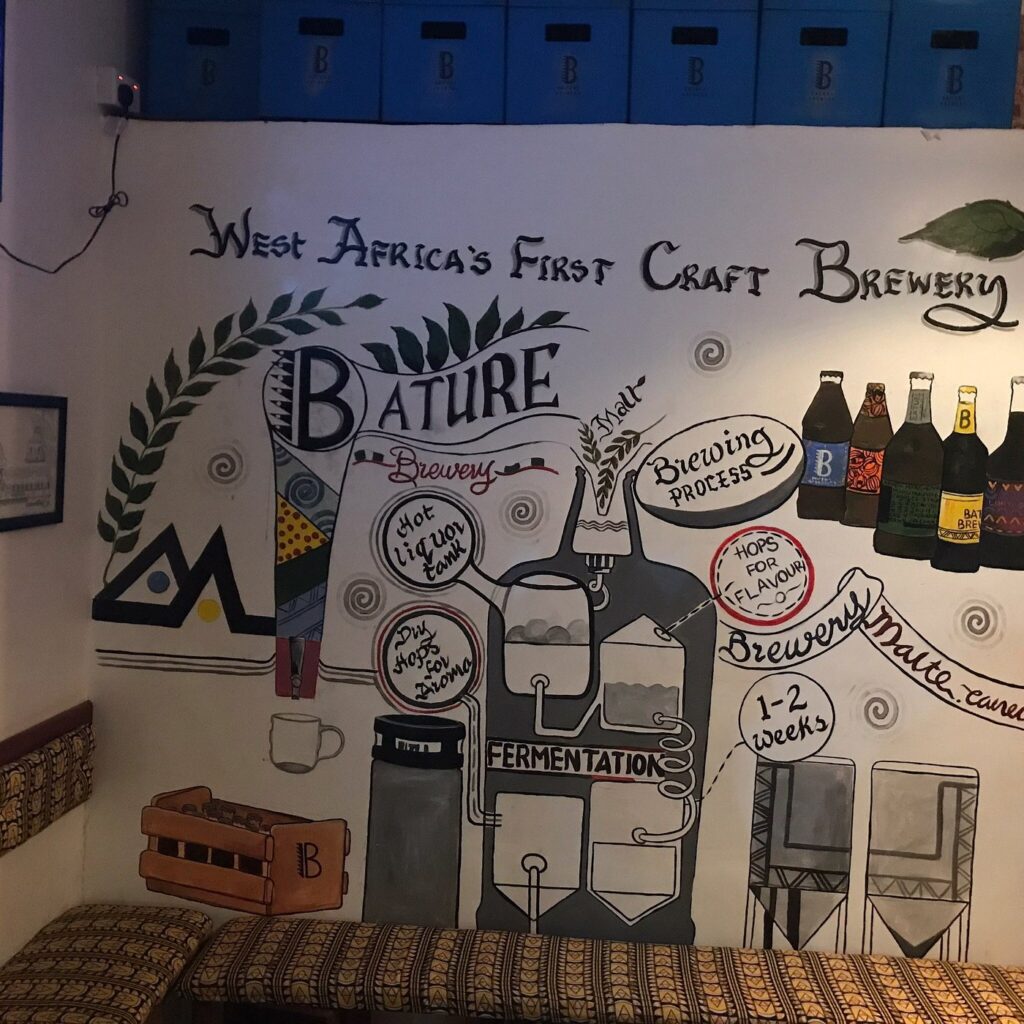
The first taproom opened in 2018 inside an Abuja mall. The 200-square-metre facility produced around 2,000 bottles per month. Neither co-founder drew a salary at this stage. Conroy kept his day job. Around the same time, Bayo Ijasan, a Nigerian-born brewer trained at Heriot-Watt University in Scotland, approached the brewery seeking to join. Conroy told him to intern. By the third day, he had handed over brewing duties entirely. Ijasan has led the brewing operation ever since.
By 2019, Conroy had a plan for Lagos. He raised $500,000, drawn mostly from friends and family in amounts between $10,000 and $20,000 per investor, and began building a second facility on Victoria Island. Construction was briefly paused by COVID-19 lockdowns. The Lagos brewery opened in early 2021, at which point Conroy left his job to run the business full time.
The Victoria Island site was a different concept from Abuja. Where the first taproom was a straightforward brewhaus, the Lagos location combined the brewery with a bar, food vendors, live music programming, and a space for art exhibitions. It also became the home of Felabration, an annual event celebrating the music of Fela Kuti, held on-site each year.
The portfolio that emerged from this operation drew deliberately on Nigerian raw materials and cultural references. Black Gold Stout is brewed with coffee beans from Taraba State. Harmattan Haze takes its name from the seasonal dust wind that settles over West Africa each dry season. Shakara, launched in canned format in 2023, was developed in collaboration with Lemi Ghariokwu, the artist whose work defined the visual identity of Fela Kuti’s albums. Black Gold won bronze at the African Beer Cup in 2019. By 2022, Lagos Lager, Founders Pale Ale, and Black Gold had all taken awards at the World Beer Awards.
On the competitive side, Bature operates in a market where Heineken, AB InBev, and Diageo collectively control the dominant share of shelf space, distribution, and consumer habit. The craft segment Bature has carved out targets a consumer willing to pay more for flavour, provenance, and product identity, a cohort that has grown as Nigeria’s urban middle class has expanded but remains a fraction of total beer consumption. The strategic question has always been whether that cohort is large enough, and loyal enough, to support a standalone craft brand at meaningful scale.
The expansion underway since 2024 suggests the founders believe it can be. In January of that year, Bature closed its brewery for a major upgrade. By August, a new five-vessel brewing system with 55,000 litres of fermentation capacity and an automated canning line had been installed, replacing the original 1,200-litre two-vessel setup. The taproom reopened in October 2024 with a live performance by Mádé Kuti. The target, once the expanded operation reaches full output, is production above 50,000 litres per month and a taproom capable of holding at least 400 people at a time.
Conroy has been direct about the commercial ambition behind the numbers. The Nigerian beer market, by his own public estimate, is worth around $6.5 billion annually. Capturing one percent of that would put Bature in $65 million territory. That target is the declared benchmark.
Alongside the domestic expansion, Bature completed its first international collaboration in April 2024, co-brewing a tropical pale ale named Mangoes to Lagos with Brixton Brewery in South London. The connection between the two breweries traces to Bature’s earliest days, when Conroy visited Brixton’s original brewery under the arches at Brixton Station to understand what a small team could build on limited resources. The resulting beer, a 4.5% ABV pale ale built around mango sourced from Lagos farms and markets, was sold in cans and on draught at bottle shops and bars across London. For Bature, the collaboration was as much about building international visibility as it was about the beer itself.
What Bature has built over seven years is not simply a craft brewery. It is a test case for whether a quality-led, culturally anchored consumer brand can scale within a Nigerian market that has historically rewarded volume over distinction. The infrastructure is now in place. Distribution across Lagos and Abuja is growing. The awards record gives it credibility in export conversations. The harder work is converting that foundation into consistent, profitable volume at a scale that justifies the capital already committed.
The Nigerian beer consumer is changing. Whether Bature is positioned to meet that consumer at the right price point, in the right channels, and at sufficient volume remains the central question for the years ahead.
Read more on Drinkabl, follow Nigeria’s supply chain pressures on our industry page, track the illicit spirits crisis through our coverage, and explore the wider West African alcoholic beverages category.