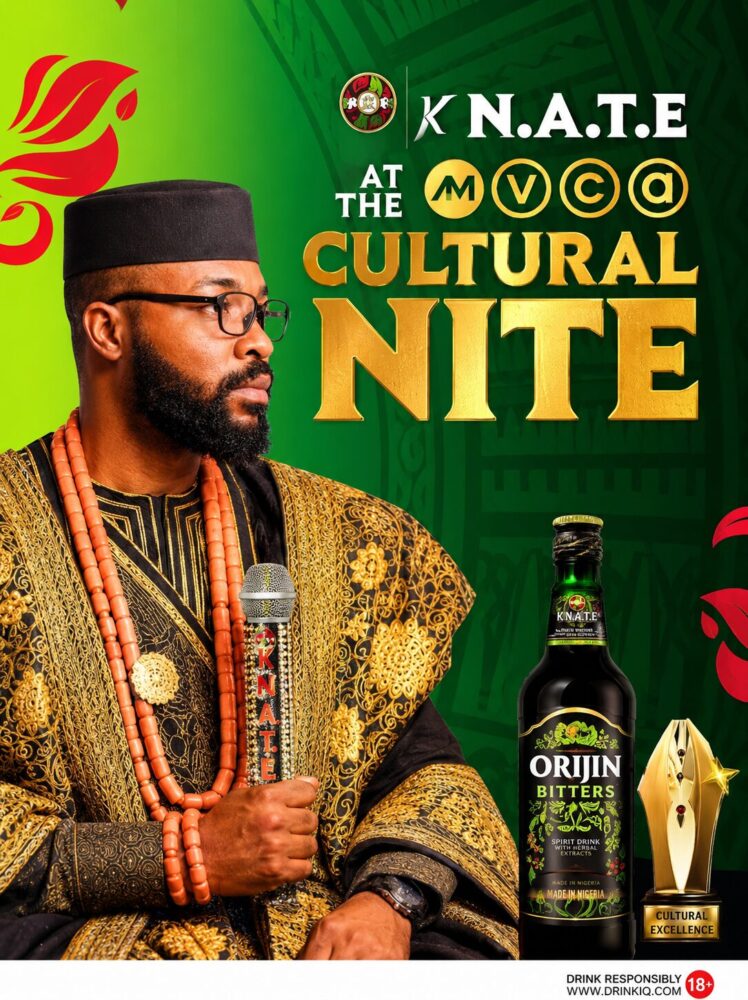

Orijin walked into the 2026 Africa Magic Viewers’ Choice Awards Cultural Night with a clear commercial objective: dominate the cultural conversation before rival beverage brands could get there first.
That was the bigger play beneath the fashion displays, celebrity appearances, and social media clips. In a LinkedIn post published after the event, Guinness Nigeria Senior Brand Manager Dorcas Mashingil Mangse described the activation as an extension of Orijin’s long-running identity around African authenticity and rooted cultural expression.
“Culture is not a seasonal campaign asset, it is the DNA of the brand,” Mangse wrote in the post.
The statement matters because Nigeria’s beverage industry has become saturated with brands trying to borrow cultural relevance for temporary visibility. Orijin is attempting to own that territory more permanently. The brand wants to sit naturally inside conversations around heritage, identity, and modern African expression, especially among younger urban consumers who increasingly treat culture as social currency.
That positioning was visible throughout the AMVCA Cultural Night experience in Lagos earlier this month. Orijin leaned heavily into traditional aesthetics, immersive storytelling, and live cultural symbolism instead of the standard celebrity-heavy bottle showcase common across entertainment sponsorships.
“Moments like that are always a reminder that the strongest brands do more than create visibility, they create belonging.”
Dorcas Mashingil Mangse, Senior Brand Manager, Guinness Nigeria
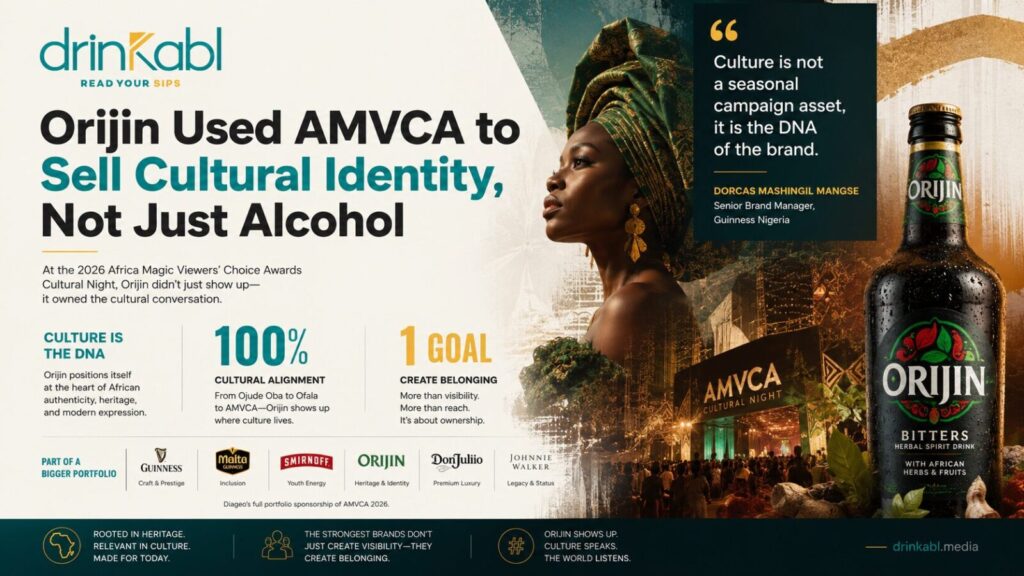
For Guinness Nigeria and parent company Diageo, the wider AMVCA partnership also carried portfolio significance. This year marked Diageo’s first full portfolio sponsorship of the awards, bringing Guinness, Malta Guinness, Smirnoff, Orijin, Don Julio, and Johnnie Walker into one coordinated entertainment platform.
Inside that lineup, Orijin occupied a carefully defined lane.
Guinness represented craftsmanship and mainstream prestige. Malta Guinness focused on mass-market inclusivity. Smirnoff chased youthful nightlife energy. Orijin handled heritage and African identity. The arrangement looked less like random sponsorship clutter and more like deliberate market segmentation.
That distinction matters in Nigeria’s increasingly experience-driven beverage economy.
Consumers now expect alcohol brands to participate in culture, not simply advertise around it. Music festivals, fashion platforms, nightlife events, and regional celebrations have become competitive territory for brands trying to stay relevant among urban audiences with shortening attention spans and endless digital options.
Orijin already has strong credentials in that space. Mangse referenced the brand’s visibility around Ojude Oba and Ofala celebrations, both events with deep cultural significance across Nigeria. AMVCA simply extended that strategy into entertainment culture, where film, music, fashion, and influencer marketing now overlap almost seamlessly.
What stood out most from her comments was the emphasis on emotional engagement instead of conventional reach metrics.
“Moments like that are always a reminder that the strongest brands do more than create visibility, they create belonging,” she wrote.
That line reflects where Nigerian experiential marketing is heading. The industry has largely moved past straightforward logo placement and celebrity endorsement cycles. Brands increasingly want emotional ownership of consumer moments because visibility alone no longer guarantees loyalty.
Consumers are also becoming harder to impress.
AMVCA itself has evolved into one of Africa’s most commercially valuable entertainment properties because it now functions as more than an award show. Fashion houses, streaming platforms, telecom operators, beauty companies, financial institutions, and alcohol brands all use the platform to test cultural positioning in real time.
For alcohol companies especially, the value sits in association. A successful cultural alignment can travel significantly further online than a traditional advertising campaign, particularly among younger consumers who increasingly respond to identity signalling over direct marketing.
That partly explains why Orijin continues investing heavily in heritage-linked experiences. The brand was originally built around African herbs, roots, and local storytelling. Maintaining credibility around that positioning matters more now because consumers quickly detect branding that feels forced or opportunistic.
Mangse also acknowledged the agencies behind the AMVCA execution, including Leo Burnett, Ideas House, Chain Reaction, Wild Fusion ALP 360, and Connecting Bridge. In practical terms, that reflects how large experiential campaigns now operate across Nigeria’s beverage industry. Beverage companies may finance the platform, but agencies increasingly shape the cultural translation consumers actually engage with.
The next challenge for Orijin is consistency.
Owning culture for one evening is relatively easy. Maintaining cultural relevance across multiple consumer cycles is much harder, particularly as more alcohol brands flood the same entertainment and heritage spaces. Detty December activations, regional festivals, nightlife partnerships, and creator-led campaigns will remain crowded through the rest of 2026. The brands that survive that noise will likely be the ones consumers believe belong there naturally.
Read More