

Sports Health Expert Challenges Common Consumer Assumptions
Former Nigeria U-15 team doctor Dr. Osinaike Jimisayo says many consumers mistake energy drinks for hydration aids, despite growing concerns about their impact on cardiovascular health during intense physical activity.
Energy drinks have become a familiar fixture in gyms, football pitches, offices and roadside kiosks across Nigeria. Marketed around energy, endurance and performance, they are often consumed before workouts, sporting activities and long workdays by people looking for an extra boost, but according to Dr. Jimisayo, a medical doctor, sports health researcher and former team doctor for Nigeria’s Under-15 national football team, one of the biggest misconceptions surrounding the category is the belief that energy drinks are designed to support athletic performance in the same way sports drinks do.
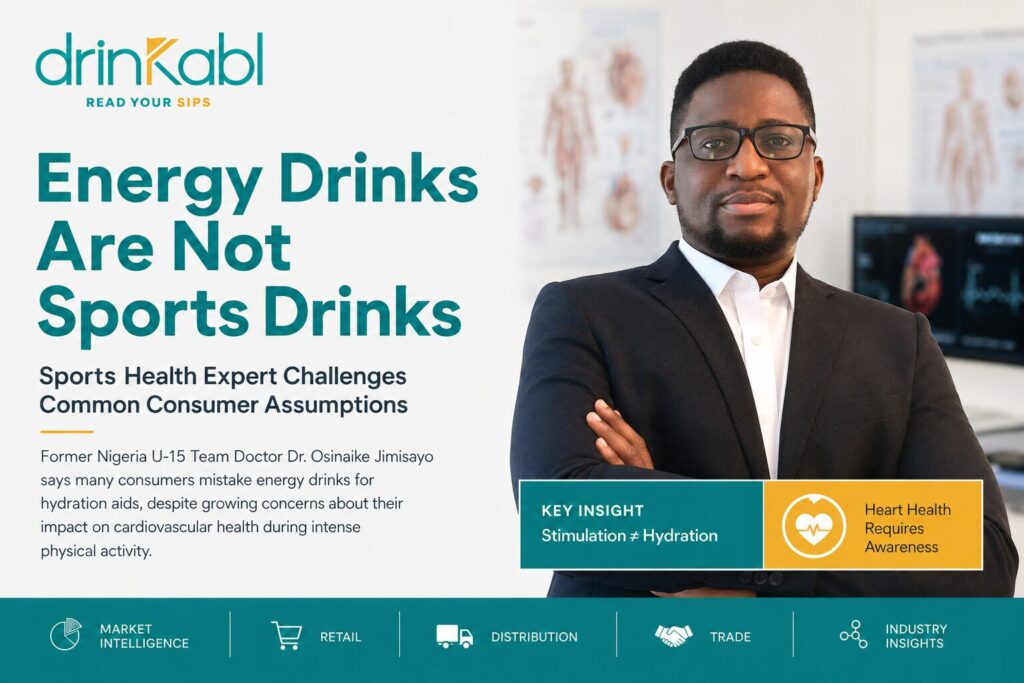
In an exclusive interview with Drinkabl Africa, Dr Jimisayo challenged that assumption, arguing that while energy drinks can temporarily increase alertness and reduce feelings of fatigue, they may also place additional strain on the cardiovascular system, particularly when combined with exercise, dehydration or alcohol. “Energy drinks are not sports drinks,” he said. That distinction, he believes, is one many consumers fail to appreciate.
Why Energy Drinks Feel Like They Work
The popularity of energy drinks is rooted in their ability to create a noticeable physiological response. Most formulations contain caffeine, sugar and ingredients such as guarana, all of which contribute to a stimulating effect on the body. “The purpose of energy drinks is to bring about stimulation,” Dr Jimisayo explained. That stimulation can increase alertness, improve concentration and create a temporary sense of energy, making the beverages attractive to everyone from students and professionals to athletes and shift workers.
For many consumers, the immediate effects are exactly what they are looking for: feeling more awake, more focused and more capable of handling demanding tasks. The challenge, according to Dr. Osinaike Jimisayo, is that the sensation of increased performance is not always the same thing as improved physical readiness.
When the Heart Is Doing the Heavy Lifting
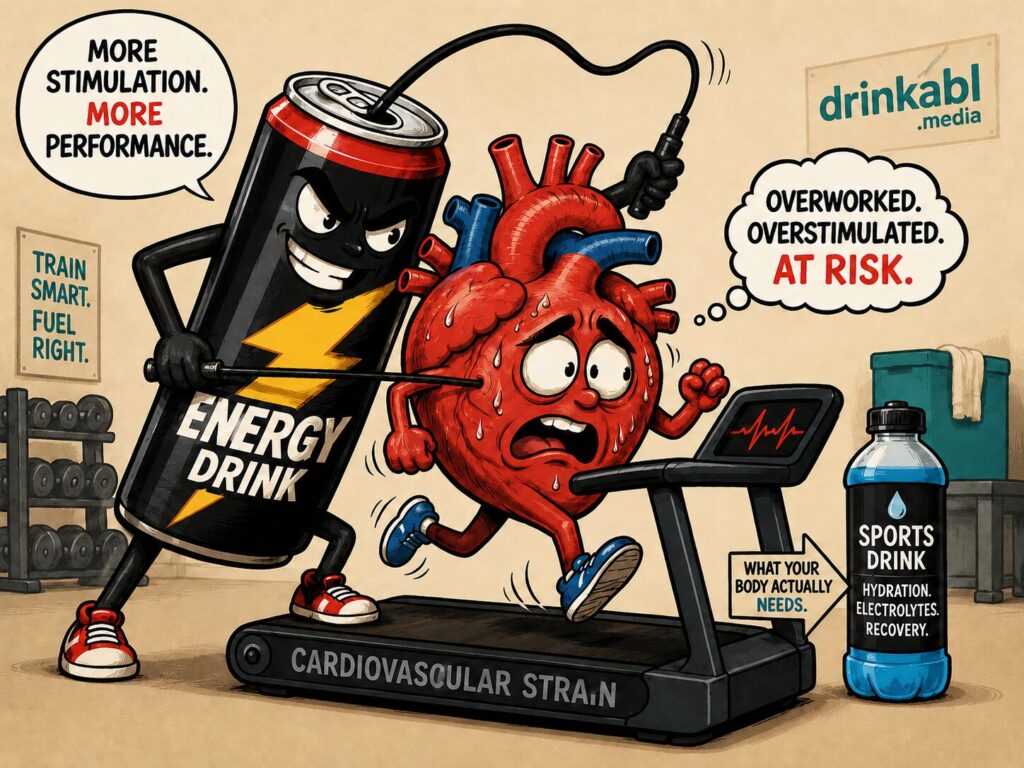
Dr Jimisayo explained that caffeine stimulates what medical professionals refer to as the sympathetic nervous system, the body’s natural “fight or flight” response. In practical terms, this can increase heart rate, raise blood pressure and place greater demands on the cardiovascular system. During exercise, those demands are already elevated. “Exercise already gets your heart pumping,” he said. “Energy drinks are causing your heart to overwork, and that is where the problem is.” According to him, excessive stimulation may alter the heart’s normal rhythm and reduce the recovery period between beats, potentially increasing the risk of palpitations and other cardiovascular complications in susceptible individuals. While moderate caffeine consumption may not present immediate concerns for most healthy adults, he cautioned that the risk profile changes when underlying health conditions enter the picture. People living with hypertension, undiagnosed cardiovascular disease or inherited heart conditions may be particularly vulnerable.
The Sports Drink Confusion
Part of the misunderstanding, Dr Jimisayo suggested, stems from the close association between energy drinks and sport. Energy drink brands have spent decades investing in sporting events, athletes and competitions, helping to build a perception that their products are performance-enhancing tools. Yet from a physiological standpoint, he argues, energy drinks and sports drinks serve very different functions. Sports drinks are generally formulated to help replace water and electrolytes lost through sweating. Their primary purpose is hydration and recovery. Energy drinks, by contrast, are designed to stimulate. “When you exercise, you’re losing water and electrolytes,” Dr Osinaike Jimisayo said. “Energy drinks do not replace that.” For consumers engaging in prolonged physical activity, confusing the two categories could mean failing to replace what the body is actually losing.
Why Exercise, Alcohol and Energy Drinks Can Be a Risky Mix
One of the strongest warnings from the interview centred on the combination of energy drinks and alcohol, a pairing that remains common in many social settings. According to Dr Jimisayo, alcohol and energy drinks can create conflicting signals within the body. Alcohol tends to slow bodily functions and contribute to dehydration, while caffeine promotes alertness and cardiovascular stimulation. “The heart is working, it’s overworking, but the alcohol is giving you a feeling that your heart is not overworking,” he explained. The result, he said, can be a false sense of control that masks the body’s normal warning signs.
Dehydration further complicates the situation. Whether caused by alcohol consumption, physical exertion or environmental conditions, reduced fluid levels force the cardiovascular system to work harder to maintain circulation. Adding stimulants into that equation may increase the strain.
Beyond the Heart
Although much of the discussion focused on cardiovascular health, Dr Jimisayo noted that the effects may extend beyond the heart. Chronic high blood pressure can affect multiple organs, including the kidneys, while excessive consumption patterns may contribute to additional health concerns over time. His broader concern is not necessarily occasional consumption, but habitual use without an understanding of the potential consequences. “The issue is awareness,” he said.
Education Over Alarmism
Dr. Osinaike Jimisayo’s perspective is shaped by years spent working at the intersection of medicine and sport. In addition to serving as team doctor for Nigeria’s Under-15 football team, he has lectured in sports and exercise science at Sheffield Hallam University and currently teaches anatomy and physiology at Tameside College. His ongoing doctoral research focuses on sports and physical activity for health. Despite his concerns, he does not advocate outright bans. Instead, he believes consumers need better information about safe consumption, underlying risk factors and the differences between energy drinks and products specifically designed for hydration and recovery. That conversation may be particularly important in countries where routine cardiovascular screening remains uncommon and many people are unaware they have conditions such as hypertension.
A Conversation Worth Having
The energy drink industry continues to expand globally, supported by strong consumer demand and deep connections to sports culture. For Dr Jimisayo, however, growth should be accompanied by greater public understanding. Energy drinks may offer temporary stimulation, but they are not hydration products, nor should they be viewed as substitutes for sleep, balanced nutrition or healthy training habits.
As debates around energy drinks continue worldwide, he believes consumers deserve a more nuanced discussion, one that moves beyond marketing claims and focuses on how these products interact with the body. The question, he suggests, is not whether energy drinks should exist. It is whether consumers fully understand what they are drinking, and when caution may be warranted.
READ MORE