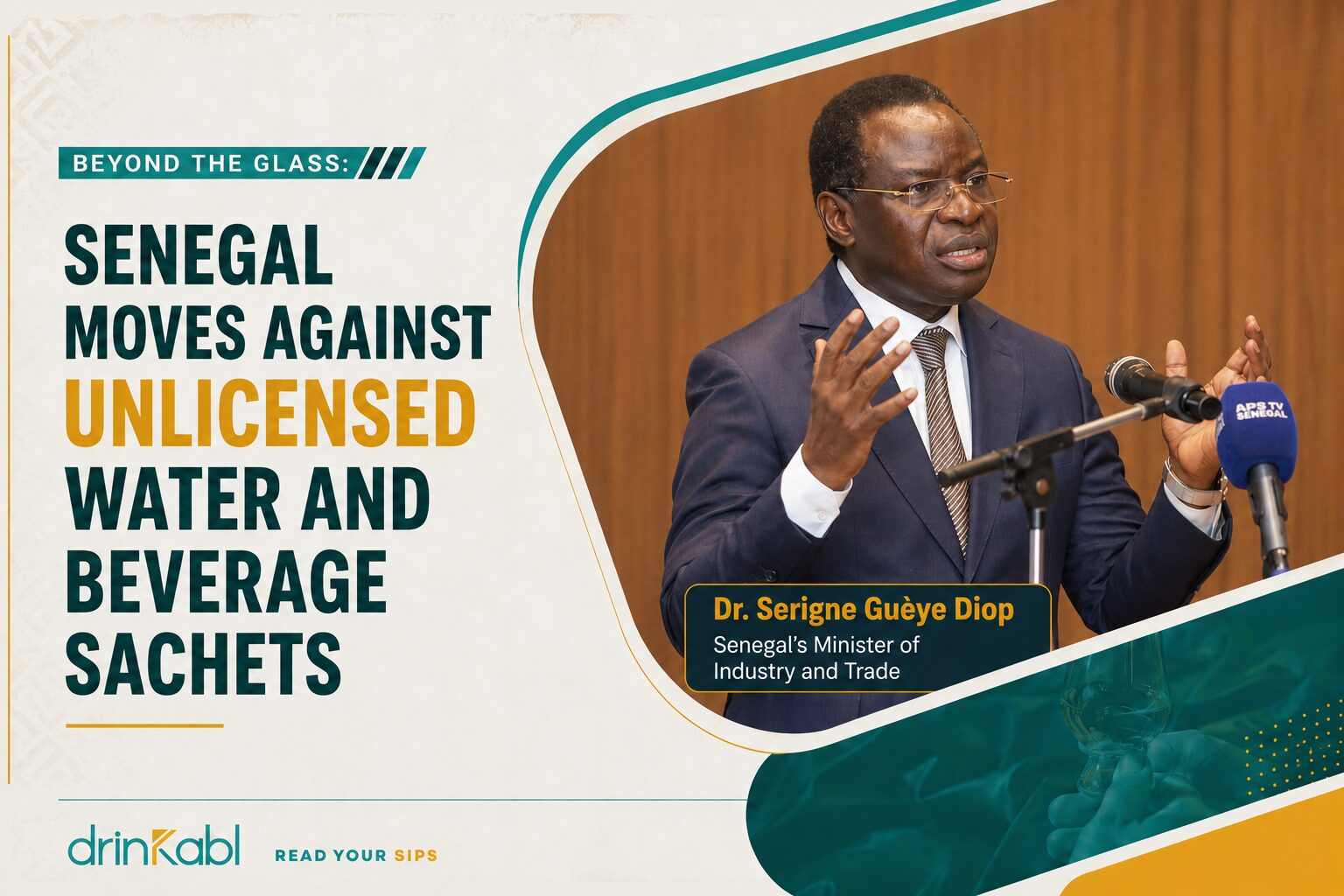

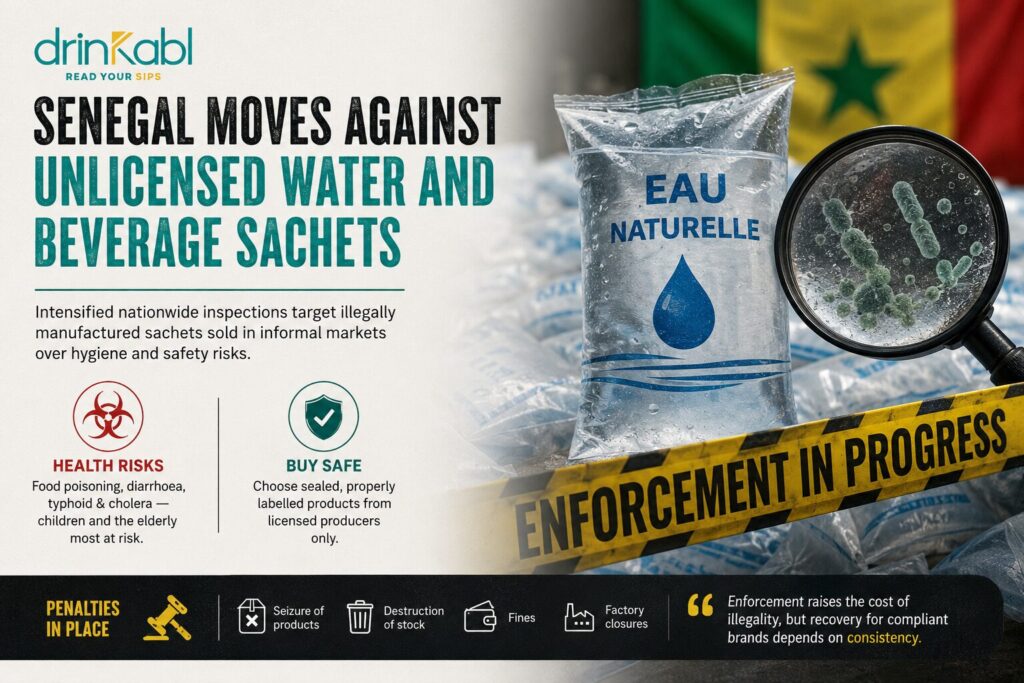
Senegal’s Ministry of Industry and Trade has ordered intensified nationwide inspections targeting illegally manufactured water and beverage sachets sold through informal retail networks. The ministry says some producers are bottling under unhygienic conditions, using untreated water with no traceability guarantees.
The health exposure is specific: food poisoning, acute diarrhoeal disease, and waterborne illness including typhoid and cholera, with children and the elderly most at risk. The ministry’s statement urges consumers to buy only from licensed facilities selling sealed, properly labelled products.
Licensed producers absorb the commercial cost of this enforcement gap. At 50 CFA francs a sachet, the category runs on volume and trust, and every clandestine operator selling untraceable water under a legitimate-looking sachet erodes both for compliant brands. Penalties on the table include seizure, destruction of stock, fines, and forced factory closures, moves that raise the cost of operating outside the licensing system but do little to help licensed producers recover market share already lost to street-level informal sellers.
This is not Senegal’s first attempt to formalise the sachet trade. A 2020 ban on single-use sachets collapsed under street-vendor pushback and pandemic-era economic pressure, and enforcement has been inconsistent since. Nigeria’s parallel struggle with sachet alcohol, where a ban has been suspended, resumed, and halted again since December, shows how easily this category slides back into informal channels once inspection pressure eases.
Senegal’s own regulators have run this play before against unlicensed alcohol, with mixed follow-through. Whether this enforcement round holds past the current heat season, when sachet demand peaks, is the more useful question than the announcement itself.
READ MORE
Africa’s Drinks Industry Has a Sober Problem, & a Bigger Opportunity
A Viral Lagos Wedding Post Puts Nigeria’s Counterfeit Alcohol Crisis Back in Public View
What Decades of Research Now Tell Us About Drinking Water First