
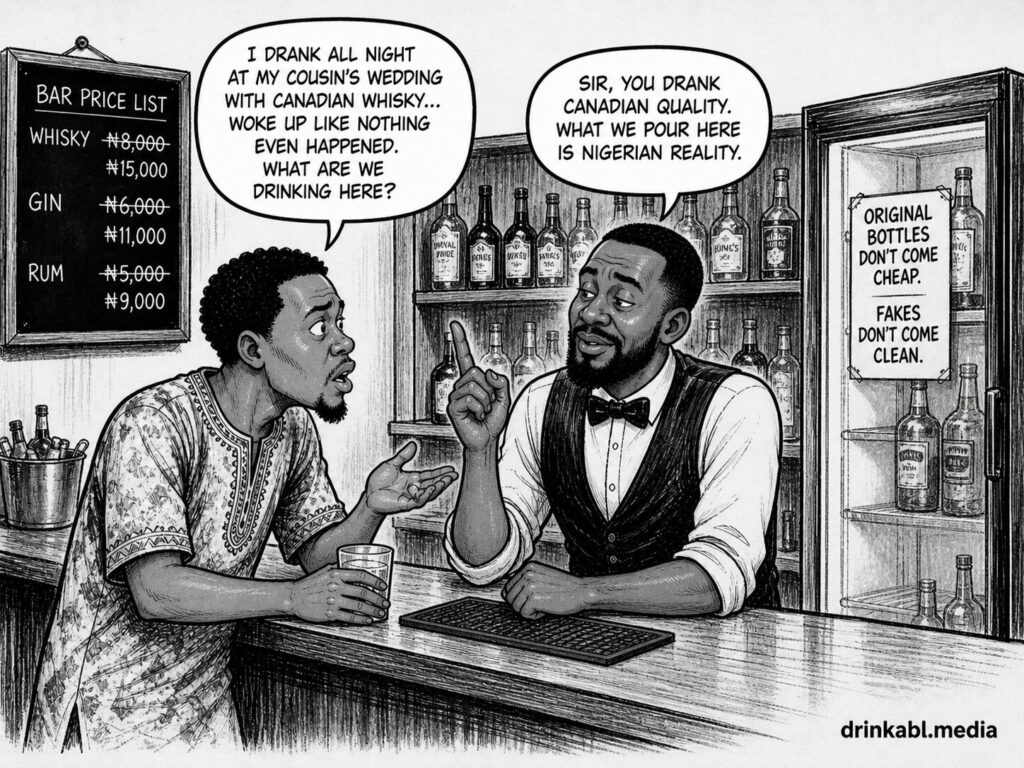
A single post on X this week reopened a conversation that Nigeria’s beverage industry has been trying to force into public consciousness for years. The account @TheRealTemz described attending a wedding in Lagos where the alcohol had been sourced from Canada. After drinking through the night, the author woke up without a headache, without nausea, without the day-long fatigue that Lagos drinkers have quietly come to treat as normal. The question he put into circulation was blunt: what exactly are Nigerians drinking?
The replies arrived fast and accumulated into something more substantive than social media commiseration. Users described identical experiments conducted at weddings in Ghana, where imported UK spirits produced the same clean recovery. Others documented personal decisions to stop drinking entirely after repeated experiences of being intoxicated by the after-effects rather than the alcohol itself. The thread drew thousands of impressions and, more significantly, surfaced a consumer recognition that trade workshops and regulatory enforcement data have consistently struggled to generate.
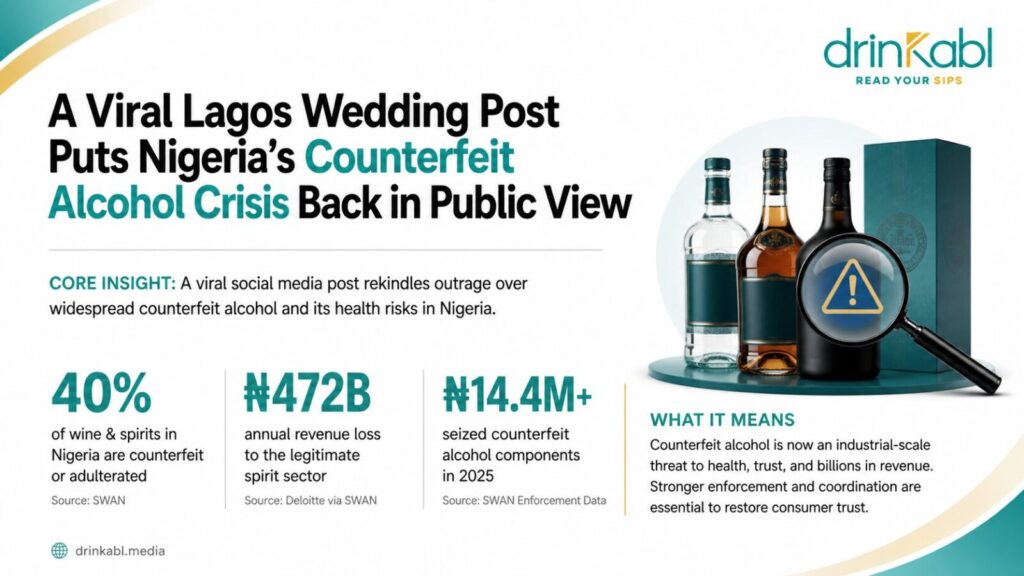
The industry context behind that recognition is well documented. The Spirits and Wines Association of Nigeria, SWAN, estimates that roughly four in ten bottles of wine and spirits circulating in the Nigerian market are counterfeit or adulterated. Deloitte research cited by the association puts the annual revenue loss to the legitimate sector at approximately 472 billion naira. Those figures come from enforcement records and supply chain analysis built up over years of documented industry activity.
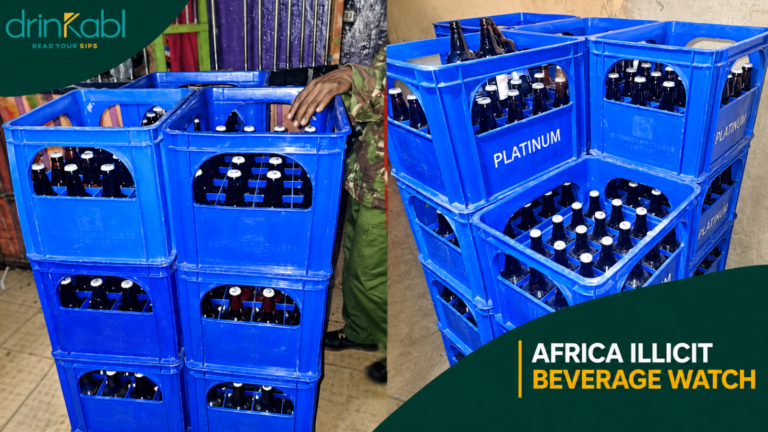
What the SWAN workshop held in Lagos in April 2026 made clear is that the manufacturing capacity behind counterfeit supply has changed structurally. David Francis of the Alliance Against Counterfeit Spirits identified the decisive shift: before the COVID-19 pandemic, illicit producers were constrained by access to genuine packaging. That ceiling is gone. Chinese manufacturers are now exporting complete production infrastructure into West African markets, including glass moulds, branded labels, Cognac-style bottle caps, and export-ready cartons. A single enforcement operation in Shandong province recovered approximately 12,000 fake bottles alongside production moulds. Separate raids netted nearly 50,000 Cognac caps and 70,000 Cognac bottles prepared for export. Across West Africa between 2023 and 2025, enforcement teams intercepted close to one million of these components, with a combined declared value exceeding $6.7 million.
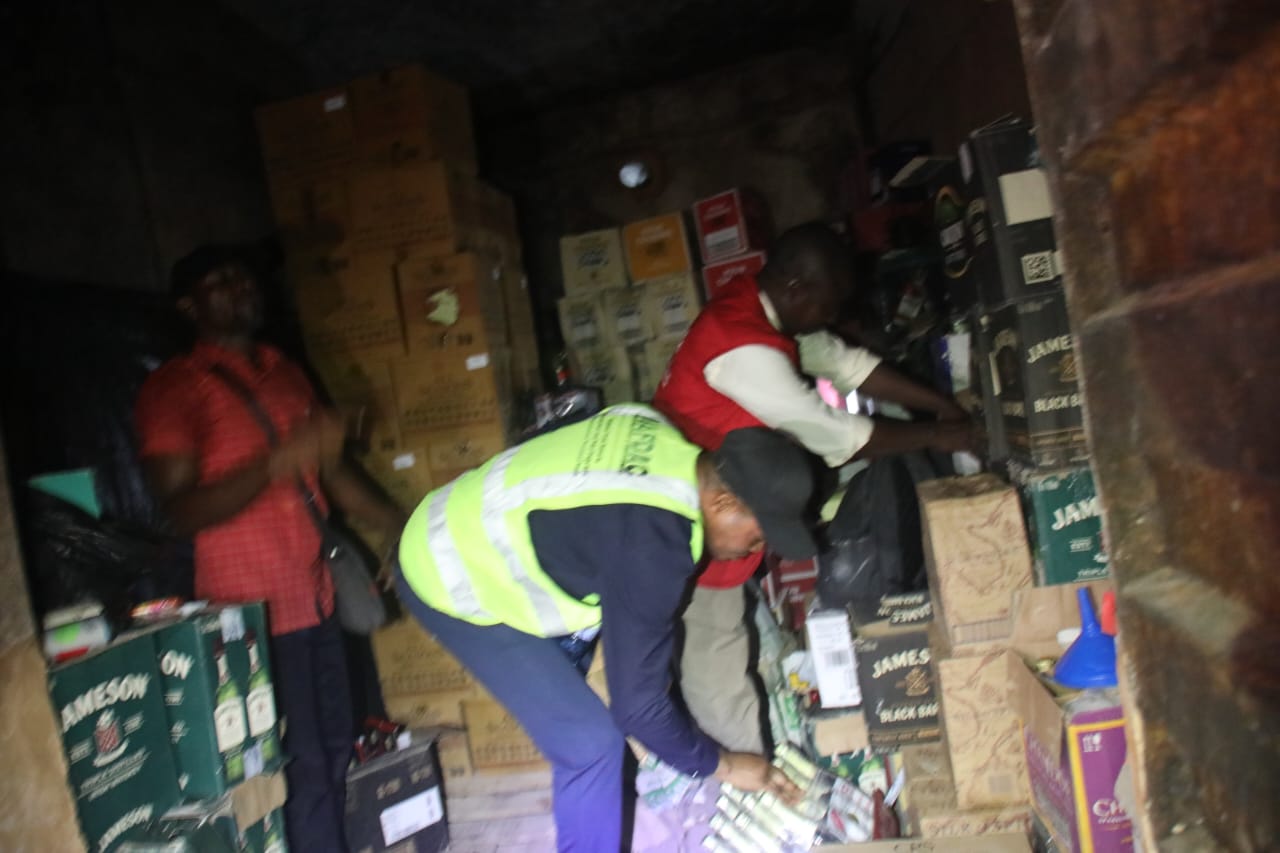
In Nigeria specifically, the scale of enforcement activity has expanded sharply. Premises raided climbed from 36 in 2023 to 105 in 2025, with declared seizure values rising from $317,000 to over $14.4 million across that period. SWAN member companies including Bacardi, Diageo, Guinness Nigeria, Moet Hennessy, and Pernod Ricard Nigeria have individually deployed recovery teams to hospitality venues to collect and destroy their own empty containers before counterfeit operators can acquire and refill them. That a global industry resorts to physically crushing its own packaging is a precise measure of how embedded the supply chain problem has become, and of the limits of brand-level intervention against an operation running at industrial throughput.
The consumer health dimension is not hypothetical. The symptoms that Lagos drinkers have normalised, headaches, nausea, appetite loss the morning after, are not standard features of alcohol consumption. They are, in many documented cases, markers of unprocessed compounds in rectified industrial ethanol, or in the worst cases, methanol-based mixtures that carry both acute and cumulative health risk. The Brazil case from late 2025, where methanol-tainted counterfeit alcohol was linked to a cluster of consumer deaths and legitimate spirits sales dropped sharply in the weeks that followed, illustrates how rapidly a single documented poisoning event can destabilise an entire category regardless of which producers were responsible.
Nigeria has not recorded a nationally attributed event of that scale, but this week’s X thread made visible something the industry has known and struggled to communicate: a large consumer population has normalised the physical cost of buying locally sourced alcohol. The distinction the thread drew between imported and domestically acquired bottles was not scientific methodology. It was a provenance test conducted across multiple social occasions, and the results were consistent enough to land. For the legitimate sector, the credibility problem now runs in both directions. Every bad morning attributed to alcohol in general erodes trust in the overall category, not only in the fake product responsible for it.
Tanzania’s recent approach offers one reference point. As Drinkabl.media reported, Dar es Salaam has moved to tighten enforcement against illicit products while simultaneously signalling to domestic formal manufacturers that the commercial environment will reward investment in legitimate production. Nigeria’s enforcement numbers suggest momentum is building on the seizure side. Whether that momentum translates into operational coordination between regulators, industry, and law enforcement at a pace that reaches consumers will determine whether the question posed by a wedding weekend post keeps circulating, or whether the industry is eventually able to answer it. The brewers who have separately raised alarms about the fiscal environment understand that counterfeit exposure and excise pressure together threaten the category’s commercial foundations. A consumer base that cannot trust what is in the bottle is a consumer base that, as this week showed, will eventually say so publicly.
Read More