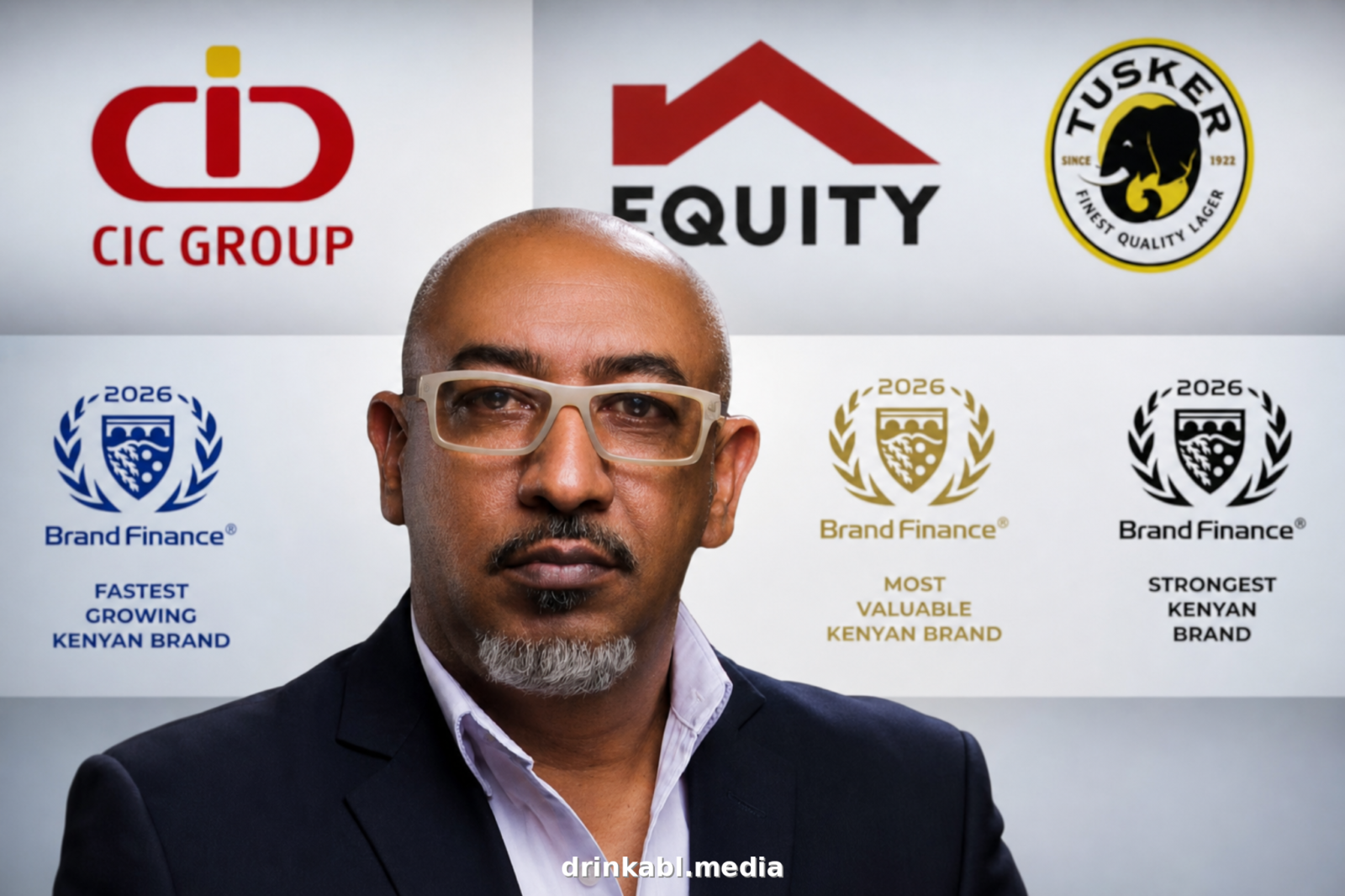

Tusker has achieved what no Kenyan bank, telco, or fintech has managed: the highest Brand Strength Index score in the market. Drinkabl.Media reports on Walter Serem’s analysis of the Brand Finance Kenya 25 2026 findings, and what the beverage sector’s quiet lead tells us about how consumer relationships are actually built in one of Africa’s most competitive markets.
When Walter Serem presented his findings from the Brand Finance Kenya 25 2026 report, he opened with three words: earned, not bought. The data behind those words is more specific than the phrase suggests, and nowhere more precisely demonstrated than at the very top of Kenya’s Brand Strength Index. Not a bank. Not a telco. A beer.
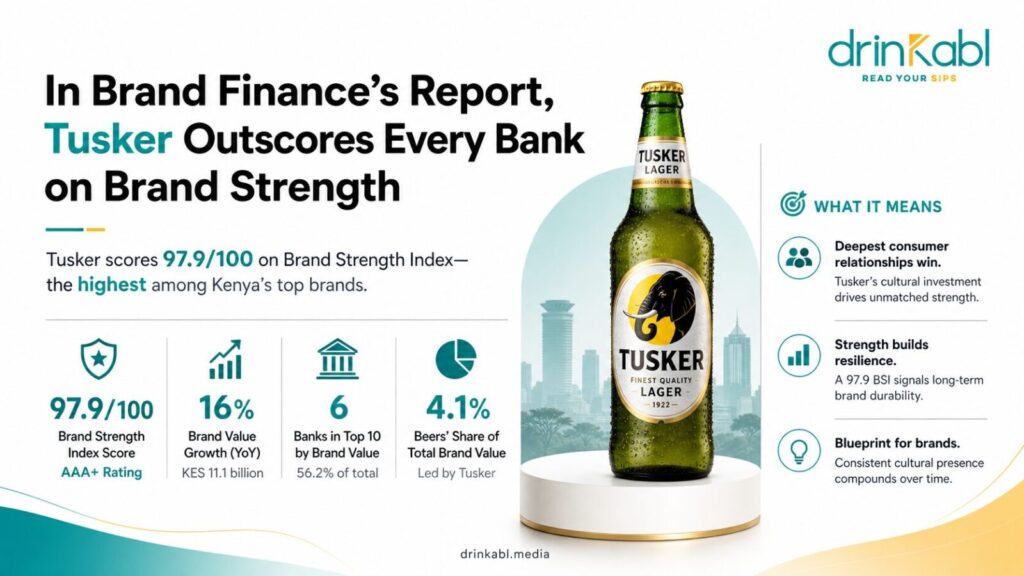
Tusker scored 97.9 out of 100 on the BSI, earning an AAA+ rating, the highest in the entire Kenya 25 ranking. Six of the top ten positions by monetary value belong to banking institutions. Tusker’s strength score sits above all of them. That result shifts the central question: not which sector dominates Kenya’s brand landscape by size, but what kind of brand-building produces the deepest consumer relationships, and what the beverage sector can learn from one of its own doing it better than anyone else in the country.
The difference between value and strength
Brand Finance report separates these two metrics deliberately, and the distinction carries real weight for anyone working in consumer goods. Brand value is a financial output, revenue, royalty rates, discount factors. Brand strength measures the quality of the relationship between a brand and its consumers: familiarity, preference, and reputation, scored against a standardised index.
Tusker ranks eighth by monetary value at KES 11.1 billion, up 16% year on year. That growth is significant. But the BSI score of 97.9 is the more telling number. It places Tusker above every bank, every telecoms operator, and every platform brand in Kenya on the measure that predicts long-term resilience. A brand at that level of strength is not dependent on any single campaign or economic cycle to hold its position.
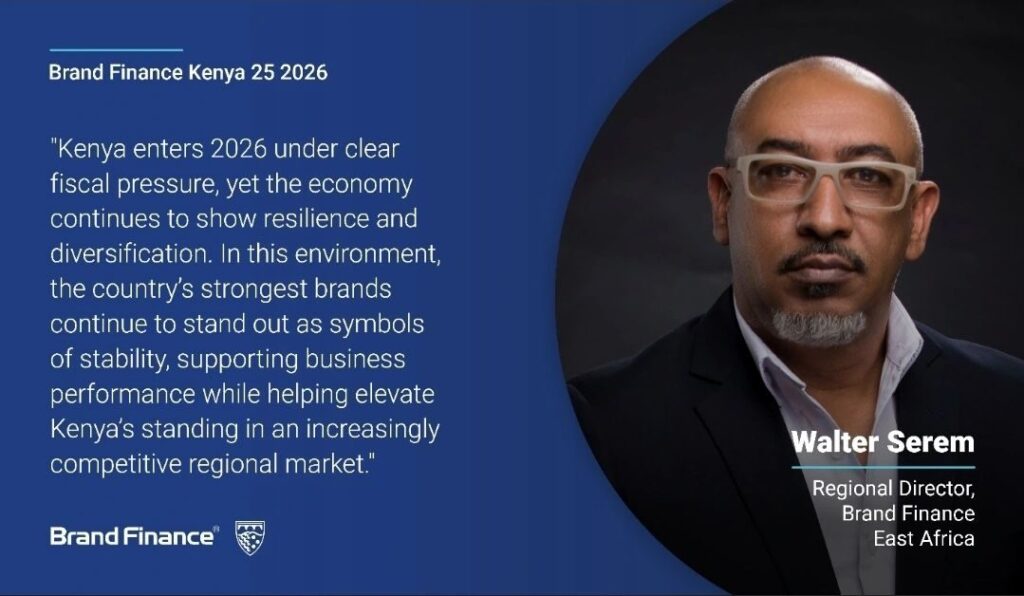
“Earned and not bought. Tusker maintained its position as the strongest Kenyan brand, growing its value by 16% to KES 11.1 billion and earning a Brand Strength Index score of 97.9 out of 100 and an AAA+ brand strength rating, reflecting its significant presence in Kenya’s cultural and commercial landscape.” , Walter Serem, Regional Manager, East Africa, Brand Finance
How Tusker built a strength index no brand could match
Serem identifies two mechanisms behind the performance. The first is the Tusker Nexters platform, a long-running initiative that backs emerging Kenyan musicians, visual artists, and tech entrepreneurs. This is not logo-placement sponsorship. It is a sustained investment in the next generation of cultural producers, designed to keep Tusker’s association with Kenyan creativity current rather than nostalgic. In a category where heritage can become a liability as demographics shift, Tusker has turned its age into a forward-facing asset.
The second is portfolio discipline. Tusker Lite and Tusker Cider have expanded commercial reach without fragmenting the core brand. Each extension addresses a distinct consumer need, lighter occasions, cider drinkers, without pulling the parent brand in conflicting directions. The result is a brand that carries credibility across age groups and geographies in Kenya: an outcome very few consumer brands sustain at scale over time.
“Brand strength is not a campaign outcome. It is the accumulated residue of consistent cultural presence, measured one consumer relationship at a time.” , Walter Serem
Banking’s dominance, and what it confirms
Six banking brands occupy the top ten of the Kenya 25 by monetary value, accounting for 56.2% of the ranking’s combined total. Equity Bank held first place for the third consecutive year, with brand value up 4% to KES 73.9 billion. Kenya Commercial Bank rose to second, on the back of a KES 55.9 billion profit after tax, the largest in Kenyan banking history. The sector’s concentration at the top reflects how completely financial services infrastructure has embedded itself into daily Kenyan life.
Serem draws a direct line between the strategies behind that dominance and the principles behind Tusker’s strength score. Equity Bank’s Wings to Fly scholarship and Equity Leaders Program are not peripheral marketing. They are the mechanism by which a bank has made itself matter to Kenyan families beyond the transaction. The logic is the same as Tusker Nexters: invest in the cultural and social aspirations of your consumer, and what results is a brand relationship no competitor can replicate through spend alone.
Beers account for 4.1% of the Kenya 25’s combined brand value, a modest share by monetary measure, and one Tusker carries largely on its own within the category. That concentration is both a benchmark and a pressure point: a single brand demonstrating what the category can reach when cultural investment is treated as a long-term commitment rather than an annual line item.
What does this mean for the beverage industry?
Brands built through sustained cultural investment compound over time, accumulating familiarity, preference, and reputation in ways that resist competitive disruption. Brands maintained through media spend alone plateau, and become vulnerable when that spend shifts.
Tusker’s 97.9 BSI is not the product of a single year’s activity. It is the result of consistent presence, community investment, product quality, and the discipline to grow without diluting what the brand stands for. For beverage producers across Kenya and East Africa, that record functions as a working blueprint. The brands that will define the next decade of this market are those building cultural depth now.
The Brand Finance data is unambiguous on the point Serem has spent his career making: the strongest brands in Kenya are not the ones with the largest budgets. They are the ones that were built, not bought.
You can read more about Brand Finance Kenya 25 here
Read more on Drinkabl.Media
- Tusker at the top: how heritage beverage brands sustain relevance across generations→
- Walter Serem on Africa’s fastest-growing consumer brand categories in 2026→
- How brand valuation works and why it matters for beverage producers in East Africa→
- CIC’s 28%: what the fastest-growing Kenyan brand signals about consumer spending→