
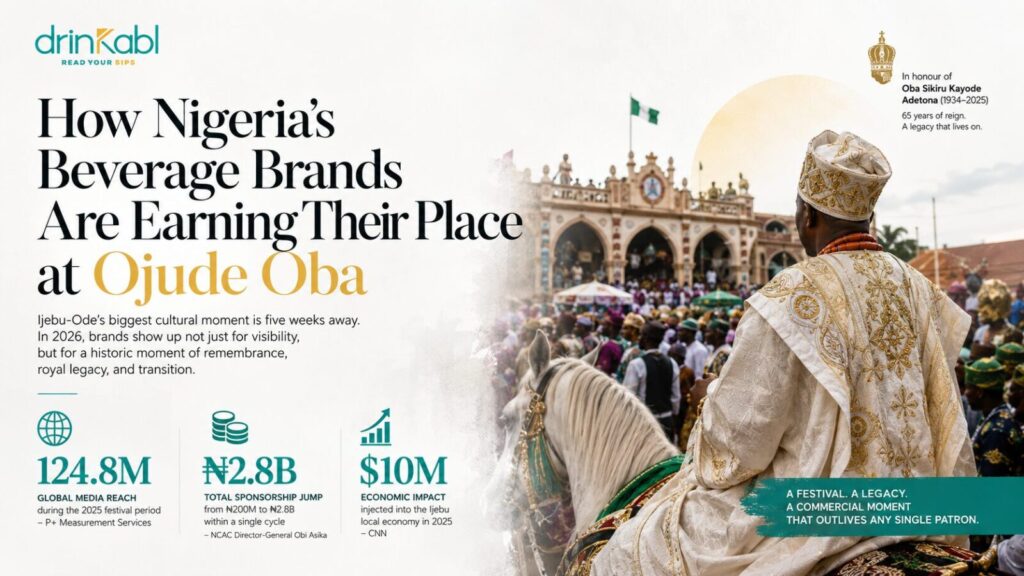
Ijebu-Ode’s biggest cultural moment of the year is five days away, and Nigeria’s drink brands have already lined up to prove they belong there. The 2026 Ojude Oba Festival carries a weight no previous edition has had to bear: it will be the first held since the death of Oba Sikiru Kayode Adetona, the Awujale of Ijebuland, who passed on July 13, 2025, at 91, ending a 65-year reign that shaped the festival’s global identity. The brands showing up this year are not simply buying visibility. They are buying into a historic moment of remembrance, royal legacy, and Ijebu’s transition into a new era.
The festival began as something far more modest. In the 19th century, during the reign of Awujale Ademuyewo Afidipotemole, early Muslim converts in Ijebu-Ode, led by Chief Balogun Kuku, established a ceremony of homage to the Awujale as thanks for the freedom to practise their faith. The gathering was first called Ita-Oba, meaning forecourt of the king. It was renamed Ojude Oba and grew into a pan-Yoruba, pan-religious spectacle held on the third day after Eid al-Kabir, drawing sons and daughters of Ijebu descent from across Nigeria and the diaspora to Ogun State. Regberegbe groups, age-grade associations parading before the palace in coordinated traditional dress, offer prayers and gifts to the king. War general families arrive on horseback in ceremonial robes, accompanied by drum salutes.
That is the ceremony. What surrounds it is now a full commercial ecosystem. P+ Measurement Services, a Lagos-based media intelligence firm, tracked a global media reach of 124,833,210 individuals across the 2025 festival period. Farooq Oreagba, MD/CEO of NG Clearing Limited and NCAC Honorary Cultural Ambassador, estimated total 2025 sponsorship at over ₦2 billion, with CNN reporting roughly $10 million injected into the Ijebu local economy. NCAC Director-General Obi Asika put the sponsorship jump in sharper relief at the Naija7Wonders conference: from ₦200 million to ₦2.8 billion within a single cycle.
That acceleration happened because a cancer survivor showed up on a horse. Oreagba’s 2024 appearance, green and lemon agbada, coral beads, designer sunglasses, cigar at the corner of his mouth, seated atop a decorated horse, went viral and rewired how brands read the festival. It was no longer a cultural obligation for Southwest-facing companies. It became a fashion moment with diaspora reach, social virality, and the kind of earned authenticity that media spend cannot replicate.
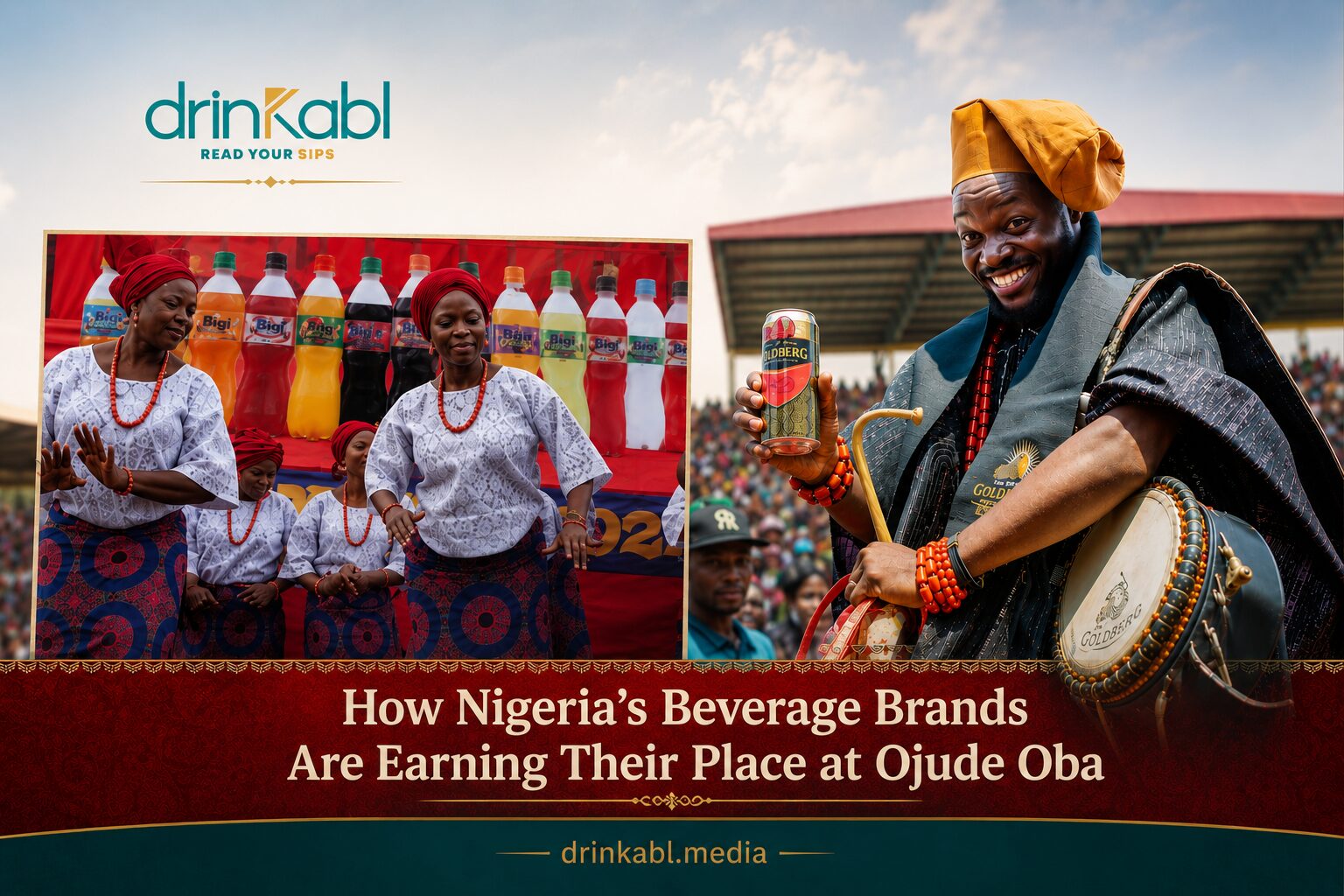
The beverage brands at Ojude Oba divide into two camps: those that have built cultural equity over years, and those chasing the moment. Goldberg, made by Nigerian Breweries, belongs firmly in the first group. Its cultural strategy across the Southwest predates the commercial boom by decades, spanning Osun Osogbo, Olojo, Udiroko and Ojude Oba, anchored in what it calls Omoluabi values: dignity, respect, and communal pride. At Ojude Oba 2025, it moved beyond event activations into individual endorsements, with Oreagba confirming Goldberg sponsored festival participant Doyin Alatishe directly. Nigerian Breweries has since reaffirmed a continued presence at the 2026 edition, committing to a third decade of partnership with the festival. Maltina, also from the NB Plc stable, activates alongside Goldberg with family-centred messaging and community reward programmes, fitting the festival’s homecoming atmosphere without competing for the heritage lane that Goldberg occupies.
Orijin, from Guinness Nigeria, arrived at Ojude Oba in 2025 as the official alcoholic beverage sponsor and has renewed for 2026, the first beverage brand to hold that slot in consecutive years. Its approach reaches beyond standard sponsorship. The brand’s 2025 platform, “My Roots, My Power,” was built around themes of ancestry and intergenerational pride; for 2026, it advances to “The Roots Run Deeper.” Its activations include heritage-themed hospitality lounges, art installations, and direct integration into the regberegbe processions. Rotimi Odusola, Corporate Relations and Legal Director at Guinness Nigeria, said at the 2026 World Press Conference: “Ojude Oba is a powerful expression of identity and pride. At Guinness Nigeria, we are intentional about showing up in spaces where culture is lived and experienced.”
Rite Foods, makers of Bigi, Fearless, and Sosa, has been at the festival consecutively since at least 2024, targeting a different crowd entirely. Where Orijin and Goldberg pursue prestige and heritage associations, Rite Foods goes wide: refreshment stations, street-level visibility, mass-crowd engagement, and community-rooted storytelling aimed at everyday festival-goers. It placed among the five most-mentioned brands at the 2025 festival, per the same P+ audit, alongside Globacom, Goldberg, Orijin, and FCMB. Globacom’s 2026 renewal marks 21 consecutive years of headline sponsorship, a tenure that predates the festival’s commercial boom by nearly two decades.
The 2026 edition, themed “Ojude Oba: Celebration of Culture Beyond Borders,” will carry tribute to the late Awujale throughout its programme. His 65-year custodianship gave the festival its organised structure and its national stature. The Awujale throne is currently vacant, with 95 candidates in contention for succession. The brands renewing into that moment cannot resolve the question of who comes next. What they can do, and what the committed ones have been doing, is demonstrate that the commercial infrastructure around Ojude Oba is durable enough to outlast any single patron. That the festival attracts this scale of renewal in the year of its most significant succession event says more about its permanence than any press conference commitment.
The Ijebu forecourt fills again this June.
READ MORE:
- These Are the 20 Nigerian Beverage Companies to Watch in 2026
- Alcoholic Beverages Coverage on Drinkabl.media
- Non-Alcoholic Beverages Coverage on Drinkabl.media