
The transatlantic spirits trade has operated under a cloud of tariff uncertainty for the better part of a decade. Retaliatory levies first imposed during the Section 232 steel and aluminium dispute pushed UK whisky out of competitive reach in the American market, straining distillers from Scotland to Ireland and suppressing new cross-border ventures that had been years in the making. Producers on both sides of the Atlantic had lobbied successive administrations without resolution, making the issue one of the most persistent sticking points in UK-US trade relations.
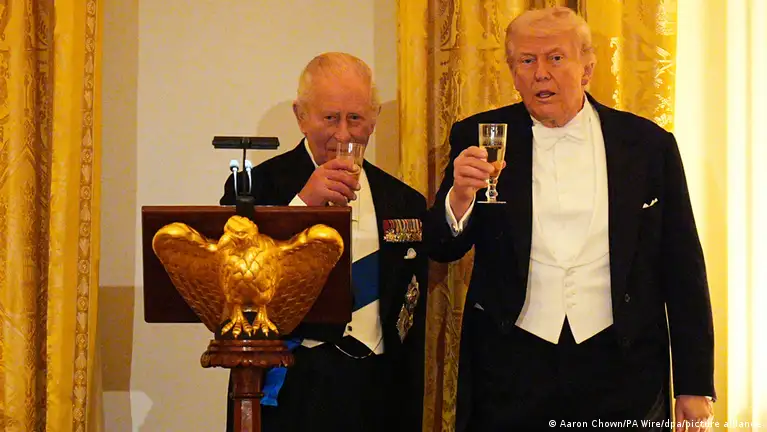
The catalyst for change came not from a trade negotiation or formal diplomatic process, but from a state visit. King Charles III and Queen Camilla travelled to Washington in late April 2026, making it the first state visit by a British monarch to the United States in more than two decades. The visit placed the bilateral relationship at the highest possible level of attention, creating an opening that trade bodies and industry groups had been unable to manufacture through conventional channels.
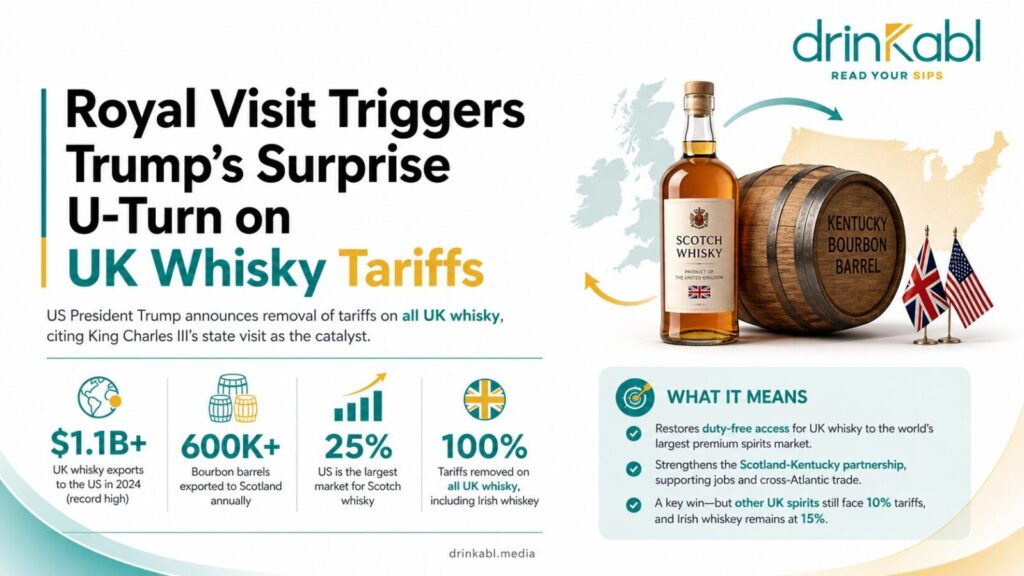
On 30 April 2026, US President Donald Trump announced via Truth Social that he would lift tariffs on whisky from the United Kingdom. Framing it as a gesture tied to the royal visit, Trump said he was removing restrictions on Scotland’s ability to work with Kentucky on whisky and barrel trade, describing both as “two very important industries within Scotland and Kentucky.” He added that the King and Queen had “got me to do something that nobody else was able to do.” The UK government confirmed to the BBC that the removal applies to all UK whisky tariffs, including Irish whiskey.
“This is exactly the news our industry needed. The UK produces great whisky from the Scottish Highlands to the English countryside, and there is no reason any of it should carry a tariff. As an independent brand, we simply couldn’t have launched without the reversal of the original tariffs, so we know better than most what a difference this kind of decision makes. We hope it encourages more innovative producers on both sides of the Atlantic to enter the market.”
Martha Dalton, Co-Founder, Kentucky Bourbon Never Say Die and the Bourbon Alliance
The spirits trade between the UK and US has long been structured around complementarity rather than competition. Scottish single malts and Kentucky bourbon occupy distinct shelf positions, while cooperage links the two industries through the exchange of used oak barrels, with bourbon casks feeding the maturation of Scotch whisky at scale. That commercial interdependence made the original retaliatory tariffs particularly damaging to producers who relied on both markets and on the movement of barrels across the Atlantic. The Scotch Whisky Association had for years placed tariff resolution at the top of its trade policy agenda, and the broader UK spirits sector had absorbed significant export volume losses since the levies were applied.
For Scottish distillers, the removal of these tariffs restores access to the world’s largest premium spirits market without a price penalty. For Kentucky bourbon producers who supply used casks to Scotch distilleries, the easing of trade friction supports a supply chain that underpins both industries. Independent brands that had deferred US launches, or structured their businesses around the tariff environment, will find the competitive landscape materially changed. The BBC’s reporting confirmed the UK government’s position that the lifting covers all UK whisky, extending the benefit beyond Scotland to English and Welsh producers as well.
The question now is scope. Martha Dalton, speaking on behalf of the Bourbon Alliance, warned that the announcement should not be treated as a complete resolution. Other UK spirits categories still carry a 10% tariff into the US market, while Irish whiskey from the Republic of Ireland continues to face a 15% rate. “What businesses need is stability, the ability to plan, invest and grow with confidence,” Dalton said in a statement. “Today’s announcement is a powerful start, and we hope it marks the beginning of a new era for the transatlantic spirits trade.”
The structural gaps that remain will shape how far this moment translates into durable recovery. Producers in gin, rum, and other UK spirit categories have no immediate relief, and Irish distillers operating out of the Republic find themselves in a different position to their Northern Irish counterparts whose products would fall under the UK exemption. Industry bodies on both sides are expected to press for broader coverage. Whether the political goodwill generated by the royal visit extends to a more comprehensive trade framework, or remains limited to whisky, will determine the full commercial impact of Thursday’s announcement. Regulatory bodies and trade groups are likely to use the moment to push for binding commitments rather than relying on further diplomatic interventions.
Read More