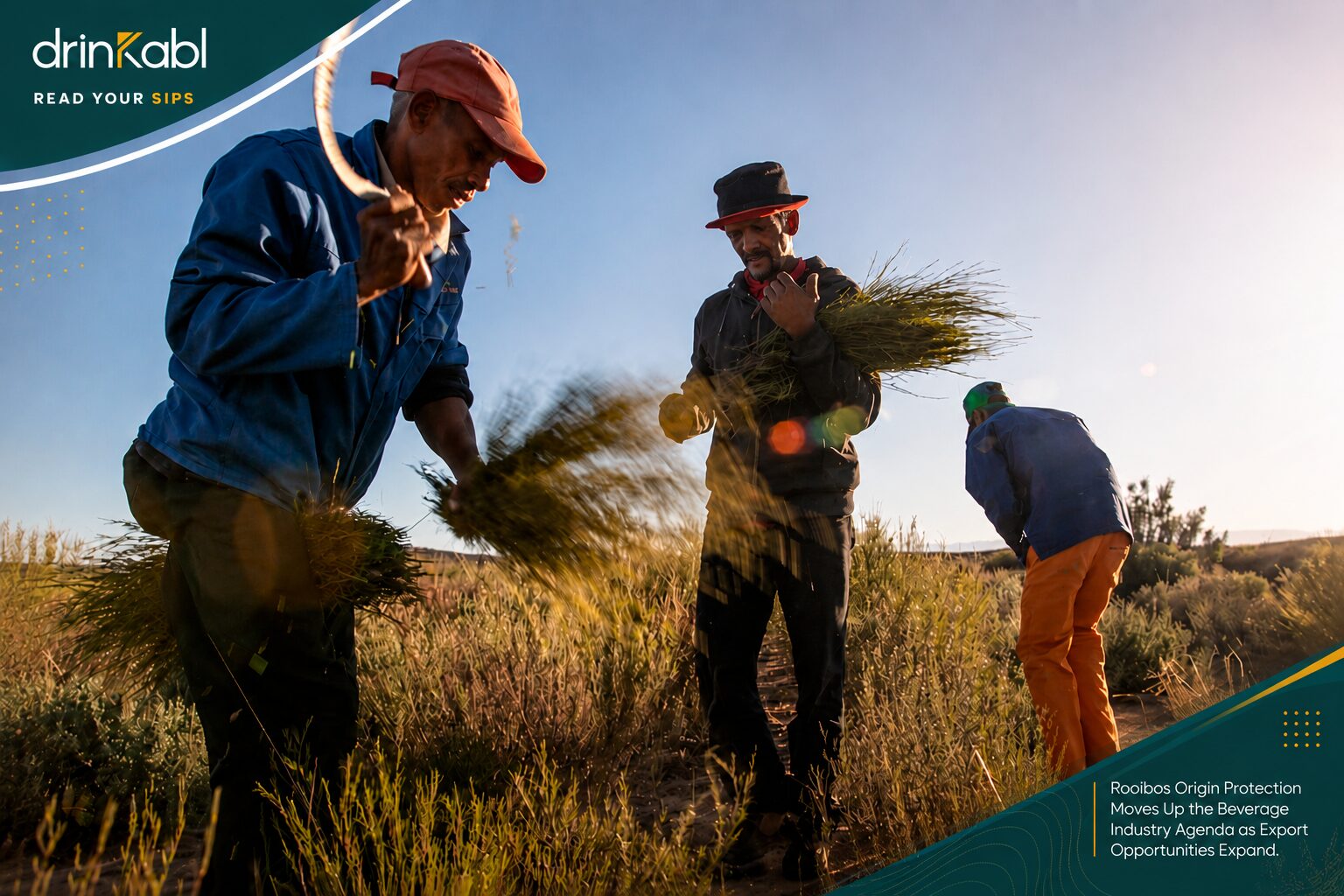

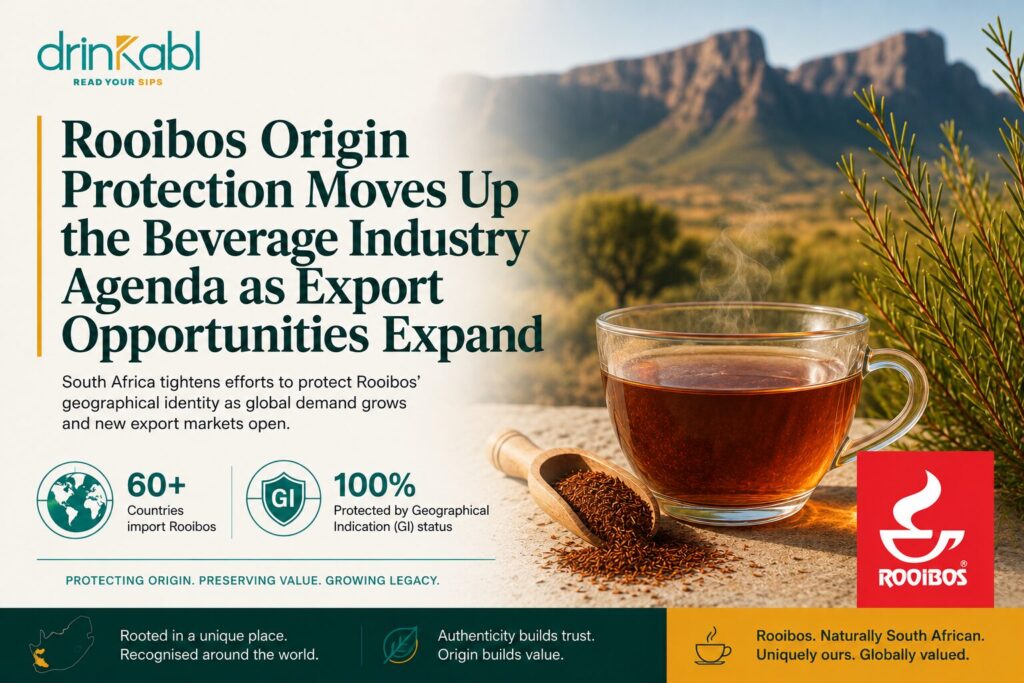
South Africa’s Rooibos industry is tightening efforts to protect the beverage’s geographical identity as new export opportunities, particularly in China, promise to increase global demand for the country’s signature herbal infusion.
The renewed focus follows recent trade developments that have improved market access for South African agricultural exports, including the removal of tariffs on several products entering China. For Rooibos producers, the opportunity extends beyond higher export volumes. It also raises the commercial importance of protecting the name “Rooibos” as the category gains wider international recognition.
Unlike most herbal teas, Rooibos benefits from Geographical Indication (GI) protection and is recognised as a Protected Designation of Origin (PDO) in the European Union. The designation reserves the name exclusively for products made from Aspalathus linearis cultivated within South Africa’s designated production region, centred around the Cederberg and parts of the Western and Northern Cape.
That protection places Rooibos alongside premium origin-protected products such as Champagne and Parmigiano Reggiano, where location forms part of the product’s commercial value rather than simply its description.
For beverage manufacturers, the issue extends beyond intellectual property. Rooibos increasingly appears in ready-to-drink teas, functional beverages, wellness drinks and botanical formulations sold across international markets. As more companies incorporate the ingredient into premium beverage portfolios, maintaining clear origin identification becomes increasingly important for both brand credibility and consumer trust.
Dawie de Villiers, Director of the South African Rooibos Council, said preserving the authenticity of Rooibos has become more important as global awareness continues to grow.
“Consumers want confidence that when they buy Rooibos, they’re getting the genuine product from its natural home.”
The commercial implications also reach deep into the supply chain. The Rooibos industry supports thousands of jobs across South Africa’s Western and Northern Cape provinces while exporting to more than 60 countries. Protecting the designation helps ensure the economic value created by growing international demand remains with the communities responsible for cultivating the indigenous crop.
The challenge now lies beyond legal recognition. As Rooibos moves through increasingly complex global supply chains, often as an ingredient in blended beverages, food products and cosmetics, maintaining traceability will become just as important as securing trademark and geographical protection.
Rather than pursuing rapid production growth, the South African Rooibos Council continues to advocate measured expansion that preserves quality, sustainability and the unique environmental conditions under which authentic Rooibos can be cultivated.
For the global beverage industry, provenance is becoming a commercial asset rather than a marketing claim. As consumers place greater value on authenticity and traceability, origin protection is evolving into a competitive advantage that may prove as valuable as the product itself.
READ MORE
Africa’s Drinks Industry Has a Sober Problem, & a Bigger Opportunity
A Viral Lagos Wedding Post Puts Nigeria’s Counterfeit Alcohol Crisis Back in Public View
What Decades of Research Now Tell Us About Drinking Water First