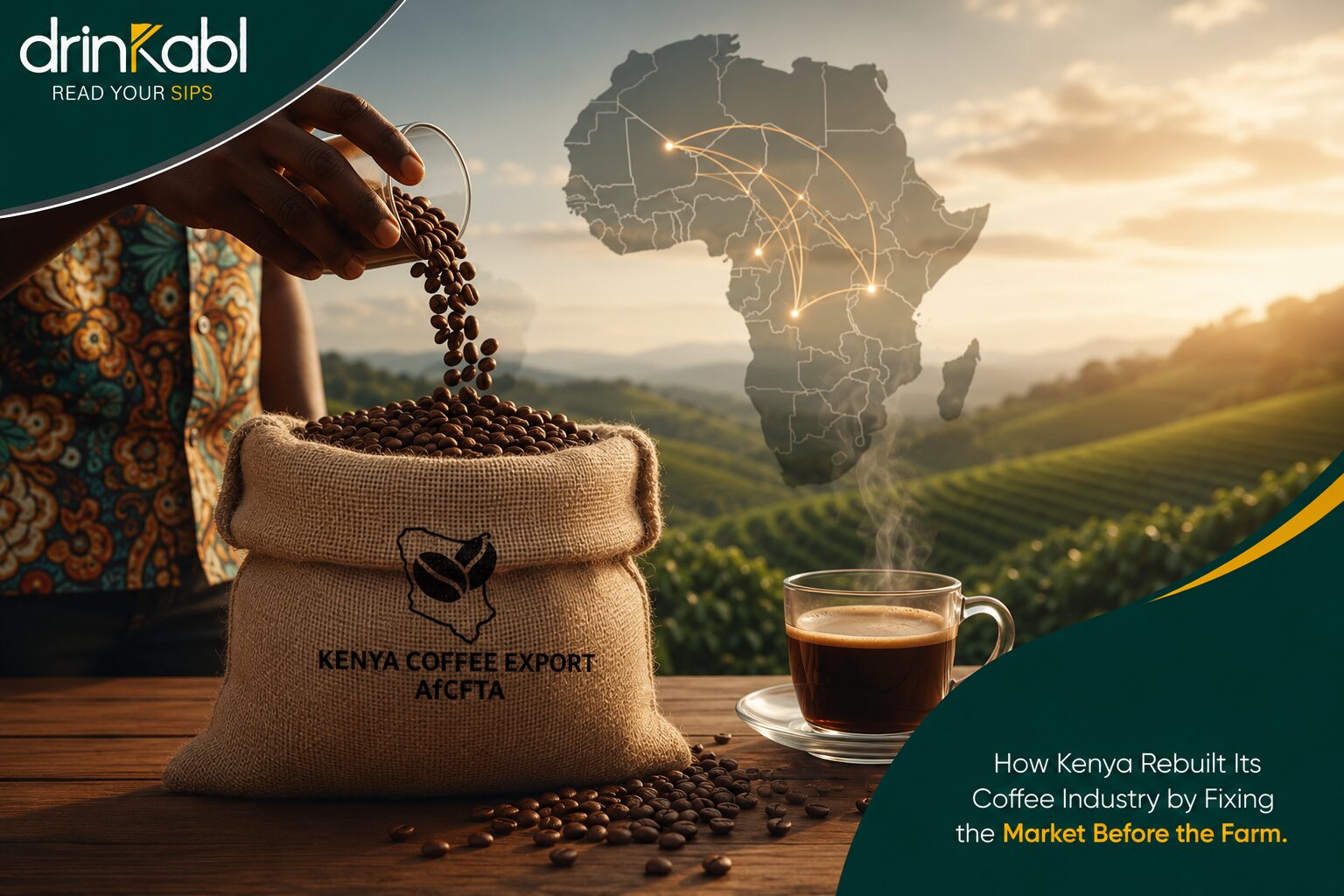

Kenya is on course to record its strongest coffee season in nearly two decades, but the recovery has less to do with expanding production than with rebuilding the institutions that govern the business of coffee.
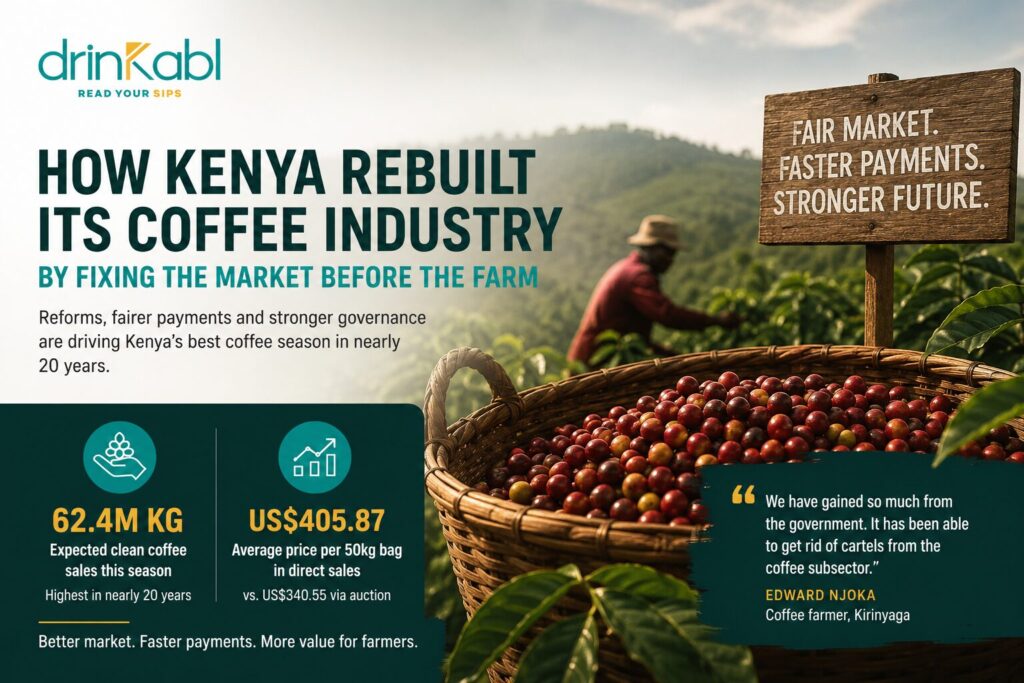
The government expects clean coffee sales to reach about 62.4 million kilogrammes this season, crossing the 60 million kilogramme mark for the first time in nearly 20 years. Higher international prices have helped, but farmers, exporters and policymakers point to another driver: reforms that have reshaped how coffee is traded, regulated and paid for.
For years, the industry struggled with ageing trees, rising costs, delayed payments and a marketing system that left many growers questioning whether the crop was worth cultivating. Some abandoned coffee altogether.
Edward Njoka did the opposite. While many farmers reduced acreage, the Kirinyaga grower expanded his farm from one acre to ten, harvesting about 46,000 kilogrammes of cherries last season from eight productive acres. “We have gained so much from the government. It has been able to get rid of cartels from the coffee subsector,” Njoka told The Star.
Part of that shift traces to a specific financial mechanism. Under the Coffee Cherry Advance Revolving Fund, government raised the guaranteed advance paid to farmers on delivery from KSh20 to KSh80 per kilogramme of cherry, funded through a kitty that reached KSh6.7 billion. The advance is not a loan; it carries no interest, and farmers receive it in two tranches, roughly KSh40 on delivery to the factory and the balance once the coffee is milled and graded, with any difference against the eventual sale price returned as a bonus. Officials managing the fund have stressed the design was meant to stop cooperatives and smallholders from turning to predatory lenders while they waited on harvest proceeds.
Kirinyaga illustrates the scale of the turnaround. Farmers there earned KSh7.4 billion from the last harvest, the highest payout on record for the county, with payments ranging between KSh104 and KSh157.40 per kilogramme of cherry.
The larger shift has taken place beyond the farm. The Coffee Act 2026 and the Coffee General Regulations, 2019 have tightened governance across the value chain, streamlining licensing, strengthening cooperative oversight, improving traceability and reinforcing compliance standards for exporters. Together with reforms initiated after Executive Order No. 2 of 2023 placed the coffee subsector under the Deputy President’s office, the measures aim to restore confidence in the market. Direct Sales Settlement provisions built into this framework are also intended to speed up payment turnaround for farmers selling outside the auction system.
One commercial change stands out. Direct coffee sales are becoming more attractive: Kenya sold about 6.07 million kilogrammes this way, valued at approximately US$49.2 million, with a 50-kilogramme bag averaging US$405.87 against roughly US$340.55 through the traditional auction. That premium gives producers and exporters stronger incentive to build long-term relationships with specialty buyers rather than relying solely on the auction floor.
For beverage businesses across Africa, Kenya’s experience offers a broader lesson: reviving an agricultural value chain is not simply about increasing production. It requires improving governance, shortening payment cycles, strengthening market transparency and ensuring producers retain a larger share of value. That lesson extends beyond coffee to cocoa, sugar, tea and other beverage-related crops across the continent.
The recovery is still vulnerable, and not only to cyclical arabica prices and climate risk. The European Union takes in roughly 55 to 60 percent of Kenya’s coffee exports, and under the EU Deforestation Regulation, exporters, including small enterprises, must eventually prove their coffee is deforestation-free, with precise farm-level geolocation data. Compliance deadlines have already been pushed back once, to December 2026 for large operators and June 2027 for small and micro enterprises, and government-led mapping of coffee farms remains incomplete. Meeting that requirement will test whether Kenya’s institutional gains can hold up against its next major external constraint.
Read More