

This year’s International Beer Day came and went with the usual pints, promotions and pub gatherings. But for Africa’s brewing industry, the occasion still offers something more valuable: a chance to reflect on one of the continent’s most resilient consumer sectors and the opportunities that could define its next decade.
Beer remains Africa’s largest commercial alcohol category by volume and one of the continent’s most important manufacturing industries. The brewing value chain spans sorghum and barley farmers, glass manufacturers, distributors, retailers and hospitality businesses, supporting millions of livelihoods.
It also contributes significantly to government revenues through excise duties and corporate taxes. Yet despite its economic importance, the industry is entering a period of profound change.
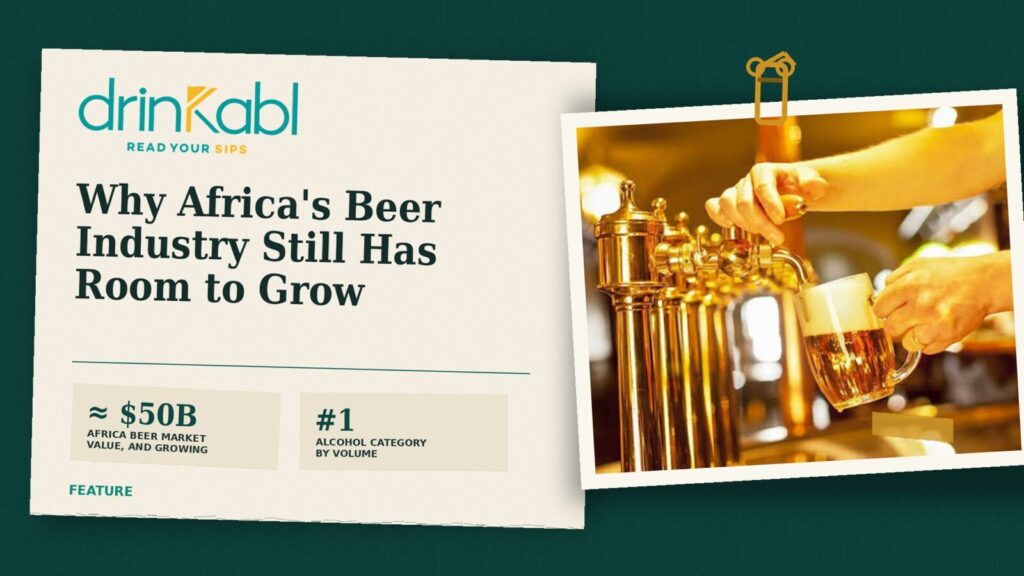
Unlike mature beer markets in Europe and North America, where consumption has plateaued or declined, many African markets continue to offer long-term growth potential, with the continent’s beer sector valued near $50 billion and still climbing.
A young population, rapid urbanisation and rising disposable incomes continue to create new consumer segments, even as economic pressures reshape purchasing behaviour. That opportunity, however, is becoming increasingly complex.
Growth Is No Longer Just About Selling More Beer
For decades, expansion meant increasing production capacity and extending distribution networks. Today, growth depends on understanding consumers whose preferences are changing faster than ever.
Health-conscious drinking habits, premiumisation, flavoured beverages, low- and no-alcohol products, ready-to-drink alternatives and digital commerce are steadily reshaping how consumers engage with beer.
The next generation of drinkers is asking different questions. They care about authenticity, sustainability, convenience and brand identity as much as price. Brewers that continue relying solely on traditional lager portfolios risk losing relevance to more agile competitors willing to innovate.
Africa’s Competitive Advantage Starts at Home
One of Africa’s greatest strengths lies in its agricultural base. Many breweries have increasingly incorporated locally sourced sorghum, cassava and other crops into production, reducing dependence on imported barley while strengthening relationships with domestic farmers.
Local sourcing has evolved beyond cost reduction. It is becoming an important sustainability strategy, helping breweries manage foreign exchange volatility while supporting rural economies.
Companies that successfully integrate local agriculture into their supply chains are likely to become more resilient in an increasingly uncertain global trading environment.
Regulation Remains the Industry’s Biggest Wild Card
If there is one issue capable of reshaping the industry’s trajectory, it is regulation. Across Africa, brewers continue to navigate changing excise tax regimes, advertising restrictions, environmental requirements and public health policies.
Governments face the difficult task of balancing public health objectives with the industry’s economic contribution.
Predictable regulation encourages investment. Frequent policy shifts often delay expansion plans, discourage innovation and increase costs that are eventually passed to consumers.
The conversation should therefore move beyond taxation alone, focusing on building competitive beverage industries capable of generating jobs, exports and manufacturing growth.
Innovation Will Separate Tomorrow’s Winners
Innovation is no longer confined to product development. Brewers are investing in digital route-to-market systems, artificial intelligence, predictive demand forecasting, returnable packaging, water stewardship and more efficient production technologies.
The companies that succeed over the next decade are unlikely to be those producing the most beer. They will be those making smarter decisions across manufacturing, logistics, marketing and consumer engagement.
In many respects, Africa’s brewing industry is becoming a technology business as much as a beverage business.
Why International Beer Day Still Matters
International Beer Day is more than a celebration of one of humanity’s oldest beverages. It is also a reminder that beer remains an important industrial product, connecting agriculture, manufacturing, logistics, retail and hospitality across the continent.
As Africa positions itself for greater regional trade under the African Continental Free Trade Area (AfCFTA), brewers have an opportunity to build stronger regional brands, deepen local supply chains and compete beyond their domestic markets.
The industry’s future will not be determined solely by who brews the best beer. It will belong to those who build the strongest brands, invest in resilient supply chains, embrace innovation and understand the rapidly evolving African consumer.
As this year’s International Beer Day fades into the calendar, the question is no longer whether Africa’s brewing industry can grow. It is whether the industry is prepared to grow differently.