
Africa Illicit Beverage Watch scans the continent weekly to track illicit beverage activities, protecting operators and brand distributors against counterfeit risks and regulatory shifts. For comments, corrections, or interviews, reach out to hello@drinkabl.media
Nigeria Removes 100,000 Cartons of Banned Alcohol as Kenya Steps Up Enforcement
Nigeria’s NAFDAC reports a major nationwide supply-chain intervention across Lagos and Ogun, while Kenyan authorities destroy seized counterfeit goods, report three months of illicit-alcohol enforcement results and arrest two people with 105 litres of illicit brew in Nairobi.
Between 16 and 22 November, enforcement developments in Nigeria and Kenya highlighted the continuing challenge of controlling prohibited alcoholic beverages, counterfeit products and illicit local brews. The most significant Nigerian intervention involved the removal of more than 100,000 cartons of banned alcoholic beverages from manufacturers, wholesalers and retailers across Lagos and Ogun states.
In Kenya, the Anti-Counterfeit Authority (ACA) conducted a destruction exercise involving counterfeit goods seized in enforcement operations, while authorities in Kirinyaga disclosed the results of a three-month crackdown. A separate police operation in Nairobi also resulted in two arrests and the recovery of 105 litres of illicit alcohol.
The developments point to enforcement activity at different stages of the supply chain, from production and wholesale distribution to retail circulation and the final destruction of seized goods.
Nigeria Removes More Than 100,000 Cartons of Banned Alcohol
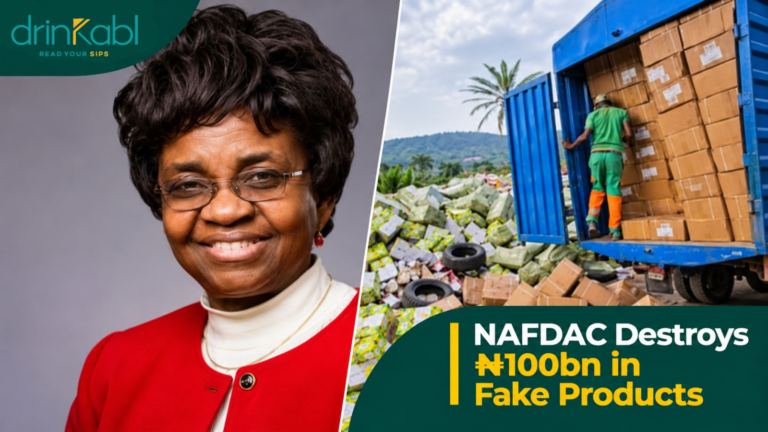
Nigeria’s National Agency for Food and Drug Administration and Control (NAFDAC) disclosed on 20 November that its enforcement teams had removed more than 100,000 cartons of banned alcoholic beverages from manufacturers, wholesalers and retailers across Lagos and Ogun states.
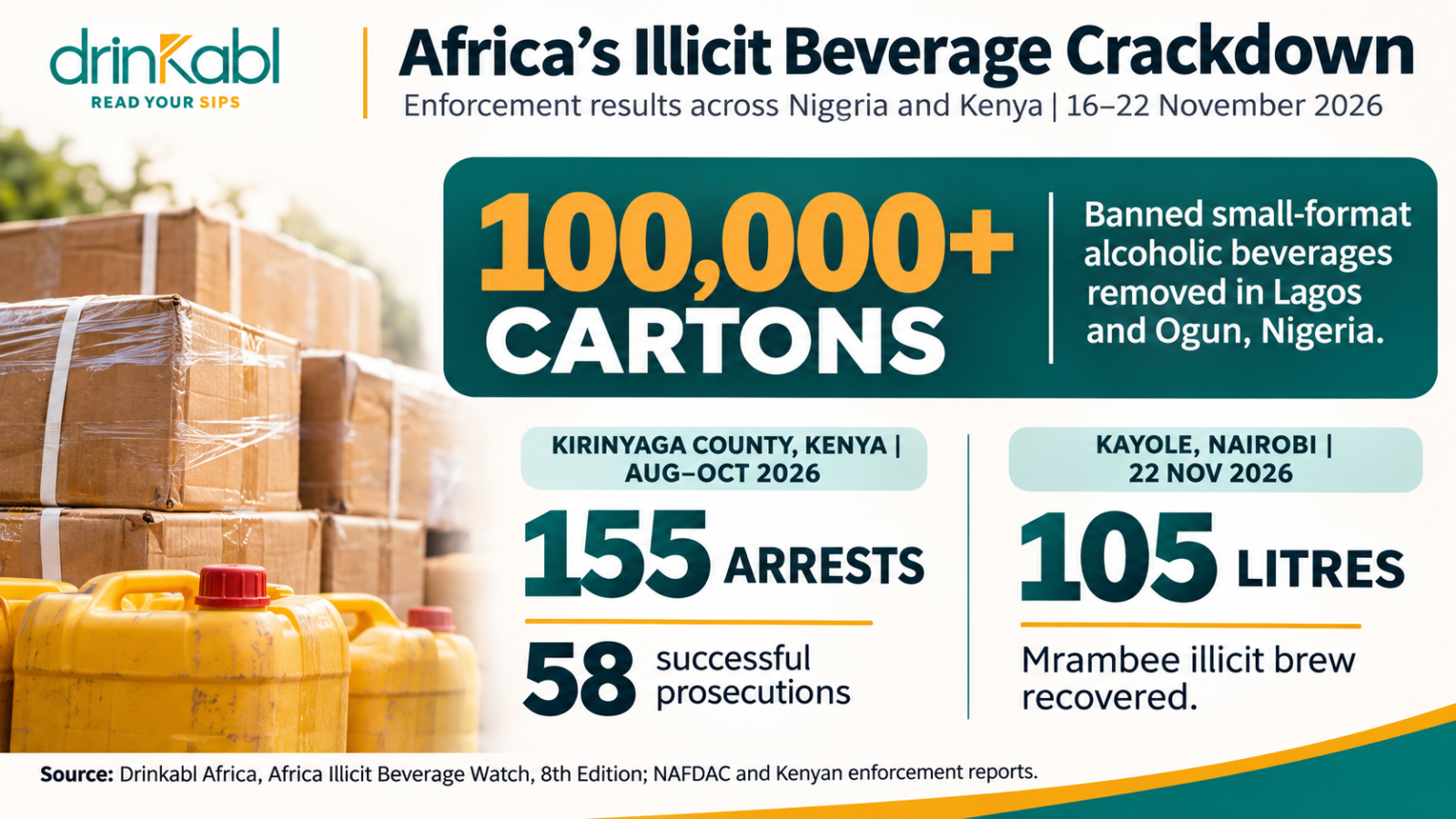
The products were packaged in sachets and polyethylene terephthalate (PET) bottles below 200ml, formats covered by the restrictions on the production, importation, distribution and sale of alcoholic beverages in Nigeria.
Director-General Mojisola Adeyeye disclosed the figures during a destruction exercise at Ogwama Dumpsite, Ogere Remo, Ogun State, where the agency destroyed fake, expired, banned, substandard and other unwholesome regulated products with an estimated combined street value of ₦100 billion. The ₦100 billion valuation covered the wider collection of destroyed products, not alcohol alone. Businessday NG+2
The agency also reported uncovering a facility allegedly used to manufacture counterfeit versions of popular alcoholic beverage brands. Investigators reportedly found another operation where expired energy drinks were being revalidated and stored for distribution. NAFDAC said suspects had been arrested and would face prosecution.
The discoveries raise questions about the extent of the production and distribution networks behind the prohibited products. While the removal of more than 100,000 cartons represents a substantial intervention, the agency has not publicly identified the brands involved in the alleged counterfeit alcohol production hub or disclosed the quantity of counterfeit alcoholic drinks recovered there.
The distinction matters: the reported 100,000 cartons relate to banned small-format alcohol, while the separate production hub concerns alleged counterfeit branded beverages. They should not be treated as one seizure. Channels Television+1
Kenya Destroys Seized Counterfeit Goods in Mombasa
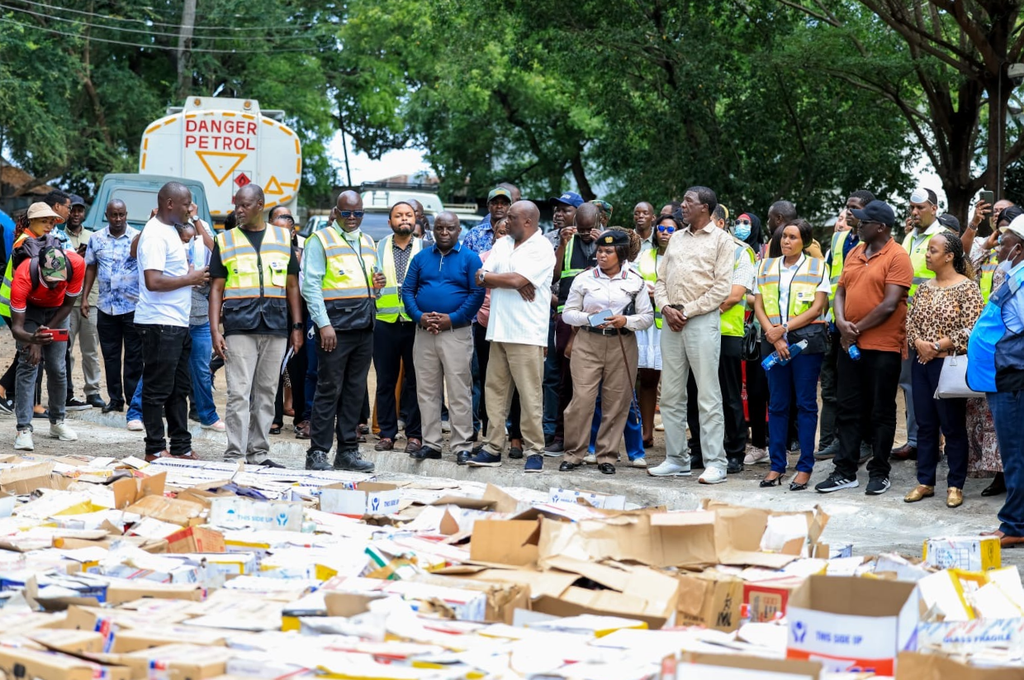
Kenya’s Anti-Counterfeit Authority conducted a major destruction exercise in Mombasa on 17 November, targeting counterfeit goods recovered during enforcement operations across the country.
The exercise, reported by the authority on 18 November, placed particular emphasis on counterfeit alcoholic beverages and their implications for consumer safety, legitimate manufacturers and government revenue.
The destruction was part of activities surrounding the third International Symposium on Intellectual Property Protection and Enforcement (ISIPPE-3), held in Mombasa on 18–19 November under the theme “Stepping up the Fight Against Counterfeiting to Safeguard Public Health and Safety.”
ACA Board Chairman Nelson R. Gaichuhie and Executive Director Robi King’a emphasised the need to ensure that intercepted counterfeit goods are permanently removed from circulation. The authority described the exercise as its second major destruction operation of the year, following an earlier exercise involving counterfeit goods valued at approximately KSh200 million.
However, the authority did not disclose the total value or quantity of alcoholic beverages destroyed in the 17 November exercise. It also did not provide a breakdown of the brands or product categories represented in the destruction. Anti-Counterfeit Authority (ACA)
For beverage manufacturers and brand owners, the intervention reinforces the importance of product authentication and the removal of counterfeit stock from distribution channels. The effectiveness of such exercises will ultimately depend on whether investigations also identify the manufacturers, importers and distributors responsible for supplying the counterfeit goods.
Kirinyaga Reports 155 Arrests in Three-Month Alcohol Crackdown
Security agencies in Kenya’s Kirinyaga County reported 155 arrests during a three-month enforcement campaign targeting illicit alcohol and drug-related offences.
The results, presented by County Commissioner Shufaa Omar Mjumwa on 18 November, covered operations conducted between August and October 2026 under the Rapid Results Initiative.
Authorities reported pouring out 384 litres of makabo, 60 litres of chang’aa and 51 litres of muratina. They also intercepted 16 litres of ethanol described as dangerous, which officials said could have posed a serious public-health risk if it had reached consumers.
The operation also uncovered alcoholic products that had not met the required Kenya Bureau of Standards requirements. These included 13 crates of Jumbo Ice, four crates of Santa Ice and 87 boxes of Trigger Portable Spirits, alongside 12 crates of bottle caps.
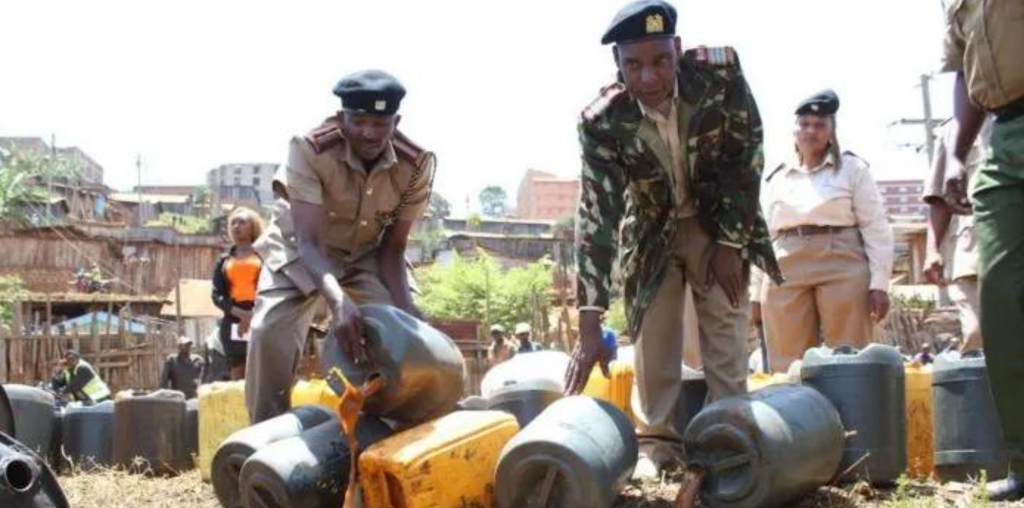
Separately, security officers confiscated 185 crates of assorted alcoholic drinks suspected to be uncertified.
Of the 155 people arrested during the wider operation, 73 cases were taken to court, with 58 resulting in successful prosecutions, according to the county commissioner.
The figures provide a broader picture of enforcement beyond individual police raids. However, the reported arrests cover various offences related to illicit alcohol and drug abuse; they should not be interpreted as 155 arrests specifically for counterfeit beverage production. Kenya News Agency
Nairobi Police Arrest Two With 105 Litres of Illicit Brew
Kenyan police arrested two people and recovered 105 litres of illicit alcohol during an operation in the Mwengenye area of Kayole, Nairobi County, on 22 November.
According to the National Police Service, officers from Obama Police Station were on patrol when they spotted a motorcycle carrying several jerrycans. Following a brief pursuit, the officers intercepted the motorcycle and arrested the two individuals on board.
A search revealed five 20-litre jerrycans and one five-litre container holding a locally produced illicit brew known as Mrambee.
The two suspects were taken to Obama Police Station and were being held pending arraignment, while the motorcycle and recovered alcohol were secured as exhibits.
The operation is part of the wider enforcement campaign against the manufacture, transportation and distribution of illicit alcoholic drinks in Kenya. The police statement did not disclose the intended destination of the recovered brew or identify its producer. People Daily
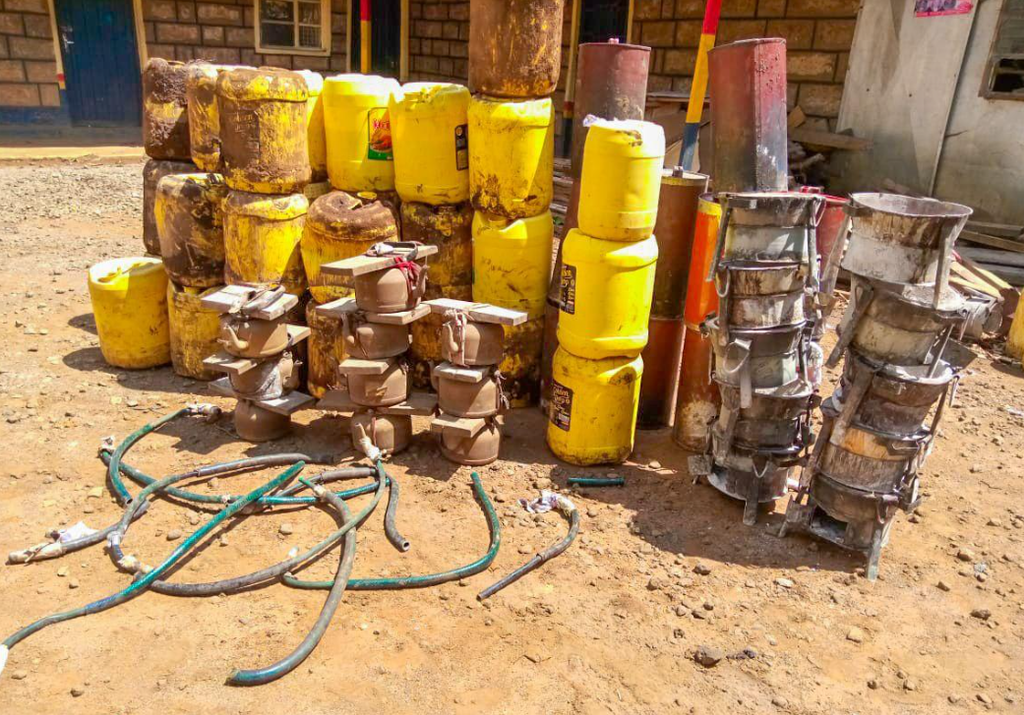
The recovery also illustrates the role of informal transportation in moving illicit products between production locations and retail markets. Identifying the source of the brew and the intended distribution network will be important to establishing whether the arrests disrupt a wider supply operation.
The Week at a Glance
| Location | Date / period | Classification | Evidence status |
|---|---|---|---|
| Lagos and Ogun, Nigeria | Reported 20 November | Banned small-format alcohol | More than 100,000 cartons removed from manufacturers, wholesalers and retailers |
| Lagos, Nigeria | Disclosed 20 November | Alleged counterfeit alcohol production | Production hub uncovered; suspects reportedly arrested |
| Mombasa, Kenya | 17 November | Counterfeit goods, including alcoholic beverages | Destruction exercise conducted; alcohol-specific quantity and value not disclosed |
| Kirinyaga, Kenya | August–October; reported 18 November | Illicit and uncertified alcoholic products | 495 litres of specified illicit brews and ethanol reported; 155 arrests across various offences |
| Kayole, Nairobi, Kenya | 22 November | Illicit local brew | 105 litres of Mrambee recovered; two people arrested |
Open Questions
In Nigeria, the immediate question is whether NAFDAC will disclose the brands and quantities involved in the alleged counterfeit alcohol production hub, alongside the identities and roles of those arrested. The agency’s removal of more than 100,000 cartons also raises questions about the manufacturers and distributors that continued supplying prohibited small-format alcoholic beverages.
In Kenya, the ACA’s Mombasa destruction exercise would benefit from a breakdown of the counterfeit alcoholic products involved, including their quantities, estimated value and brands affected. The Kirinyaga results also leave questions about the supply sources of the uncertified products and the outcomes of cases that have not yet resulted in successful prosecutions.
For the Kayole operation, investigators will need to establish where the 105 litres of Mrambee originated and whether the two arrested individuals were part of a larger production or distribution network.
The week’s developments demonstrate that enforcement is taking place at several points in the illicit beverage chain. Nigeria’s large-scale market removal, Kenya’s destruction of counterfeit goods and the recovery of locally brewed alcohol in Nairobi each address a different part of the problem.
But seizures and destruction exercises are only immediate interventions. For legitimate beverage operators, the more important measure of progress will be whether authorities can trace the supply networks, secure successful prosecutions and prevent the same products and production operations from returning to the market.
From the archives: Read previous editions of AFRICA ILLICIT BEVERAGE WATCH.