
The new format extends the brand’s existing can and glass-bottle portfolio into lighter, more portable packaging. Oluwaponmile Alabi, Head of RTS Category at Guinness Nigeria, said the format was designed to expand access without diluting the brand’s character. “The product increases touch points for consumers to enjoy the familiar Orijin flavor whenever moments of connection arise,” he said at the launch.
Zainab Bakare, brand manager at Guinness Nigeria, framed the launch as a distribution and cultural play, not just a packaging change. “We’re showing up everywhere, from high-energy digital takeovers to the heart of the hustle with our ‘Igbadun Friday’ experiences across the East and West,” she said. The company is supporting the launch with the “ORIJIN In The Mix” campaign, which includes influencer storytelling, street activations, and media engagement.
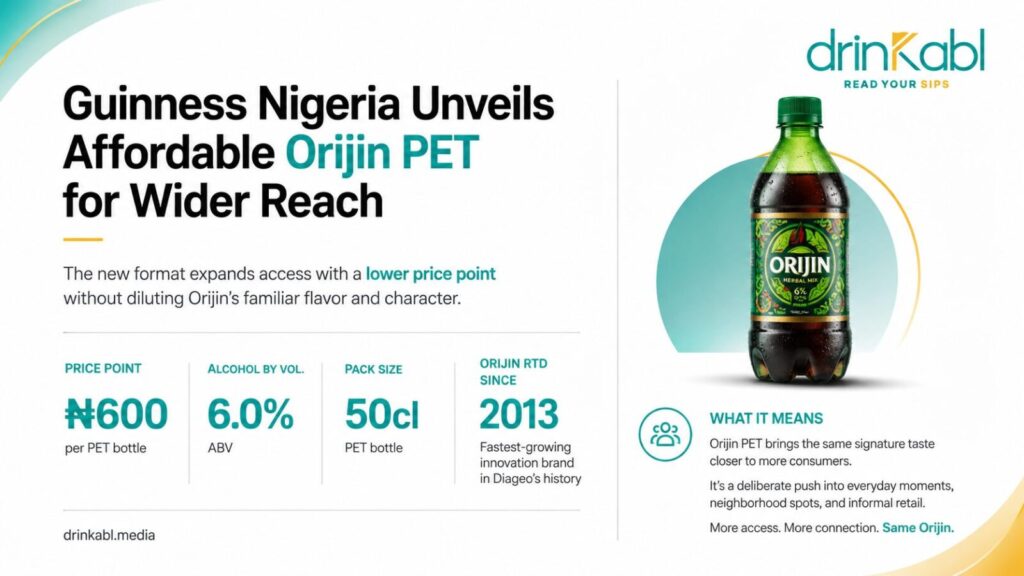
The PET format joins a portfolio that already includes Orijin Bitters in 20cl and 75cl sizes, as well as Orijin Zero in PET for non-alcoholic consumers. Guinness Nigeria’s PET production lines have been operational since 2018, with Malta Guinness and Dubic Malt previously produced in the format. Orijin RTD, first launched in 2013, became one of the fastest-growing innovation brands in Diageo’s history and holds a dominant share of Nigeria’s herbal RTD category.
The ₦600 price point places Orijin PET below the existing can format in most retail channels, a deliberate move to reach roadside vendors, local bars, and informal retail. The brand is pitching the format at consumers in neighborhood spots, roadside grills, and casual social settings where glass bottles and cans can be impractical.

The launch arrives as Guinness Nigeria, now majority-owned by Tolaram Group following Diageo’s 2025 equity exit, is pushing volume growth across its core RTD brands. As Drinkabl.media reported, Guinness Nigeria’s position and ambitions in 2026 sit at the center of the industry’s recovery story, with Tolaram’s distribution muscle and local market instincts now driving brand decisions that Diageo’s global model was slower to make.
Read More: