
NAFDAC issued a public alert on June 25 warning Nigerian importers, retailers, and consumers against two alcoholic energy drinks already banned in Ghana, after Ghanaian authorities seized approximately 140 boxes of the products in the Upper East Region.
The agency identified the products as Bel Ice Vodka Energy Drink, manufactured by Bel Beverages in Ghana, and Cody’s Vody Energy Mix, produced by Jens Warneke Export GmbH in Bremen, Germany. Both had been prohibited in Nigeria before the Ghana alert, under NAFDAC’s 2019 Regulations, which bar caffeine and other stimulants from spirit drink formulations.
The Ghana Food and Drugs Authority had moved against these products in May, but the enforcement campaign started earlier. On February 25, the Authority issued a directive under Ghana’s Public Health Act ordering importers, manufacturers, and distributors to clear alcoholic energy drinks by the end of March. That deadline passed without full compliance. By late April, a separate sweep across the Western North Region recovered more than 2,100 units of prohibited products, including Bel Ice and Cody’s Vody variants, from multiple towns with police support.
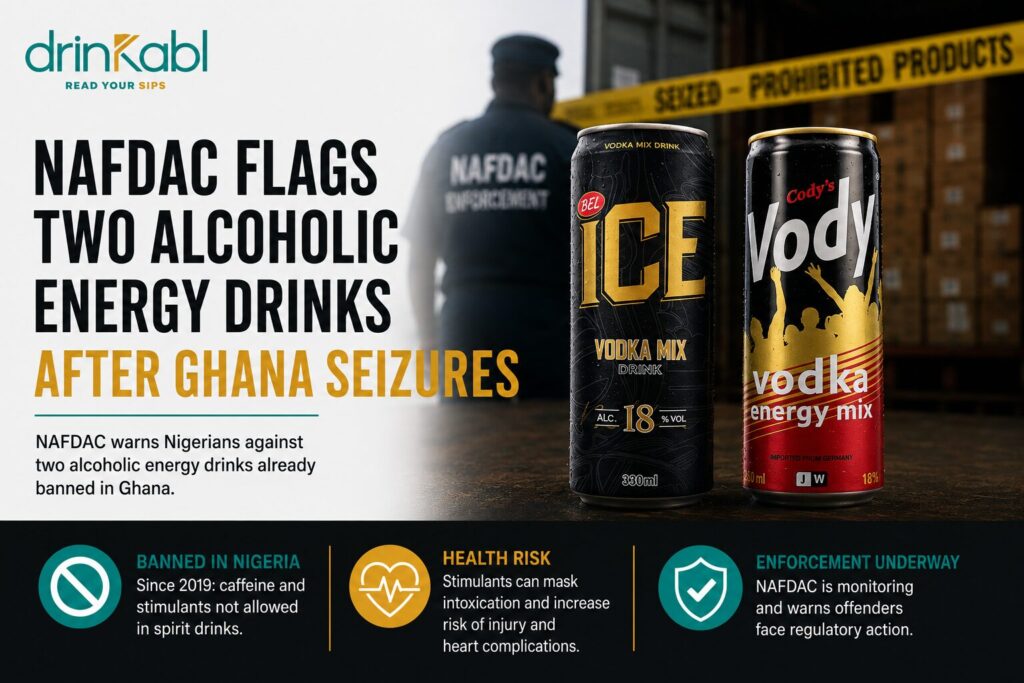
The core concern with alcoholic energy drinks is pharmacological. Stimulants such as caffeine and taurine can suppress the subjective experience of intoxication, causing consumers to drink past the point of impairment without recognising it. NAFDAC’s alert warned of elevated cardiovascular risk, impaired coordination, and greater exposure to alcohol-related injury. Young adults and adolescents were flagged as the most vulnerable group.
NAFDAC said post-market surveillance and monitoring are now active. The agency warned that anyone found importing, distributing, or selling the two products in Nigeria faces regulatory action, and urged the trade to verify that all beverages on sale carry valid NAFDAC registration.
The alert arrives as NAFDAC’s domestic enforcement bandwidth is already stretched. The agency is simultaneously running a contentious campaign against sachets and sub-200ml bottles, a policy that has drawn protests from manufacturers and labour groups and triggered court challenges since its January restart. Monitoring cross-border product infiltration adds a further surveillance obligation without an obvious increase in enforcement capacity.
Ghana’s experience with this ban offers a direct precedent. More than three months after a clear regulatory deadline and multiple seizure operations, the products were still moving through Ghanaian markets. Whether NAFDAC can contain the same cross-border spillover without similar multi-phase operations across Nigeria’s borders is the question its regional desk now has to answer.
READ MORE