
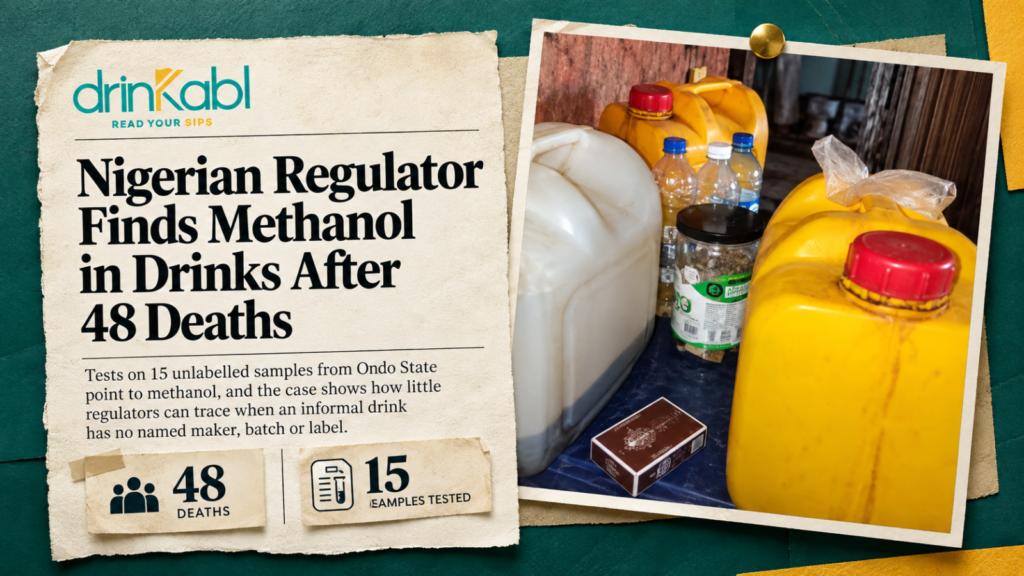
Tests on 15 unlabelled samples from Ondo State point to methanol, and the case shows how little regulators can trace when an informal drink has no named maker, batch or label.
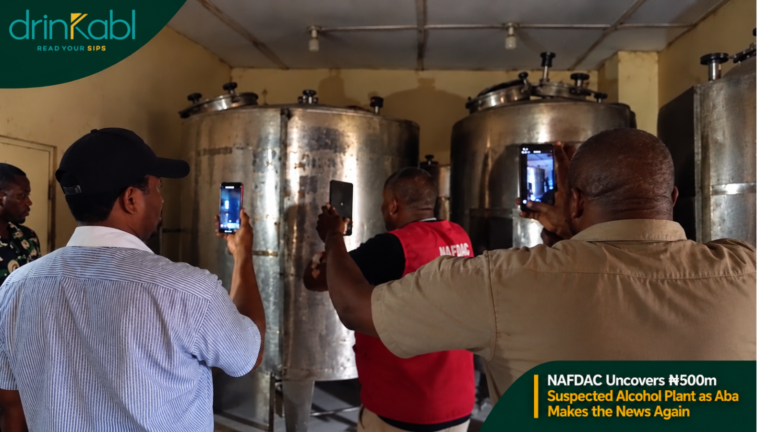
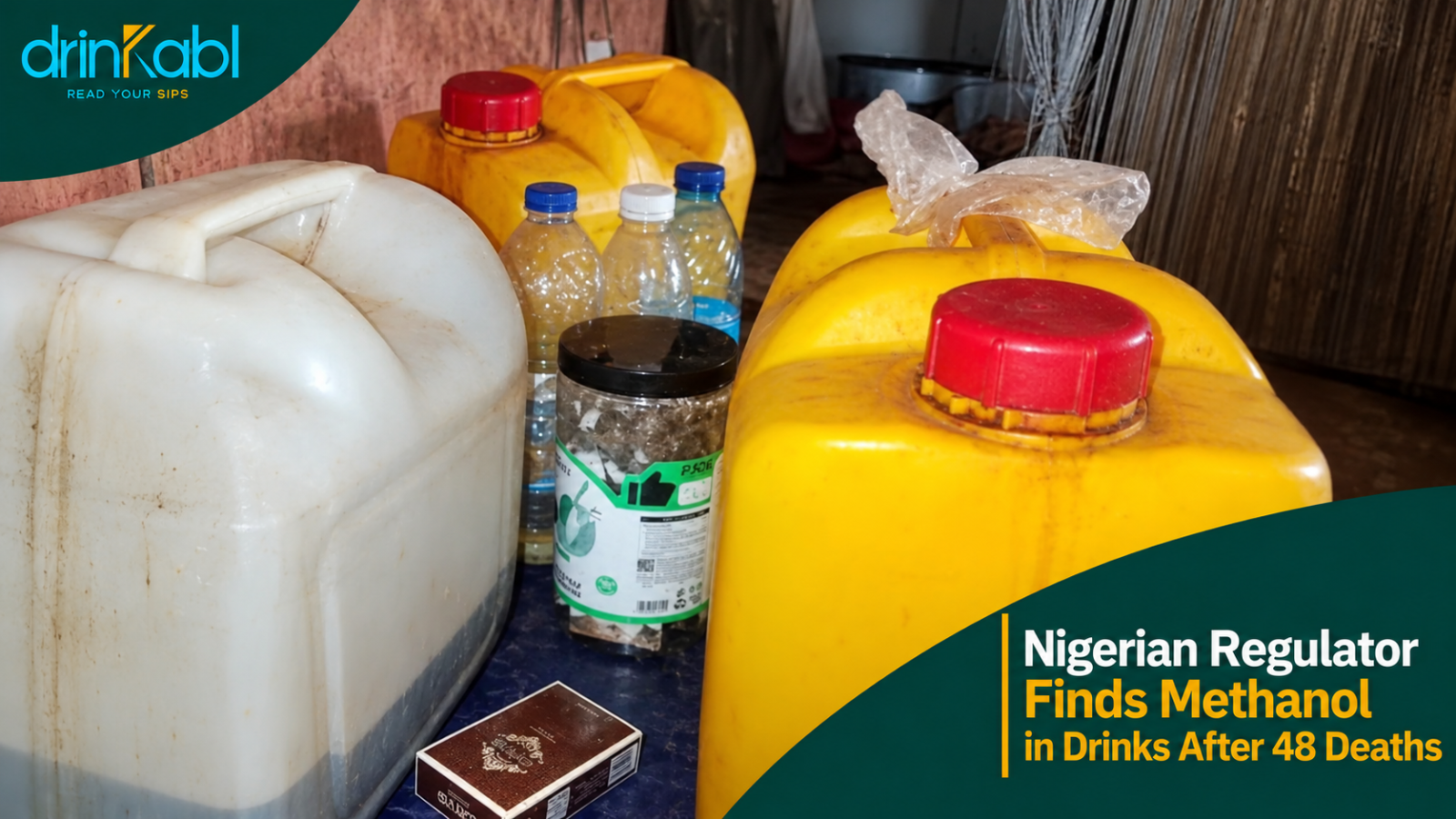
Nigeria’s National Agency for Food and Drug Administration and Control (NAFDAC) has found high concentrations of methanol in locally prepared alcoholic and herbal drinks linked to a poisoning outbreak in Ondo State, according to its update of 18 September. It counted 182 cases and 48 deaths as of 17 September, and five survivors are totally blind. The findings are preliminary and further testing is under way.
What the tests show
NAFDAC tested 15 unlabelled samples. Gas chromatography found high concentrations of methanol, and 11 of the 15 also tested positive for Cannabis indica. In toxicity tests, every sample made laboratory mice critically ill, and about half the mice died in six of the samples. The agency says further tests will measure the methanol and look for other toxic agents.
The Nigerian Medical Association’s liaison committee with NAFDAC has named the local mix known as Monkey Tail as the drink implicated, citing NAFDAC’s results for samples from Odigbo, Irele and nearby areas. That covers the samples tested. It does not mean every drink sold under that name contains methanol, and NAFDAC has not said how the methanol got there.
How it unfolded
The emergency was first reported on 5 September, when authorities said 29 people had died within a week. Reuters reported on 18 September that Ondo’s health commissioner, Banji Ajaka, put the toll at 49, one above NAFDAC’s confirmed figure. Officials traced the first cases to two ceremonies in Odigbo district, and Ajaka said an outsider brought the drink to one of them.
Victims reported headaches, weakness, visual disturbances, breathing difficulty and altered consciousness, and some got worse quickly. BusinessDay noted that Irele and Odigbo also saw a methanol outbreak in 2015.
Where the trail goes cold
A sealed bottle from a registered producer carries a brand, a batch and a distributor, so a recall can be aimed at a defined group of buyers. An unlabelled drink mixed locally may carry none of that. Investigators in Ondo are rebuilding the chain after the fact.
They still have to establish where the methanol came from, whether one producer or several made the drinks, and how they reached the ceremonies. The medical association’s committee wants tighter control of methanol supply, to stop it being diverted into drinks, and a crackdown on informal distilleries and open-market distribution.
Two rules in play
Nigeria’s ban on spirits sold in sachets and in PET or glass bottles under 200ml took full effect on 1 January 2026. NAFDAC ran nationwide mop-up operations from July and ordered a recall in August, with manufacturers signing enforcement undertakings through their trade associations. The agency says the aim is to limit access for children and young people. That rule targets a packaging format, not traceability.
In Ondo, Attorney-General Olukayode Ajulo has asked the Chief Judge to set up a coroner’s court to inquire into the deaths. He also said the state is reviewing the rules for locally prepared herbal and alcoholic products, a process he says began before this outbreak after stakeholders submitted a draft regulation.
What to watch
For licensed producers, the questions sit upstream. If investigators find how methanol entered the drinks, scrutiny may fall on who can buy industrial alcohol. Registered brands also have reason to make the difference between their products and anonymous local mixes easy for buyers to see.
NAFDAC’s confirmatory tests should give the exact methanol levels and show whether other toxic agents were involved. Until then, the source of the methanol remains unconfirmed.