
Regulators cleared Asahi’s $2.3 billion purchase of Diageo’s stake in East African Breweries on that condition. Measuring it, enforcing it and filling the space are harder, and the sale has not closed.
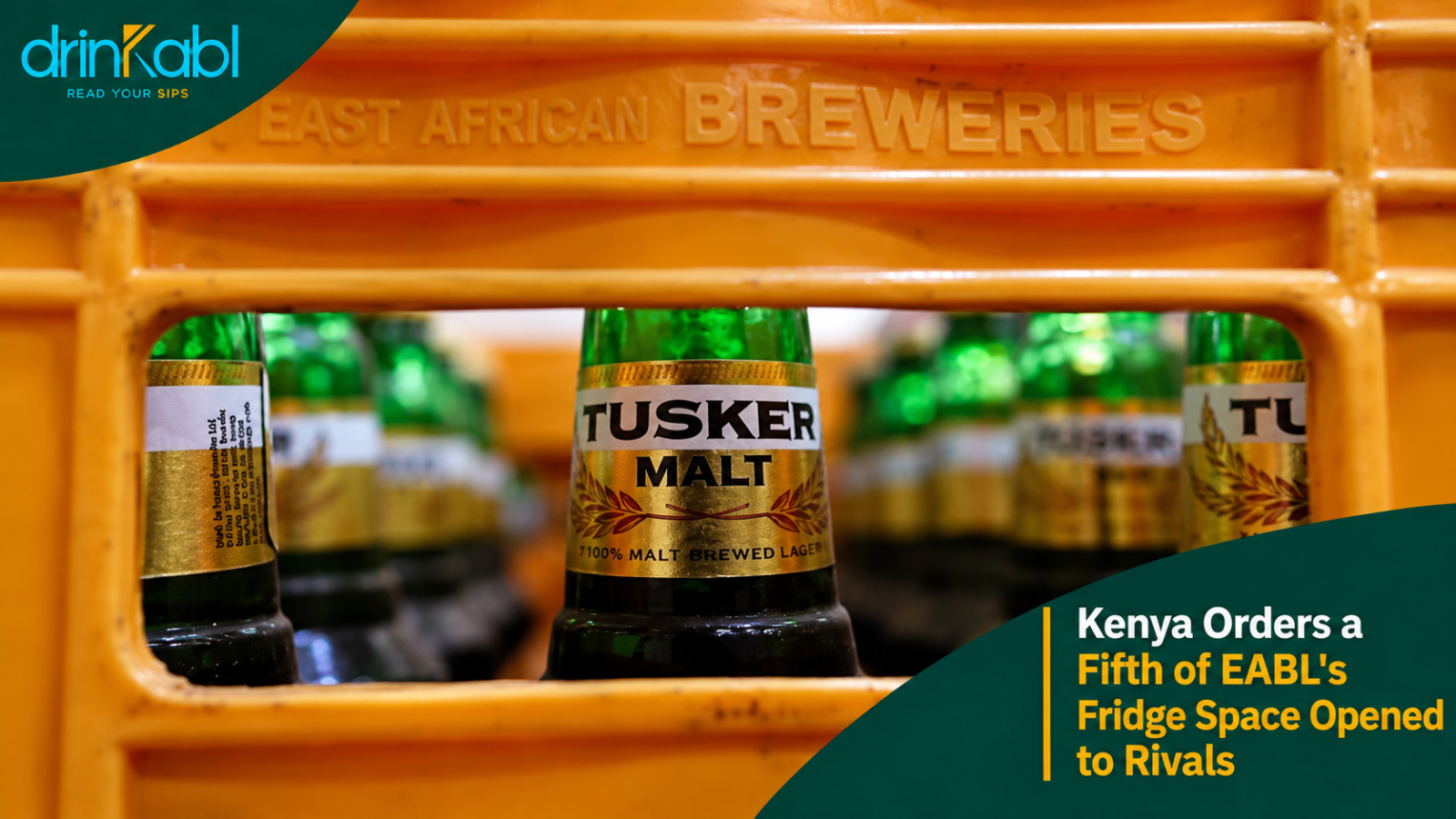
According Media reports that EABL currently prohibits rival brands in the fridges it places in Kenyan outlets. Under the terms Kenya set for Asahi’s purchase of the brewer, at least a fifth of the refrigeration space it provides to shops must be reserved for drinks that belong to neither EABL nor Asahi.
The Competition Authority of Kenya (CAK) attached the condition when it approved the deal. EABL confirmed the approval on 10 September, and the authority announced it the next day. The Standard put EABL’s share of Kenya’s alcohol market at roughly 80%. The regulator did not block the sale. It allowed ownership to change and limited what the new owner can do with the equipment that puts drinks in front of shoppers.
This piece looks at what the condition covers, why a fridge counts as market power, and what stands between a rival brand and the reserved space. The rule is real but narrow, nobody has said how it will be measured, and the sale it is attached to is still caught in court. Each of those decides whether a shop owner ever sees a rival’s bottle in a cold EABL fridge.
What the condition covers
CAK approved the purchase of Diageo Kenya Limited on two conditions. The first is the fridge reserve. The second requires enough of the sale price to be set aside to meet outstanding liabilities and to protect supplies and small businesses. The spirits business, UDV Kenya, was cleared without conditions, and CAK said its review also covered the market for malt and brewing grains.
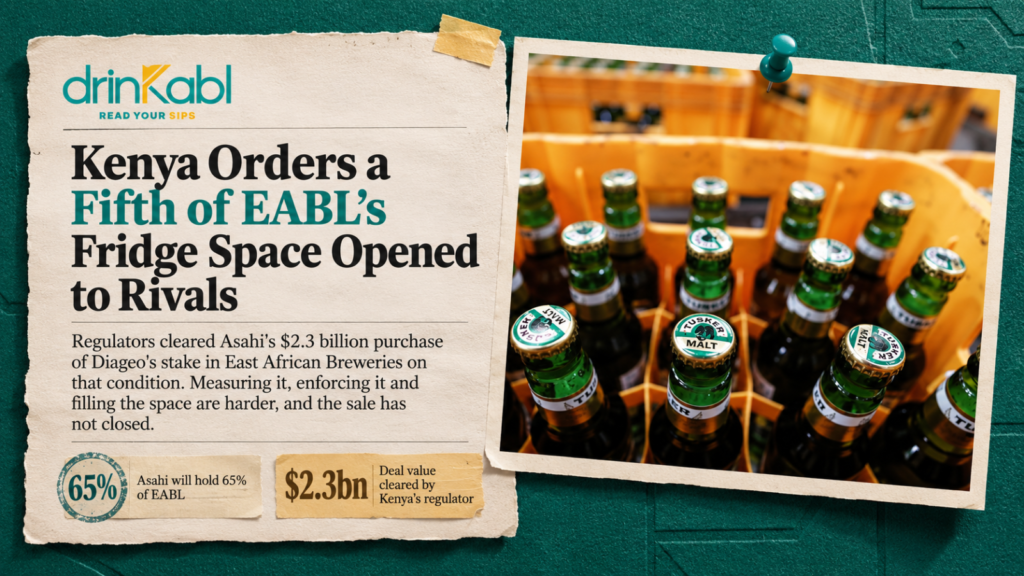
The fridge rule has exclusions. It does not apply to top-end drinking establishments, supermarkets, liquor stores at petrol stations or hotels rated above two stars. That leaves small shops, ordinary bars and lower-rated hotels, where a fridge decides much of what a customer can buy cold. It is also a rule about fridges and not shelves, since it covers the refrigeration space the merged business supplies and not a share of everything a retailer stocks.
Why a fridge matters
The regulator treats the fridge as part of a brewer’s route to market. CAK found that the merged business would keep benefiting from EABL’s network, branding arrangements, exclusive sales territories, product-placement arrangements and company-owned refrigeration equipment. Business Daily reported the authority’s concern that these could be used to shut competing brands out of outlets.
That worry was not only the regulator’s. Semafor reported that Kenya Wines Agencies, a Heineken subsidiary, had complained that the deal could entrench alleged abuses of market power by tying distributors and suppliers into exclusive agreements. EABL has consistently denied such allegations.
What Asahi is buying
Diageo announced the sale in December 2025. It expects $2.3 billion in net proceeds after tax and transaction costs, and the price implies an enterprise value of about $4.8 billion for all of EABL. Enterprise value adds net debt to the value of the shares, so it shows the full price of the business.
Asahi will hold 65% of a brewer that operates in Kenya, Uganda and Tanzania, and has said it will keep EABL listed and go no higher. EABL will keep making Guinness, Smirnoff and Captain Morgan under licence. In the year to June 2026, Semafor reported, EABL passed $1 billion in revenue for the first time, and net profit rose 49% to a record $140 million.
The fight over the terms
Diageo and Asahi resisted both conditions. CAK’s list in August included a reserve of about 4% of the deal value, which press reports put at up to KSh15 billion, or roughly $116 million. The final approval did not state an amount. Diageo said the concerns behind the reserve had “absolutely no connection to the transaction”, and the companies argued that market conditions do not change because a shareholder does.
Critics of the process went further. Jaindi Kisero, a former managing editor of The EastAfrican, wrote that if every major transaction becomes subject to parliamentary bargaining, investors cannot count on consistent, rules-based outcomes. Lawmakers had pressed CAK to protect sorghum and millet farmers, distributors and employees, and its director-general told them existing contracts would stay binding.
Rival brewers were guarded. One executive at a larger competitor, speaking anonymously to Semafor, called the decision “a positive first step” but said EABL’s lobbying power meant the matter was not settled.
What stands between a rival and the space
The 20% is easier to write than to count. The wording CAK has given the press does not say how the share will be measured, who will decide disputes or how quickly a rival can claim space. CAK has said it will monitor compliance. A rival must also be able to fill the space, which takes a product that sells, a delivery route to the shop and enough volume to keep a fridge stocked. Semafor named Heineken, Keroche Breweries and African Originals as brewers that could benefit if the rule is enforced.
The sale itself has not closed. On 2 September the High Court ordered that EABL’s ownership and control stay as they stood on 18 June until the Capital Markets Tribunal decides an appeal by minority shareholders against Asahi’s exemption from a full takeover offer, and CAK completes its review. CAK finished that review nine days later. A separate suit by the distributor Bia Tosha failed in April. When The Standard reported the approval on 12 September, neither company had announced that control had passed.