
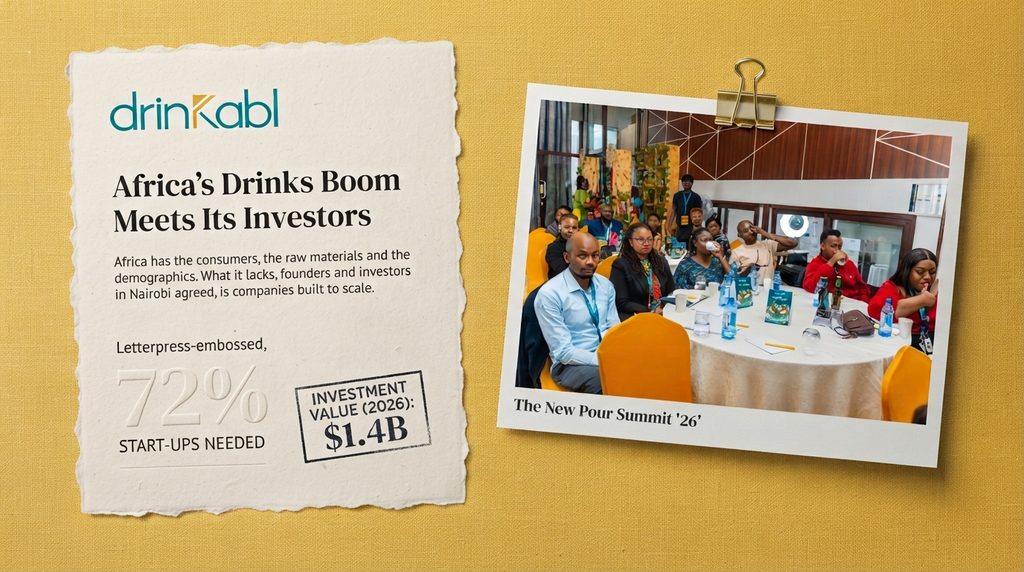
Africa has the consumers, the raw materials and the demographics. What it lacks, founders and investors in Nairobi agreed, is companies built to scale.
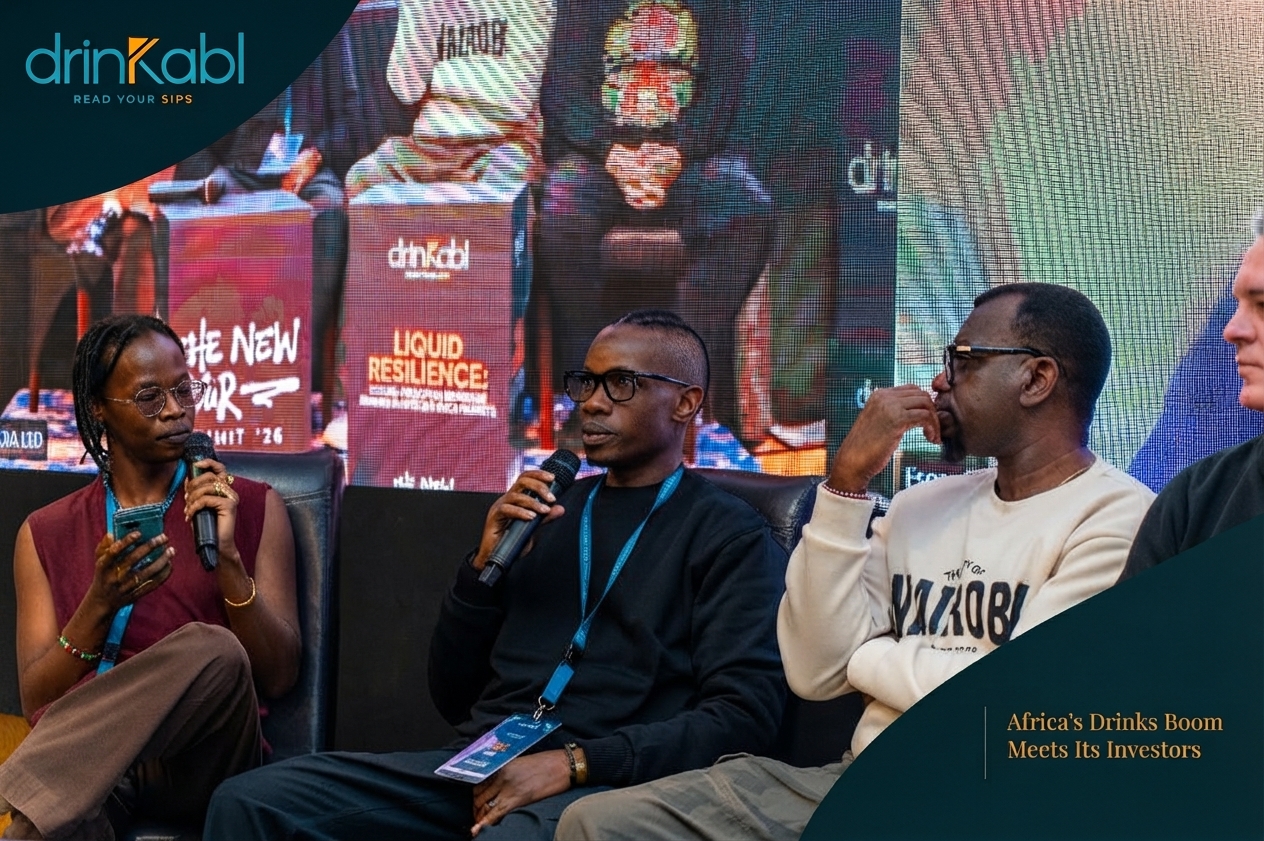
That was the message at The New Pour Summit ’26, held on July 25 at Golden Tulip Westlands in Nairobi and broadcast across five African markets. Convened by Drinkabl Africa under the theme “Liquid Resilience: Future-Proofing Beverage Brands in Africa’s VUCA Markets,” the one-day summit gathered founders, investors and manufacturers, and launched the inaugural New Pour Report 2026.
Africa’s beverage industry is drawing sharper investor attention, but the opportunity is no longer simply selling more drinks. It is building brands, supply chains and businesses that can travel. The consumers are there. The brands are still catching up.
Capital is asking harder questions
Kanessa Muluneh, founder of Nyle, put the gap bluntly during a session on structuring investment: “Story is everything, especially when it comes to beverages. In Africa, we don’t have enough beverage brands, by far.” Her point was not that the continent lacks drinks. It is that few African brands combine the story, intellectual property, operational discipline and scalability that investors can back, which is why raw materials still leave the continent while finished beverages come back in.
The session set out what investors now expect: scalability, financial discipline, IP ownership, supply-chain control and operational resilience. A good liquid is no longer enough.
Brian Kiriba, founder and chief executive of Handas Juice, showed the problem from the operator’s side. Unable to find distribution, he built his own, describing the mindset behind it as “productive naivety, being naive enough to ignore the odds, but wise enough to learn everything that gets in the way.” That is the sector’s central investment puzzle: consumer appeal without reliable manufacturing, working capital and route to market does not become a scalable business, and counterfeiting and rising production costs make the maths harder still.
Culture is now an investment variable
The summit also challenged the idea that African brands must imitate Western ones to scale. Feyi Olubodun of Open Squares Africa introduced a “Villager Framework” for decoding African consumers, arguing that culture must sit at the centre of strategy, not decorate it. “Africans are modernising, but they are not westernising,” he said. “They are digital in behaviour, analog in identity and motivation.” His data showed that infusing culture into point-of-sale design can lift brand patronage by up to 65 percent.
The case study came from Manyatta Cider, presented by EABL’s Effie Thiong’o and Ogilvy’s Maurice “Rizz” Wangalachi: a brand built on the symbolism of the Manyatta homestead and its “timeless flame.” According to figures presented at the summit, Manyatta has sold more than 10 million bottles and generated double-digit millions of US dollars in revenue. On that evidence, cultural specificity need not cap a brand’s market. It can be the reason consumers recognise it.
Technology featured too. Josiah Kimanzi of Actnable AI demonstrated WhatsApp, SMS and facial-expression tools that test consumer response faster than conventional research, useful when a launch otherwise means spending heavily before knowing whether it lands. “If you’re old school, you’re using the stairs,” he said. “AI is a lift.”
The operating reality still sets the price of risk
Optimism came with a warning. Lengthy licensing for breweries and distilleries, currency volatility, input costs and counterfeiting are not operational irritants; they are inputs into how investors price risk. A strong product in a large market is still hard to finance if it cannot secure licences, protect its IP or move stock.
The opportunity also stretches past beer and spirits, into juice, water, coffee, tea and functional drinks, a larger addressable market and a more complicated one, since each category carries its own regulation, margins and consumption occasions.
That is the shift. Africa’s beverage story is moving from proving the opportunity exists to identifying which companies can turn it into durable value.