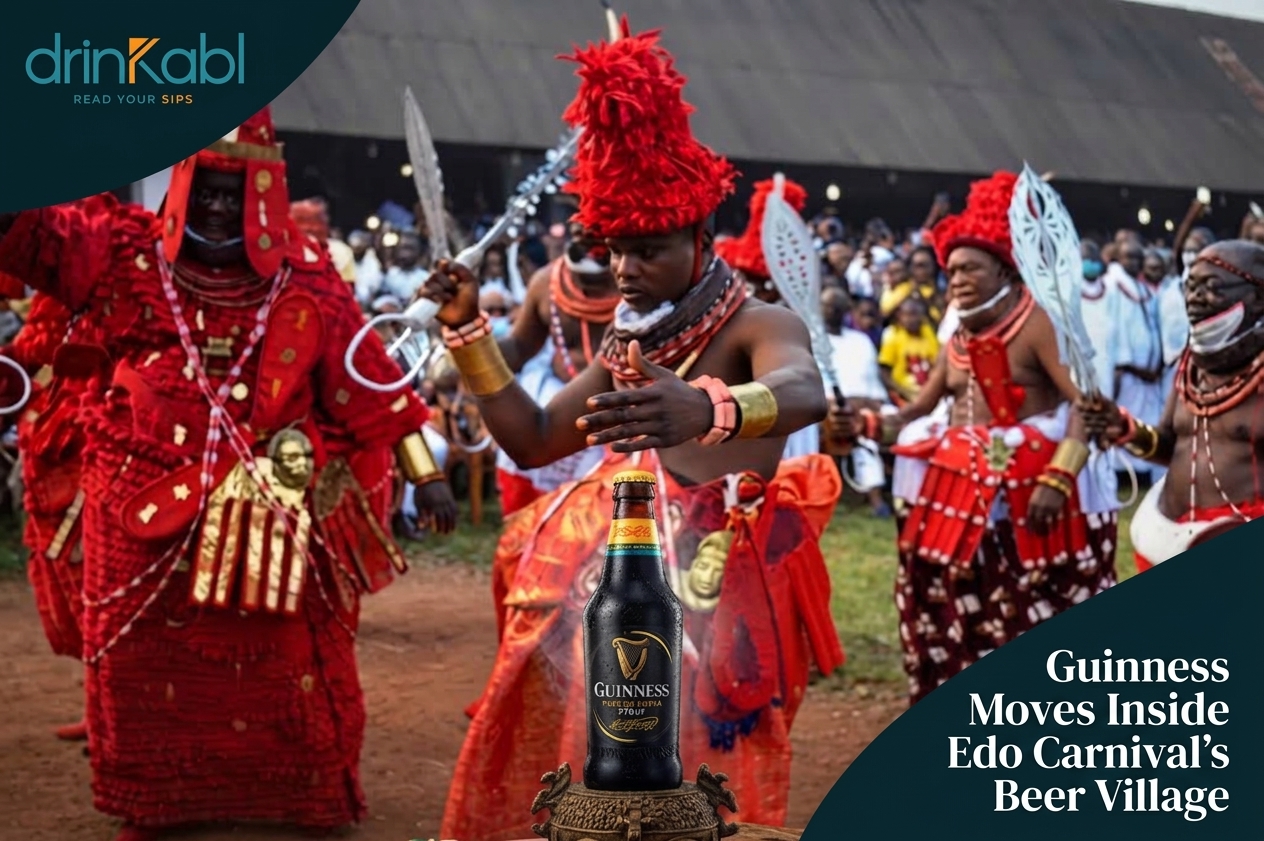

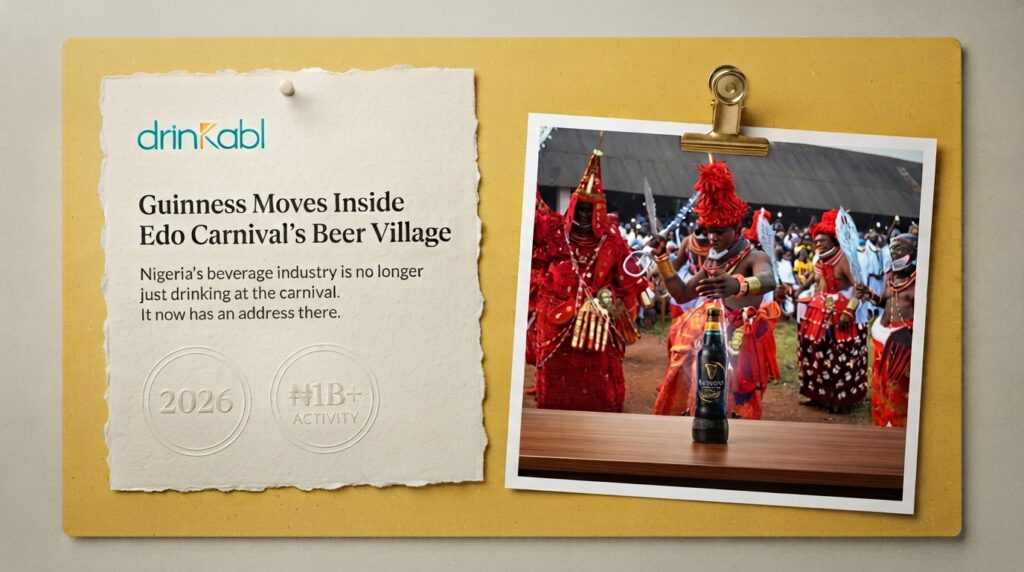
Nigeria’s beverage industry is no longer just drinking at the carnival. It now has an address there.
Guinness and Malta Guinness have been named among the sponsors of the 2026 Edo Carnival, and the festival’s programme now includes a dedicated Beer Village. The carnival, themed “The Spirit of Edo,” runs December 13 to 26 in Benin City. The Edo State Government is targeting close to 100,000 participants and more than ₦1 billion in economic activity across the 13 days, up sharply from the maiden edition in December 2025.
From cultural event to commercial platform
The 2025 edition was pitched mainly as a new cultural attraction, combining street parades, entertainment, food and fashion. Beer was present, with a Shine Beer Barn and tastings on the programme, but the available record does not show Guinness or Malta Guinness as named sponsors that year.
For 2026, organisers Peak Rendezvous Global are building a formal commercial environment at the Garrick Memorial ground on Ekehuan Road. The Carnival Village will host food and beverage vendors, merchandise outlets and the Beer Village, alongside a food festival, boat regatta, children’s carnival, concert and fashion show. That changes the offer for beverage companies. Instead of placing a logo beside an event, brands can sit inside the consumption environment itself. As Peak Rendezvous Entertainment Global Limited scales up the 2026 Edo Carnival infrastructure, the festival’s commercial evolution has drawn significant international media attention. A dedicated production crew from the BBC is on-site at the Garrick Memorial ground on Ekehuan Road to document the transformation.
Two brands, two occasions
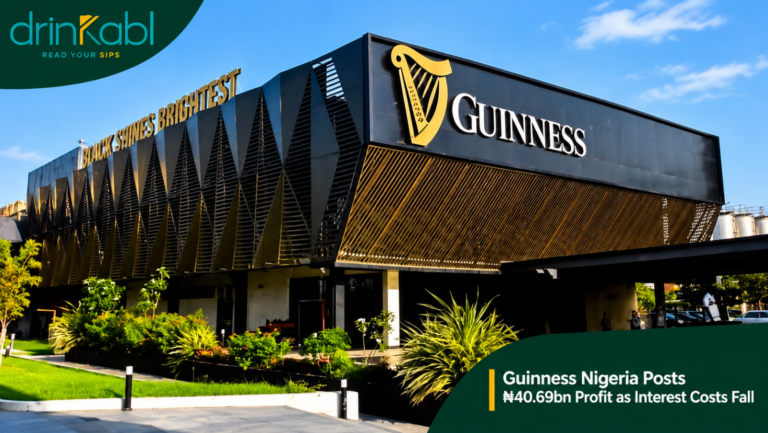
Guinness and Malta Guinness appear on the sponsor list beside Indomie, Premium Trust Bank, Power Oil, UBA, Zenith Bank and First Bank. Together they give Guinness Nigeria a presence across both alcoholic and non-alcoholic occasions, a useful spread at a family festival.
The timing is notable. Tolaram completed its acquisition of Diageo’s 58.02 percent stake in Guinness Nigeria on September 30, 2024, with Diageo retaining the Guinness brand under a long-term licence. The company is courting a new audience under a new majority shareholder.
There is also local history. Guinness Nigeria built its second brewery in Benin in 1974, producing Harp Lager, before later adding stout production at the site. Its relationship with the city predates the carnival by more than five decades.
The audience is what changes the equation
The 100,000 figure is a target, not an attendance already achieved, and the ₦1 billion projection covers the wider event economy, tourism, accommodation, transport, food, fashion, rather than drinks alone.
But those categories are commercially linked. Visitors buy drinks at concerts and parades; food vendors stock them; hotels, bars and distributors all feel the foot traffic. The Beer Village makes that link explicit, and it fits a pattern. Guinness Nigeria used a first-ever multi-brand sponsorship at the 2026 AMVCAs and returned Orijin as official alcohol sponsor of Ojude Oba for the second year running. Shelf space is no longer the only contest; cultural moments are.
The question the Beer Village raises
Edo Carnival is deliberately built as a broad family festival, complete with a children’s carnival. It is now also hosting a beer precinct and major alcohol sponsors. That poses a governance question rather than an accusation: how does an event balance alcohol-brand participation with family-oriented ambitions? The task will be maintaining clear boundaries while letting partners extract value from the audience they are helping to build.
Whether drinks belong at the carnival is settled. How deeply beverage companies embed themselves as it grows is not. For Guinness and Malta Guinness, the bet is already visible: the beer is no longer beside the carnival. It has a village inside it.