

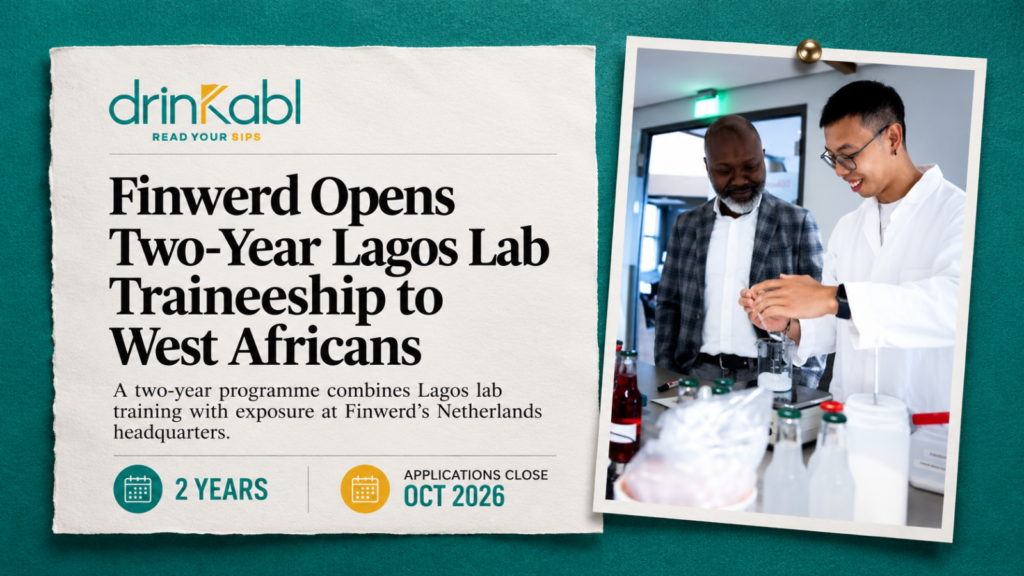
Finwerd, which makes flavour systems for drinks producers in Lagos, has opened a two-year Beverage Application Traineeship for young people from across West Africa, with applications accepted until the end of October 2026. Trainees will work in the company’s Lagos application laboratories and spend part of the programme at its headquarters in the Netherlands.
Application technologists turn flavour systems into finished drinks, and Finwerd says few routes into the job exist because entry barriers are high. The company, which calls itself West Africa’s largest flavour manufacturer, values the training and resources spent on each trainee at more than US$150,000, a figure it did not break down.
Two Years Inside the Lab
Selected trainees will learn on the job in Finwerd’s Lagos laboratories, working beside the company’s experienced beverage technologists. Part of the training moves to the Netherlands, where Finwerd has its headquarters. Candidates are drawn from across the Economic Community of West African States, the regional bloc, so the intake is not limited to Nigerians.
Why Local Flavours Matter
Finwerd argues that making flavours in Lagos gives drinks producers shorter lead times, less exposure to import delays and less risk from currency swings. Those are the company’s own claims, and the announcement carries no figures to test them. Steven Kabuito, Managing Director Africa, said the industry should be built in Africa by people who know its markets, and that Finwerd wants to back young talent.
Building on the Academy
The traineeship follows the Finwerd Beverage Academy, a one-day training event held at a Lagos hotel on 24 April 2025 that covered flavour creation, sweetening, production and regulatory compliance. Finwerd’s own report records 47 registrations and 36 attendees, six of them joining online from Ghana and Cameroon. Against a single day of teaching, the new programme asks trainees for two years.
What the Announcement Omits
Applications close at the end of October 2026. The announcement does not state how many places are open, what trainees will be paid or how candidates will be selected, and it does not say whether trainees will be offered jobs when the two years end. A second cohort has not been mentioned.
Read more