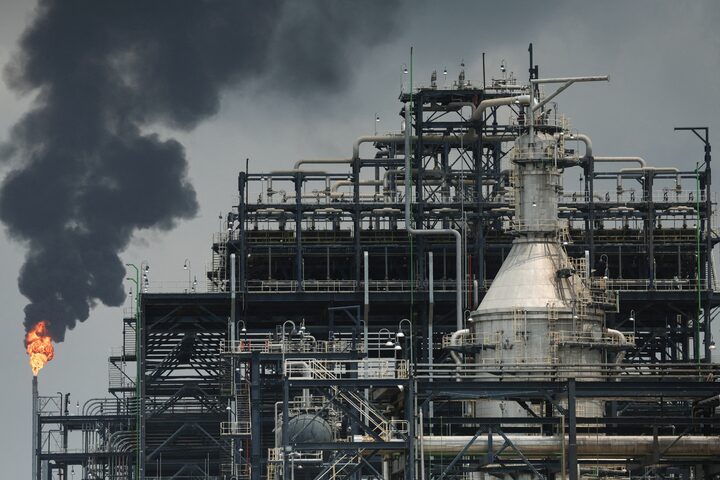

When the first missiles flew across the Gulf earlier this year, beverage executives were watching oil prices.Today, they should be watching shipping invoices.
Back in March, Drinkabl examined how the conflict between Iran, the United States and Israel threatened one of the world’s most important trade routes in How the Iran-U.S. War and Strait of Hormuz Closure Is Shaking the Global Beverage Industry. At the time, the concern was straightforward: if the Strait of Hormuz closed, energy prices would surge and supply chains would tighten.
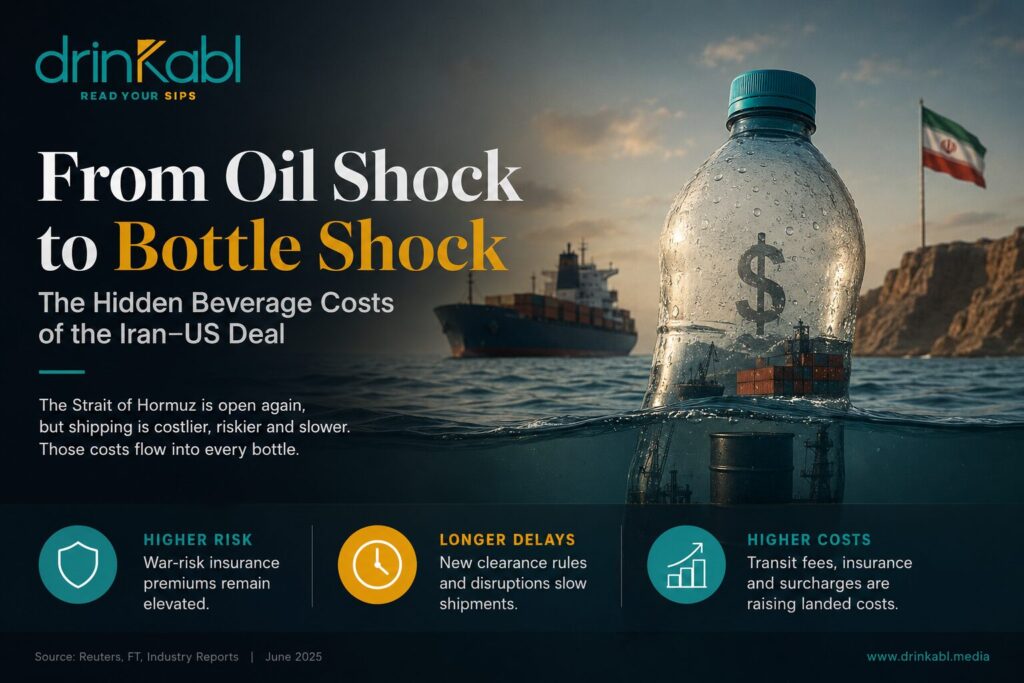
The conflict has since evolved. A ceasefire framework and maritime roadmap between Washington and Tehran have helped reopen parts of the corridor, allowing some vessel traffic to resume. Yet the return of ships has not meant a return to normality. Even after diplomatic breakthroughs, shipping companies, insurers and commodity traders continue to treat Hormuz as a high-risk route. The result is a new commercial reality that could outlast the war itself.
For the beverage industry, this matters because bottles do not move through geopolitics. They move through logistics.
The most important development since the fighting eased is not oil. It is insurance.
Before the conflict, a tanker entering the Gulf could secure war-risk coverage at relatively modest rates. During the crisis, premiums surged dramatically as insurers withdrew cover, ships were stranded and commercial traffic collapsed. Although vessels are returning, insurers continue to warn that the Strait remains a war-zone operating environment, with mine-clearing operations, security concerns and unpredictable disruptions still influencing risk calculations.
That cost eventually finds its way into a beverage bottle.
A brewery in Lagos importing can stock from Asia may never see a warship. A soft drinks producer in Nairobi buying PET resin may never deal directly with a shipping insurer. Yet every additional insurance premium, freight surcharge and security fee becomes part of the landed cost of raw materials.
The industry’s exposure is broader than many realise.
PET bottles originate from petrochemical feedstocks. Aluminium can production remains highly energy-intensive. Beverage concentrates, flavours, processing equipment, closures, labels and packaging components routinely move through global shipping networks that are now factoring Middle East risk into pricing decisions. Even if crude oil prices retreat, logistics providers may not immediately remove the premiums added during the conflict.
Another emerging issue is the debate around post-war transit arrangements.
Iranian officials have indicated that vessels using the Strait may eventually face additional insurance-related charges or security-linked passage costs once temporary agreements expire. Whether these proposals become permanent policy remains uncertain, but the discussion itself signals a shift. The Strait is no longer being treated simply as an international waterway. It is increasingly being viewed as a strategic asset whose use may carry a commercial price. For beverage companies, the distinction is significant.
The industry has spent decades operating in a world where global shipping routes were largely invisible costs. Hormuz is revealing a different future, one where geopolitical risk is permanently embedded in freight pricing.
The numbers already tell the story. Traffic through the Strait remains volatile despite the ceasefire, with vessel movements fluctuating sharply depending on security conditions. Shipping analysts increasingly argue that the real signal is not what governments declare, but how insurers and shipowners behave. If they continue pricing Hormuz as a risk corridor, beverage supply chains will continue absorbing the consequences.
For African beverage markets, the implications are particularly acute.
Many manufacturers still depend on imported inputs, machinery and packaging materials. While multinational producers may have the scale to negotiate freight contracts and hedge exposure, smaller bottlers and independent importers often lack those protections. Every additional logistics cost narrows margins, raises retail prices or delays investment.
That is why the biggest lesson from the Iran-US agreement may not be about peace. It may be about permanence. The Strait of Hormuz is reopening. Ships are moving again. Oil markets are stabilising. But the era of cheap, politically neutral passage may be over.
And long after the headlines move on from the war, consumers could still be paying for it one bottle at a time.
READ MORE