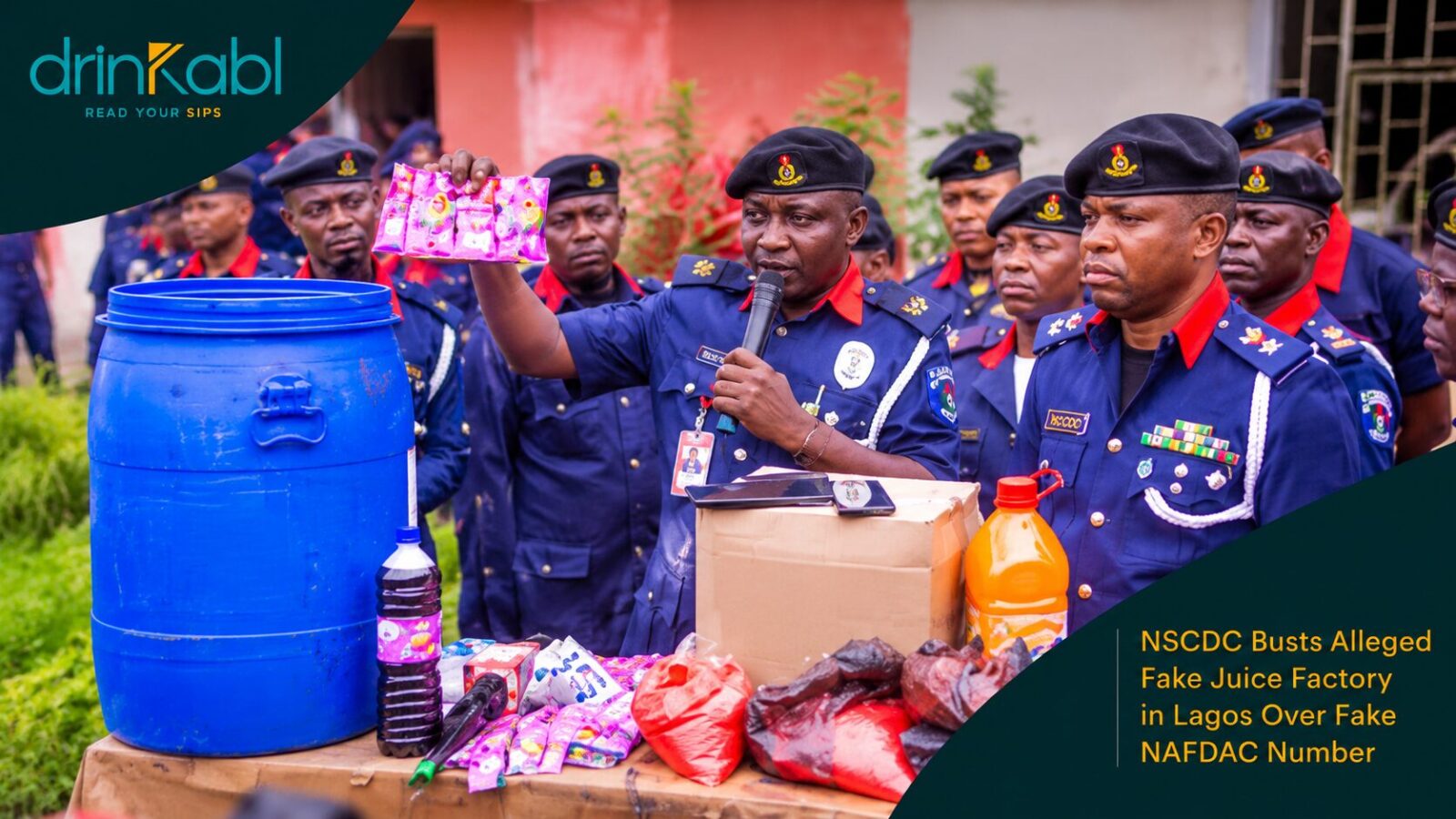

Two women were arrested in Badagry over “Barkas Juice”, which officials say contained no real fruit and carried a registration number NAFDAC’s records could not match.
Key facts
- Two women, aged 48 and 50, were arrested at a facility in Aradagun, Badagry.
- The NSCDC alleges the drink was made from water, flavourings, sweeteners and dyes, with no fruit.
- The product’s NAFDAC number, 01-2166L, is alleged to be fake, and the factory was unregistered.
- The Corps says the juice reached markets in Lagos and Benin City.
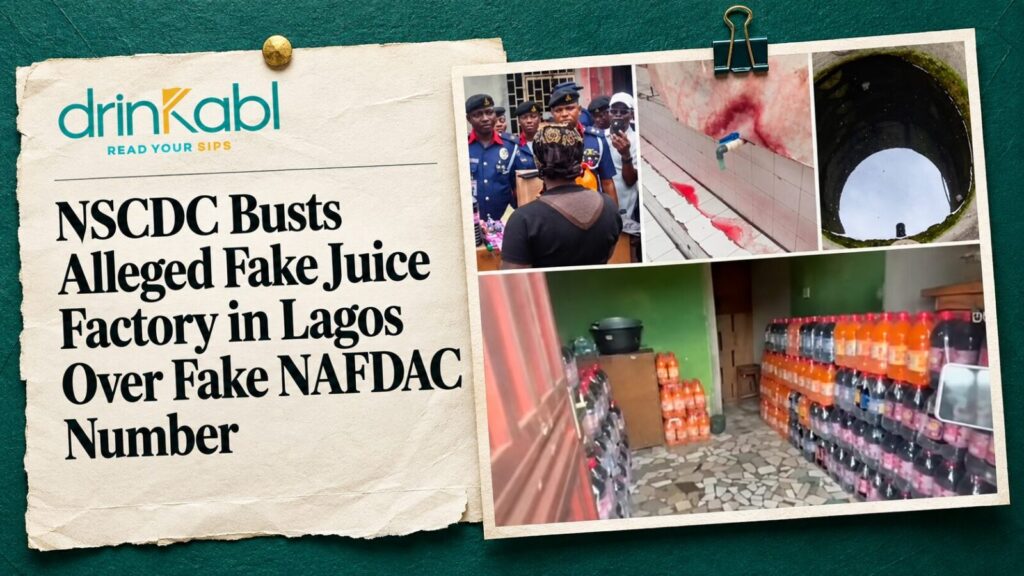
The Nigeria Security and Civil Defence Corps (NSCDC), Lagos State Command, has shut down an alleged illegal juice factory in Aradagun, Badagry, and arrested two women over a fruit drink sold as Barkas Juice.
Officers raided the site on Talabi Onilegbale Street over the weekend of 19 and 20 September, after about five days of surveillance, with support from a Nigerian Army formation. Commandant Adedotun Keshinro said members of the public supplied the intelligence. Some local youths reportedly tried to resist the operation.
Alleged fake registration
The Corps says the product carried NAFDAC number 01-2166L and that a check of the agency’s portal did not return the Barkas name. The factory itself was not registered, the NSCDC alleges. A number printed on a pack proves nothing until it matches the product name and manufacturer on NAFDAC’s register.
What the NSCDC says was in the bottle
Preliminary findings, according to the Corps, point to water, synthetic flavourings, industrial sweeteners, colourants and preservatives, with real fruit left out. Officials warned that such products, made in unhygienic conditions, risk diabetes and liver and kidney damage. No laboratory results have been disclosed so far.
Officers recovered cartons of juice, product labels, machinery, chemicals, drums, gas cylinders and a truck loaded for distribution. The Corps described the premises as unhygienic, partly a residence, with a well and a storage tank as water sources.
Minors allegedly used in production
The NSCDC also alleges that boys and girls aged 15 and 16 worked in production.
“They hire the services of juveniles, underage boys and girls,” an NSCDC officer said.
How the young people came to be at the site remains part of the investigation.
The suspect’s account
The 48-year-old, whose name the Corps has withheld, said her grandmother began with water production before moving into juice, and that she inherited the business about 20 years ago. She said production ran three or four times a year, with supplies going outside Lagos. That account has not been independently verified.
Why it matters for the drinks industry
Finished cartons already loaded for delivery point to an established route to market rather than a one-off batch. Legitimate producers already lose sales to illicit trade, and a cheap imitation with a copied registration number also erodes consumer trust in registered brands.
Key questions remain open: how much product has reached shoppers, who distributed it, and whether the registration number was invented or copied from another product. Reports so far carry no response from NAFDAC. Until laboratory tests or a court settle the matter, the product remains alleged to be fake. The NSCDC says the suspects will be prosecuted once investigations end.
READ MORE