
Alcohol-free beer has long occupied an awkward spot in the drinks industry. It was the option bought by whoever was driving, or offered to someone who had decided not to drink for the night. It looked roughly like beer and tasted somewhere in the neighbourhood of beer, with the quiet implication that the real drinking was happening elsewhere.
That positioning is starting to shift, and not only because of specialist non-alcoholic brands. Several of the world’s largest drinks companies are now treating alcohol-free products as a genuine growth category rather than a compliance line item.
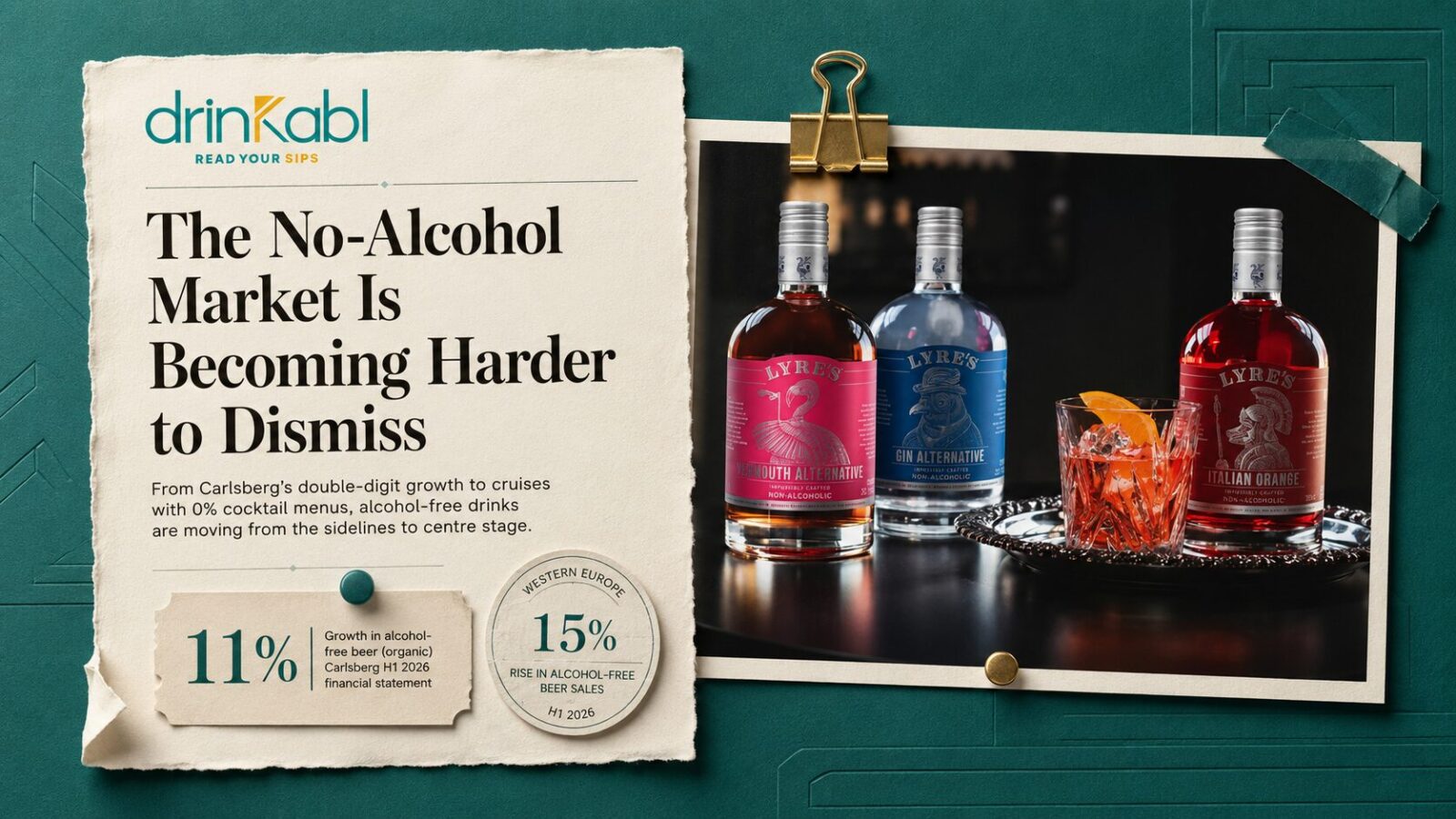
Carlsberg’s first-half 2026 results illustrate the point. Beer volumes fell from 52.7 million hectolitres to 52.2 million, a decline of roughly 1%, while alcohol-free brews grew 11% organically and soft drinks grew 9%, according to the company’s H1 2026 financial statement. Beer is not disappearing, but the figures suggest consumers increasingly separate the ritual of drinking from the alcohol itself. For African beverage markets, that raises a practical question: is no-alcohol still a niche category, or the early stage of a broader shift in drinking habits?
A familiar decision point
The choice used to be binary: drink alcohol, or drink something else entirely, typically a soft drink that signalled a person had opted out of the occasion. The newer wave of alcohol-free products is aimed at collapsing that distinction, allowing someone to hold a beer, join a toast and stay for another round without necessarily consuming alcohol. It sounds like a minor technical difference. For the industry, it changes what an occasion can include, and who it can include.
The major companies are already positioning for it
Carlsberg is not alone in pursuing the category, but its results make the commercial case difficult to dismiss. In Western Europe specifically, alcohol-free beer sales rose 15% in the first half, even as conventional beer volumes in the region declined. The company is also becoming less dependent on beer generally: its acquisition of Britvic has broadened its soft-drinks portfolio, which grew at a comparable rate over the same period. Taken together, Carlsberg is not simply testing an alcohol-free line and waiting to see if it sells. It is building a portfolio in which alcohol-free products, beer and soft drinks sit alongside one another as core categories, which reads less like experimentation and more like where the company intends its business to be positioned in five years.
The shift is visible outside retail as well. Marella Cruises announced this month that it is expanding its non-alcoholic offering fleetwide from August 2026, adding 18 alcohol-free cocktails, six 0% ABV spirits and four alcohol-free wines alongside non-alcoholic beer and cider, across its standard and premium all-inclusive packages. The detail worth noting is not the volume of new products but the intent behind them: a cruise line is now designing entire drinking occasions around guests who are not drinking alcohol, rather than adding a token mocktail to an existing menu.
Africa cannot simply copy Europe
Most of the current momentum behind no-alcohol products originates in Western Europe and North America, where shifting attitudes toward wellness and moderation created space for the category to expand. Africa has its own drinking cultures, shaped by differences in income, age demographics, religion, social occasions, regulation and retail infrastructure. Assuming that growth patterns from Britain or Germany will simply repeat across African markets would be premature. They might. The industry has yet to establish that they will.
The Western framing of “sober curious” does not necessarily translate either. A more useful question for African markets is what would actually motivate a consumer here to choose an alcohol-free drink, and the answer is likely to vary considerably by consumer. A driver may want to participate socially without the alcohol. A young professional may want something appropriate for a weekday lunch. A Muslim consumer may want the social ritual of a beer-style drink without the alcohol content. An athlete may want the habit without compromising training. Someone rebuilding a life after alcohol use disorder may want nothing that resembles the previous drinking occasion at all. Others will simply prefer the taste. Grouping all of these motivations under “wellness” obscures a story that is really about several distinct consumer segments with different reasons for the same purchase.
The harder problem is cultural, not technical
Alcohol has historically done more than produce intoxication. It marks occasions: a bottle opened after work signals one thing, a wedding toast another, a round of beers after football something else again. The test for alcohol-free brands is therefore not primarily whether they can approximate the taste, which is improving quickly. It is whether they can reproduce enough of the social meaning attached to the original drink, which is considerably harder to manufacture.
Where a consumer’s underlying motivation is intoxication, removing the alcohol does not adjust the product; it changes what is being sold entirely. The industry’s alternative is to sell something else: taste, craft, food pairing, belonging, moderation, performance, convenience, or simply the appeal of having something interesting in the glass. That is likely why the next phase of the category depends less on persuading heavy drinkers to stop and more on persuading regular drinkers that they do not need alcohol at every occasion. Consider a consumer who drinks three times a week but does not particularly want to every time. Persuading that person to replace one alcoholic occasion with an alcohol-free product does not convert a non-drinker; it shifts consumption behaviour, which is a commercially larger and more attainable market than trying to eliminate alcohol from someone’s routine altogether.
Price remains a constraint
African market realities complicate the opportunity in one clear way. Alcohol-free products typically require more sophisticated formulation and production, and they compete in markets where many consumers remain price-sensitive. If a familiar soft drink costs substantially less than an alcohol-free beer, the case for switching weakens. If an alcohol-free spirit costs as much as, or more than, its alcoholic equivalent, the value proposition becomes harder to justify. This is one reason African brands cannot simply import the language of European no-alcohol marketing. “Mindful drinking” may work as a slogan, but value still has to hold up at the point of purchase, and the category will need products that are genuinely good, accessible and priced for the occasions consumers actually have.
Taste innovation is moving beyond removal
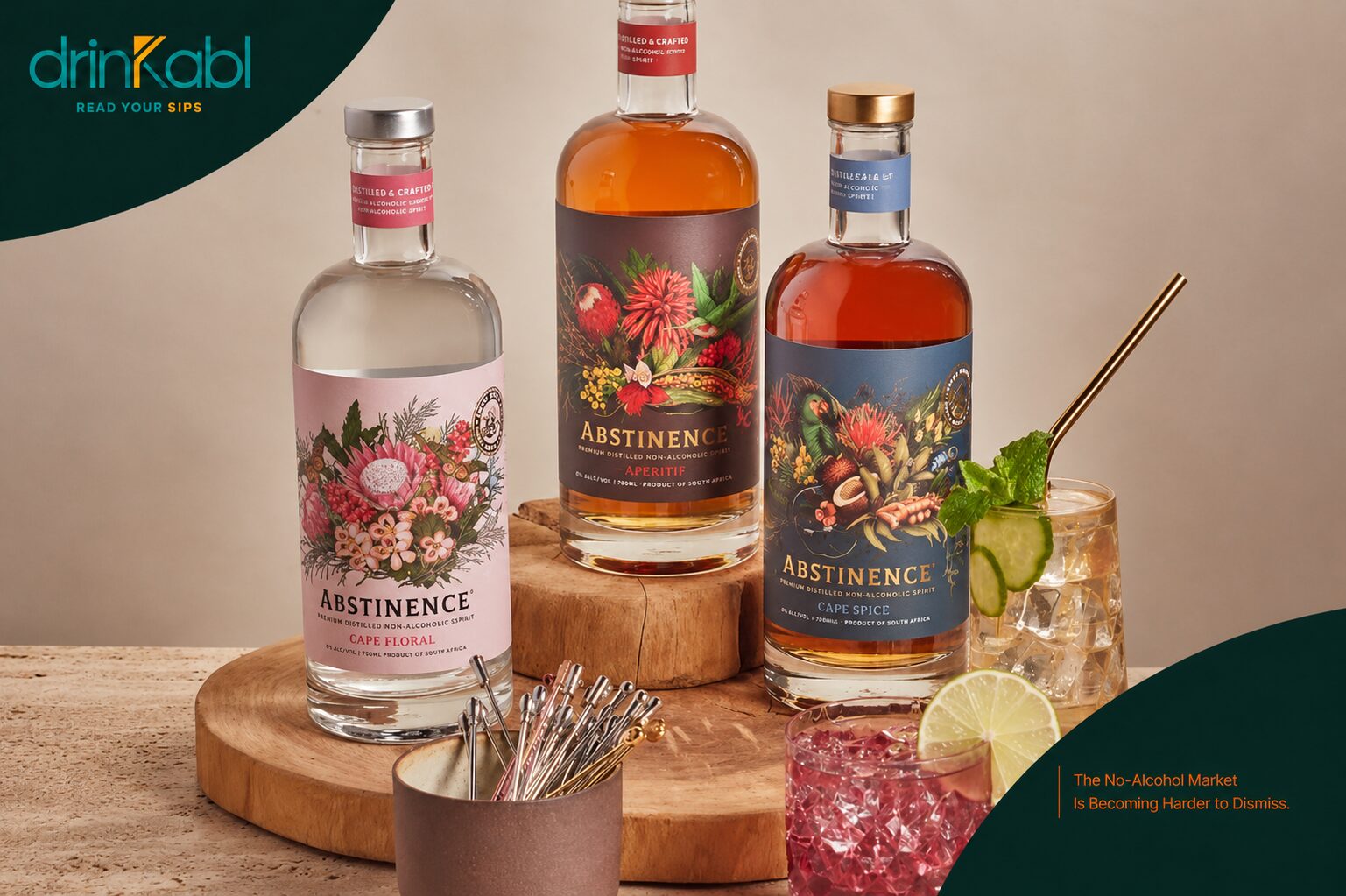
Consumers already know what beer, wine and a gin and tonic taste like, so producers have to recreate enough of the original sensory experience to make the alcohol-free substitute worth buying. That is why innovation in the category has moved past simply stripping out alcohol. Food & Wine reported last week on growing interest in functional ingredients in non-alcoholic beer, with some brands adding electrolytes, adaptogens and herbs to give consumers an additional reason to choose the product. The industry needs discipline here: a drink should not become a collection of fashionable ingredients carrying unverified health claims simply because “wellness” sells. Consumers are entitled to know what is actually in the bottle and what those ingredients can realistically deliver.
Africa may already have the raw material
The continent does not need to wait for the next imported trend. Africa has a long history of drinks that never depended on alcohol for social relevance: hibiscus, ginger and tamarind drinks, malt beverages, fruit-based drinks and traditional fermented beverages that occupy their own complicated cultural and regulatory space. A premium alcohol-free drink built around a recognisable African ingredient tells a different story from a European-style imitation beer, and a well-made non-alcoholic cocktail built on local flavours could work in a Lagos restaurant, a Nairobi rooftop bar or an Accra hotel without imitating something from elsewhere. The category does not have to mean “beer without alcohol.” It can mean better drinks for occasions where alcohol is not wanted, which is a considerably larger opportunity.
Recovery requires careful handling
One group the industry needs to consider carefully is people recovering from alcohol use disorder. For someone rebuilding a life without alcohol, an alcohol-free beer may be entirely unsuitable; for someone else, it may be harmless. There is no universal answer, which is why the commercial language around “moderation” needs care. It can imply that alcohol-free products are universally beneficial or universally safe, and they are neither. People’s relationships with alcohol are personal, and the category should avoid turning recovery or sobriety into marketing shorthand. The opportunity here is commercial, but the underlying subject remains a human one.
Whether this becomes a lasting shift
The more likely outcome is not that no-alcohol becomes the next major trend, but that it simply becomes unremarkable. Trends attract attention because they are new; categories become durable once they stop feeling unusual. An alcohol-free beer ordered by someone driving home should not require an explanation. A 0% cocktail at a wedding should not read as a consolation option. A non-alcoholic choice at a business dinner should not be a bottle of water positioned at the bottom of the menu, and a guest who says they are not drinking tonight should not have to leave the occasion to make that true.
Carlsberg’s results suggest major drinks companies are already treating this as commercially serious. For Africa, the open questions are whether consumers will pay for it, whether retailers will allocate shelf space, whether bars and restaurants will take it seriously, and whether local manufacturers will build products that feel distinctly African rather than imported. The underlying test is whether the industry can make drinking less about what is absent from the glass and more about what is actually in it. If it can, the no-alcohol niche will last much longer.