
Africa’s Beverage Industry Pursues Growth as Trust and Market Access Come Under Pressure
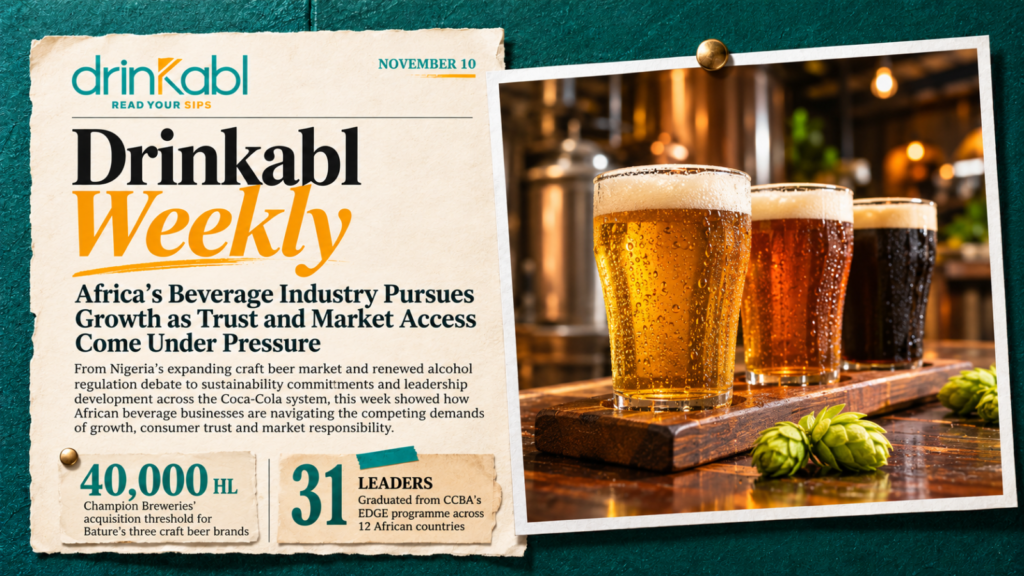
From Nigeria’s expanding craft beer market and renewed alcohol regulation debate to sustainability commitments and leadership development across the Coca-Cola system, this week showed how African beverage businesses are navigating the competing demands of growth, consumer trust and market responsibility.
Africa’s beverage industry had a week of developments that brought commercial expansion and industry accountability into sharper focus. In Nigeria, Champion Breweries entered a manufacturing and distribution partnership with Bature Brewery to take three locally developed craft beers nationwide. Civil society organisations renewed pressure on lawmakers to pass a National Alcohol Control Bill, while investigations into counterfeit wine exposed the weaknesses in consumer protection and product authentication. Rite Foods entered Nigeria’s top 20 brand ranking, and several major corporations backed a new sustainability pledge. Across the continent, Coca-Cola Beverages Africa graduated 31 senior leaders from 12 African countries, highlighting the importance of developing management capacity for a more competitive regional industry.
Together, the developments show an industry seeking growth through stronger distribution, better brand positioning and regional collaboration, while facing increasing expectations around product integrity, responsible marketing and environmental performance.
Champion Breweries takes Nigerian craft beer nationwide
Champion Breweries Plc entered a manufacturing and distribution partnership with Thistlerock Enterprises Limited, the owner of Bature Brewery, on 6 November, creating a new route for three Nigerian craft beer brands to reach consumers nationally.
The agreement covers Lagos Lager, Black Gold Stout and Harmattan Haze. Production and packaging will take place at Champion Breweries’ facility in Uyo, Akwa Ibom State, while Champion will use its manufacturing capabilities and distribution network to expand the brands beyond their established markets.
The arrangement is structured initially as a licensing partnership rather than an outright acquisition. Bature will retain ownership of the brands and responsibility for product development, brand strategy and consumer engagement. Champion, meanwhile, will handle manufacturing, packaging and nationwide distribution.
The agreement also includes an option for Champion to acquire the three brands if their combined annual sales reach 40,000 hectolitres, equivalent to four million litres, subject to regulatory and corporate approvals. Neither company has disclosed the financial valuation attached to the potential acquisition.
The rollout will begin with Lagos Lager, scheduled for introduction at the Calabar Festival in December 2026. Harmattan Haze is expected to follow in the first quarter of 2027, with Black Gold Stout scheduled for wider distribution later in the year.
The partnership addresses one of the structural challenges facing independent craft breweries in Nigeria: the cost of building production capacity and distribution infrastructure beyond major urban markets.
For Champion, the arrangement extends its diversification strategy and adds craft beer to a portfolio that has expanded beyond its traditional beer and malt categories.
The commercial test will be whether the partnership can generate sufficient consumer demand to reach the acquisition threshold. National distribution creates access, but sustained retail availability and repeat purchases will determine whether these brands can scale.
Read more: Champion Breweries Takes Bature Craft Beers Nationwide
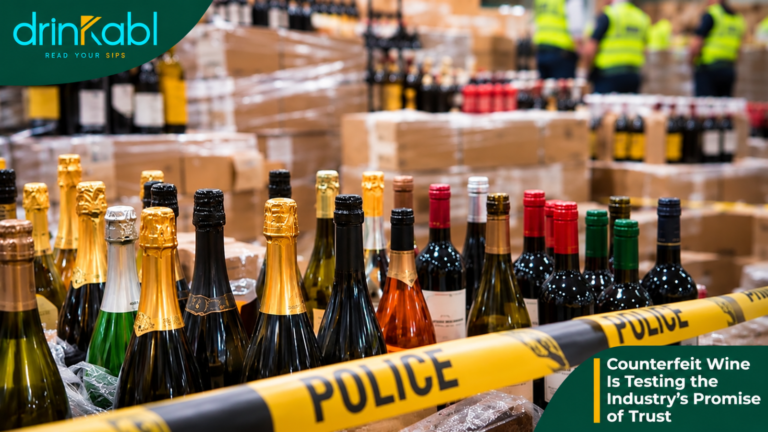
Counterfeit wine exposes the limits of consumer trust
Counterfeit wine emerged as another important concern for Nigeria’s beverage industry following investigations into suspected fraudulent drinks operations in Lagos and separate counterfeit wine cases in England.
A Drinkabl investigation published on 8 November examined how counterfeiters exploit the commercial value of established wine labels, using genuine-looking bottles to sell products whose contents may not match their packaging.
The Nigerian investigation draws on NAFDAC’s October raid at Zamfara Plaza in the Lagos Trade Fair Complex, where the agency uncovered more than 20 illegal stores and recovered products and materials valued at over ₦2 billion.
According to the agency, suspects were allegedly involved in repackaging alcoholic beverages, revalidating expired drinks and storing prohibited imported products. One of the suspects described changing the contents of bottles while retaining the original packaging.
The problem extends beyond Nigeria. Investigations in Europe have exposed sophisticated wine fraud involving counterfeit labels, corks and claims about product origin. In England, the Food Standards Agency also announced an investigation involving suspected counterfeit wine valued at more than £500,000.
For legitimate wine producers, importers and distributors, the implications are significant. Consumers often rely on packaging, brand reputation and retail presentation when making purchasing decisions, but these indicators become less reliable when counterfeiters can reproduce labels and refill genuine bottles.
Authentication technologies, including QR codes, serialised labels and tamper-evident seals, can help establish whether packaging is genuine. However, they cannot independently establish the chemical composition or safety of the liquid inside.
The distinction is important. A counterfeit label does not automatically mean a drink is toxic, just as convincing packaging does not guarantee product safety.
For regulators and manufacturers, the next priority must be strengthening product traceability, laboratory testing and investigations into the suppliers behind counterfeit operations.
Read more: Counterfeit Wine Is Testing the Industry’s Promise of Trust
Nigeria’s alcohol control debate moves back to the National Assembly
Nigeria’s National Alcohol Control Bill returned to the policy debate after civil society organisations urged the National Assembly to prioritise its passage, warning that existing regulatory measures do not provide a sufficiently comprehensive framework for addressing alcohol-related harm.
The call followed an advocacy meeting organised in Abuja on 2 November by the Renevlyn Development Initiative and Motivator’s Crib Africa, under the Nigeria Civil Society Convening on Alcohol Policy Advocacy Action.
In a communiqué issued on 3 November, the organisations argued that stronger legislation was needed to regulate alcohol marketing, improve enforcement and protect children and other vulnerable populations.
The groups raised concerns about digital advertising, lifestyle branding and the accessibility of alcohol through sachet and miniature packaging. They also called for stronger coordination among government agencies and more effective enforcement of existing restrictions.
The debate comes as NAFDAC continues to enforce restrictions on alcoholic beverages packaged in sachets and containers below 200 millilitres.
The proposed legislation would give Nigeria a broader statutory framework for alcohol control, although the precise commercial implications will depend on its final provisions and implementation.
For beverage manufacturers, the debate carries implications for marketing practices, packaging, distribution and the commercial relationship between brands and consumers.
Public-health advocates argue that stronger controls are necessary to reduce alcohol-related harm. Industry stakeholders, meanwhile, have a commercial interest in regulatory clarity and consistent enforcement.
The next stage will depend on whether lawmakers advance the proposal through the legislative process and how its provisions are reconciled with existing regulations.
Read More – Civil Society Groups Urge NASS to Pass Alcohol Control Bill
Rite Foods breaks into Nigeria’s top 20 brand ranking
Rite Foods Limited entered Nigeria’s top 20 brands for the first time, placing 17th in the 2026 Top 50 Brands Nigeria Ranking announced following the Brand Nigeria Leadership Forum and Awards held in Lagos on 30 October.
The company improved five positions from its 2025 ranking of 22nd and recorded a brand strength score of 58%, according to the ranking organisers.
The result extends a five-year progression for the Nigerian-owned food and beverage manufacturer, which moved from 50th position in 2021 to 17th in 2026.
Rite Foods’ portfolio includes Bigi carbonated soft drinks, Fearless Energy Drink, Sosa Fruit Drink and Bigi Premium Drinking Water. The company has also entered the malt category with LIDA Malt Classic, introduced during a product immersion programme at its Ososa manufacturing facility in October.
The ranking measures brand strength through consumer recall, sentiment, online engagement, trust, relevance and other perception indicators. It should therefore not be interpreted as a direct measurement of revenue, profitability or market share.
Nevertheless, the achievement offers an indication of the growing visibility of locally owned beverage manufacturers in Nigeria’s competitive consumer market.
Rite Foods is expanding across several beverage categories, giving it more opportunities to build brand recognition and reach different consumer segments.
The challenge will be converting that recognition into sustained sales growth, distribution expansion and stronger category positions. Brand visibility can create commercial opportunities, but the ability to deliver consistent products at competitive prices ultimately determines market performance.
Read more: Rite Foods Enters Nigeria’s Top 20 Brand Ranking
Nestlé, Guinness and FMN back a broader African sustainability agenda
Nestlé Nigeria, Guinness Nigeria, Flour Mills of Nigeria and MTN Nigeria joined other corporate organisations in backing the Africa Sustainability Pledge, adopted at the inaugural Africa Sustainability Forum 2026 in Lagos.
The forum took place on 20 October at the Oriental Hotel under the theme Sustainable Futures: Driving Just Transitions, Green Growth and Shared Prosperity. The pledge was reported on 4 November.
Other participating organisations included Rite Foods, the Food and Beverage Recycling Alliance, PwC Nigeria, the Nigerian Communications Commission and Aren Paper Mills.
The declaration calls on participating organisations to improve resource efficiency, reduce waste, support environmentally responsible innovation and promote inclusive economic development.
For the beverage industry, packaging recovery is particularly important. Nigeria’s Plastic Waste Control Regulations 2026 introduce recycled PET requirements for covered packaging, including a minimum 25% recycled PET content by January 2028, rising to 50% subsequently.
This creates a more direct commercial relationship between sustainability commitments and manufacturing operations. Beverage producers will need reliable access to recovered plastic, recycling infrastructure and systems capable of delivering materials that meet production standards.
Some participating companies already have initiatives in place. Nestlé Nigeria, for example, has reported using 50% recycled PET in its Nestlé Pure Life bottles and supporting plastic recovery partnerships.
However, the sustainability pledge does not disclose individual company investment commitments, measurable targets or a common monitoring framework.
The real test will be whether the participating organisations translate the declaration into measurable reductions in waste, stronger recycling infrastructure and more responsible production practices.
For beverage manufacturers, sustainability is increasingly moving beyond corporate communication into the economics of packaging, procurement and manufacturing.
Read more: Nestlé, Guinness, FMN Back Africa Sustainability Pledge
Coca-Cola Beverages Africa invests in regional leadership
Coca-Cola Beverages Africa (CCBA) graduated 31 senior leaders from 12 African countries through its EDGE Senior Leadership Acceleration Programme, marking the second generation of the programme and its first pan-African cohort.
The graduation was announced on 4 November in Johannesburg. The 2026 programme was expanded to include participants from Equatorial Coca-Cola Bottling Company and Coca-Cola Hellenic Bottling Company, creating a broader leadership development initiative across the Coca-Cola system.
Delivered in partnership with Henley Business School Africa, EDGE combines classroom learning, mentoring, coaching and practical business projects.
Its curriculum covers strategy, value creation, transformation, commercial decision-making and leadership development.
The programme also included participants from CCBA’s Ethiopian operations, where Sales Director Moses Luyima and Supply Chain Director Solomon Tesfaye completed the programme.
The development reflects the importance of management capacity in a business operating across different markets, regulatory environments and consumer economies.
CCBA says it serves more than 840,000 customers across Africa and operates in 14 countries. Managing such a network requires leaders who understand local market conditions while maintaining consistent operational and commercial standards.
The programme’s commercial value will ultimately depend on how graduates apply their experience to business performance, market expansion and organisational development.
For Africa’s beverage industry, the initiative also raises a broader issue: regional growth requires more than manufacturing infrastructure and distribution networks. It requires executives capable of managing complex businesses across borders.
Read more: CCBA Graduates 31 Senior Leaders From 12 African Countries
What comes next
The coming weeks will test whether Champion Breweries can use its partnership with Bature to demonstrate that Nigerian craft beer can scale beyond established hospitality markets. The commercial performance of Lagos Lager and the subsequent rollout of Harmattan Haze and Black Gold Stout will provide an early indication of how consumers respond to locally developed premium beer brands.
In Nigeria, the proposed National Alcohol Control Bill will remain an important policy issue, particularly as regulators continue to confront counterfeit and prohibited products. For manufacturers, the challenge is to protect product integrity while preparing for a potentially more demanding regulatory environment.
Rite Foods’ improved brand ranking and the sustainability commitments made by major corporations also highlight two different measures of competitiveness: consumer relevance and responsible production. Both will require measurable commercial and operational outcomes.
Across the continent, CCBA’s leadership programme points to the importance of developing people capable of managing increasingly interconnected African beverage markets.
The common thread this week was the need to build businesses that can scale without losing their identity or credibility. Distribution can take a local brand nationwide, but consumer loyalty must be earned. Marketing can create visibility, but product authenticity must sustain trust. Sustainability pledges can establish direction, but measurable investment must deliver results.
For Africa’s beverage industry, the next generation of growth will depend on companies that understand these relationships and build commercial strategies around them.