
The Edo State Consumer Protection Committee has given sellers, dealers and manufacturers seven days to withdraw and dispose of sachet alcohol across the state, escalating enforcement of Nigeria’s nationwide ban on small-format alcoholic drinks.
The directive, issued by committee chairman Osaro Culture Iyamu, follows the Federal Government’s prohibition on sachet and other small-format alcoholic beverages. Radio Nigeria reported that businesses that fail to comply could face penalties, seizure of products and prosecution.
After the seven-day grace period, task force teams will move across markets, shops, motor parks and other sales points in Edo’s 18 local government areas. That shifts the policy from a federal manufacturing and recall exercise into a more direct retail enforcement problem.
The federal crackdown has already moved beyond factories. NAFDAC ordered manufacturers of alcoholic drinks packaged in sachets and plastic bottles below 200ml to begin a nationwide recall, with recalled products to be inventoried and destroyed under the agency’s supervision. NAFDAC said the ban took effect on January 1, 2026 and has since progressed from manufacturers to markets, motor parks, retailers, bars and distribution centres.
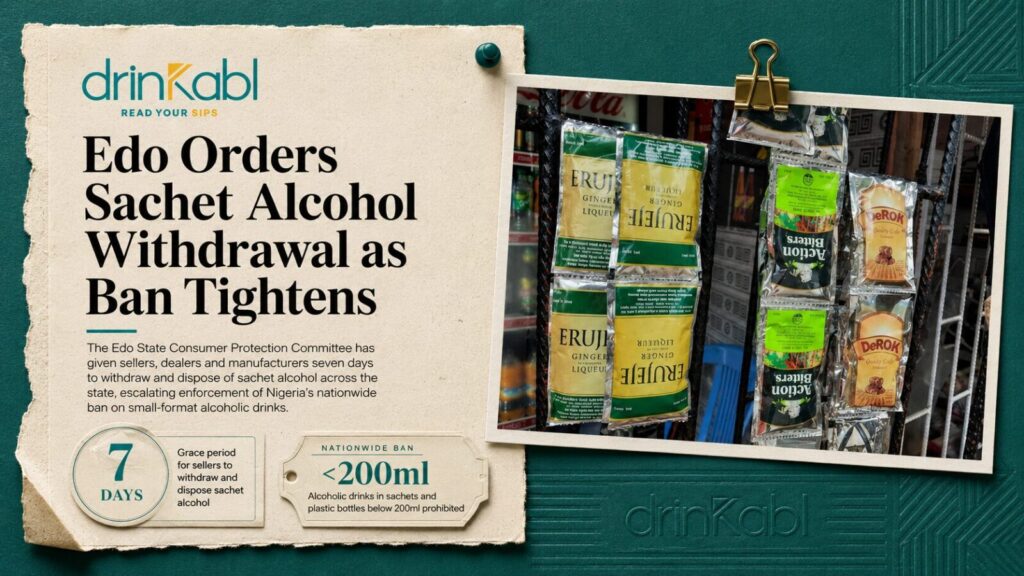
For retailers, the pressure is becoming harder to absorb. Lagos traders recently appealed to President Bola Tinubu and NAFDAC to halt enforcement, arguing that confiscations and lost sales were damaging businesses already carrying debt. retailers The traders said the affected products provided daily income for many small operators and called for alternatives before further enforcement.
Drinkabl.media’s recent reporting on the Nigerian beverage market has already traced the widening gap between formal-sector beverage growth and the retailers exposed to the packaging ban. Its alcohol coverage noted that sachet sellers in Ibadan had protested the policy even as major brewers reported stronger first-half revenues. market
The Edo directive adds another enforcement layer. Manufacturers must remove prohibited stock, while distributors and retailers now face a shorter window to clear products before state-level sanctions begin.
The next test will be whether enforcement removes the products without pushing the economic burden further down the retail chain. For thousands of small sellers, the federal ban is already a business decision they did not make.