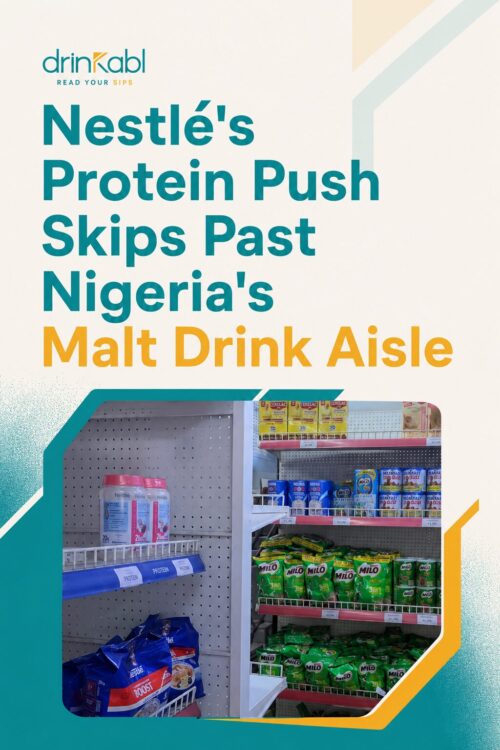

Nestlé has taken full ownership of Yfood, buying out the German “smart food” brand’s founders after three years as a minority partner. The deal lands inside a consolidation wave hitting functional nutrition: Danone bought Huel, Lactalis bought Protein Works, and Nestlé itself was first to market in the US with a GLP-1-aligned drink range under a separate brand, Boost.
That range runs on whey protein microgels, a technology built to let manufacturers heat-process high concentrations of whey without the clumping and off-flavours that usually follow. “Whey protein is known for its high nutritional quality but can clump together when heated as a concentrated liquid,” said Christophe Schmitt, senior expert in protein science and technology at Nestlé Research. Eleven patents support the format. Boost Pre-Meal Hunger Support reached US shelves on the back of it in 2025; Boost Advanced, a 35-gram-protein shake aimed at preserving muscle during GLP-1-driven weight loss, followed in June.
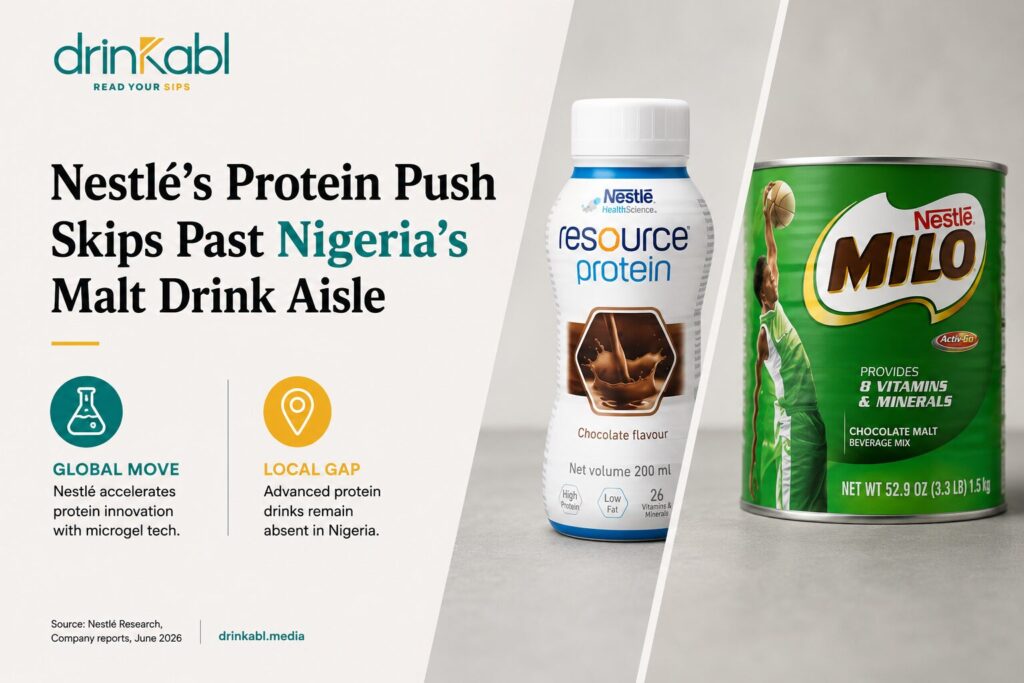
None of it has reached Nigeria’s malt drink category, where Nestlé already sells a protein-enriched product. Milo Activ-Go runs on the brand’s original malt-milk-cocoa base with added vitamins and minerals, not on hydrolyzed whey or microgel processing. The newer high-protein Milo line, Milo Pro, has gone to Australia and Indonesia, with a Southeast Asia rollout planned for 2026. West Africa is not on that list.
The gap is a margin question as much as a technical one. Activ-Go already trades on the same logic Nestlé is selling GLP-1 consumers in the US: protein as a functional upgrade to a drink people already trust. Bringing microgel processing to Nigeria would mean importing or licensing specialised inputs into a market where excise and sugar-tax pressure is moving in the opposite direction from the cost relief brewers are seeing elsewhere on the continent.
Nestlé Nigeria’s next full-year results will show whether protein fortification has entered the product pipeline, or whether the upgrade path stays parked in Europe and the US while local FMCG players fight over shelf space with the tools they already have.
READ MORE
Nigeria’s Beverage Giants Confront the Limits of Affordability
East Africa vs West Africa: Two Distinct Paths for Africa’s Beverage Industry