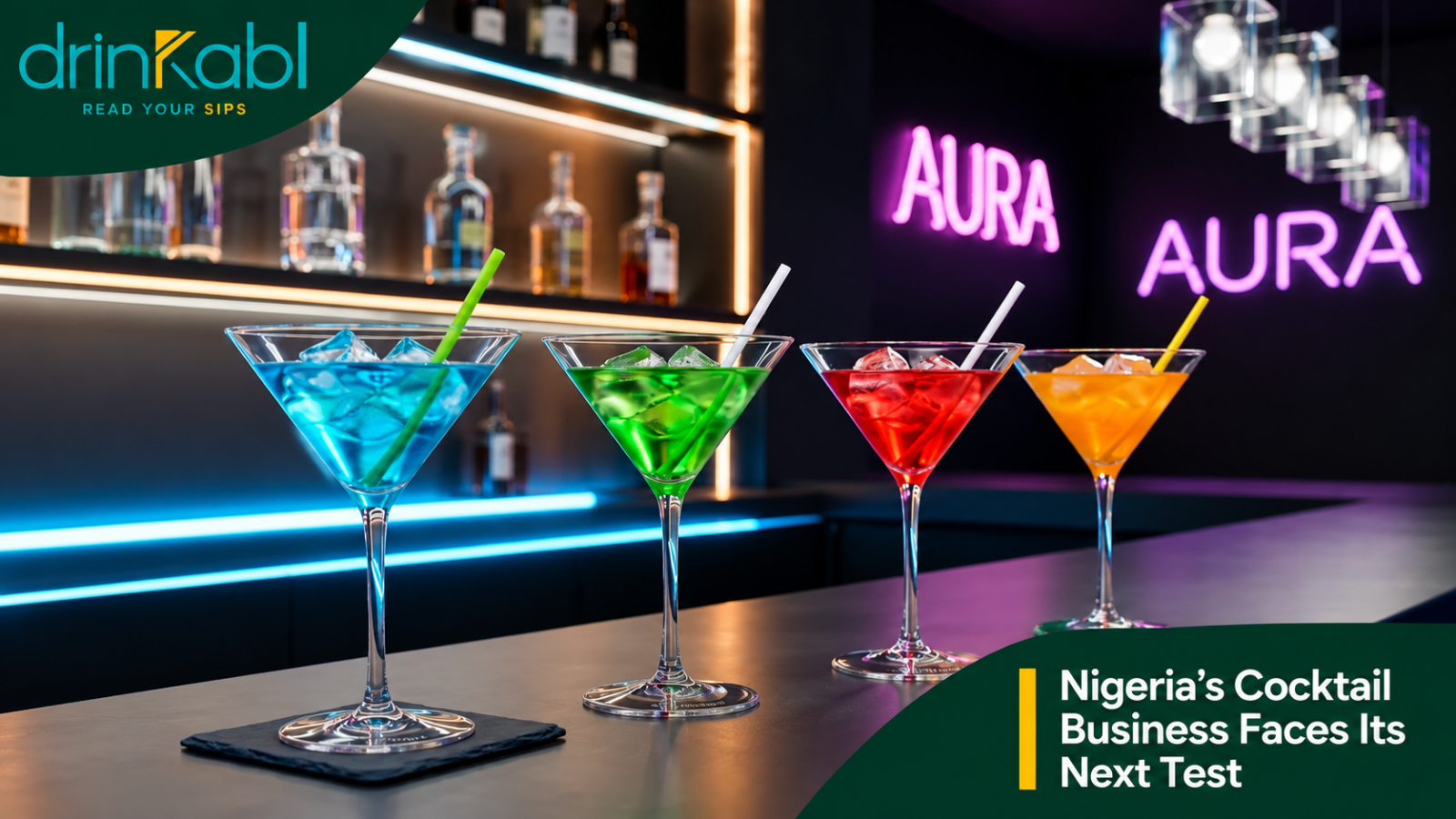

Rising brand investment, independent cocktail ventures and professional training are expanding the trade. But high operating costs, limited industry infrastructure and uncertain demand are testing how far the business can grow.
Nigeria’s cocktail business is becoming more visible in bars, restaurants, private events and beverage-brand activations. At Lagos Cocktail Week in October 2026, Absolut, Monin, Cutty Sark, Gold Bar Whiskey, Lord’s Gin and Schweppes were among the brands presenting products and engaging consumers. Independent ventures are also exploring packaged cocktails and delivery. Yet the activity raises a commercial question: can the growing interest in cocktails translate into sustainable businesses in a market where operating costs, professional training and consumer purchasing power remain challenges?
The difficulty is establishing the sector’s actual size. Nigeria has no readily available, reliable national figure for cocktail sales, the number of specialist operators or industry-wide profit margins. Evidence from individual businesses, bartender competitions, hospitality venues and beverage-company investments can reveal where commercial opportunities are emerging, but it cannot establish the market’s total value or growth rate. The businesses building this sector therefore offer a useful starting point for understanding both its progress and its limitations.
The cost of building a cocktail business
A cocktail business must manage several costs before it can make a profit. Spirits, mixers, fresh ingredients, ice, glassware, equipment, transport and labour all affect the cost of delivering a drink. Imported ingredients and equipment also expose operators to foreign-exchange movements, while inflation can force them to increase prices or accept lower margins. For businesses serving price-sensitive customers, raising prices is not always a straightforward solution.
The operating model creates further complications. A bar must attract enough customers to cover rent, staffing and inventory, while a mobile cocktail service needs a steady flow of bookings to justify its equipment and labour costs. Packaged-drink businesses face a different challenge because production, packaging and distribution costs are incurred before they know how quickly stock will sell. A busy event or a popular product launch may generate revenue, but neither automatically demonstrates profitability.
The industry also lacks the formal training infrastructure that could help more operators deliver consistent service and manage their businesses professionally. At the launch of Diageo’s 2026 World Class competition, hospitality consultant Kostantine Madi called for formal bartending institutions in Nigeria, arguing that professional training could help venues improve their standards and justify higher prices. The wider issue is that technical skill must be supported by business knowledge, including stock control, costing, pricing and customer retention.
Eventi Cocktails helps fill a gap
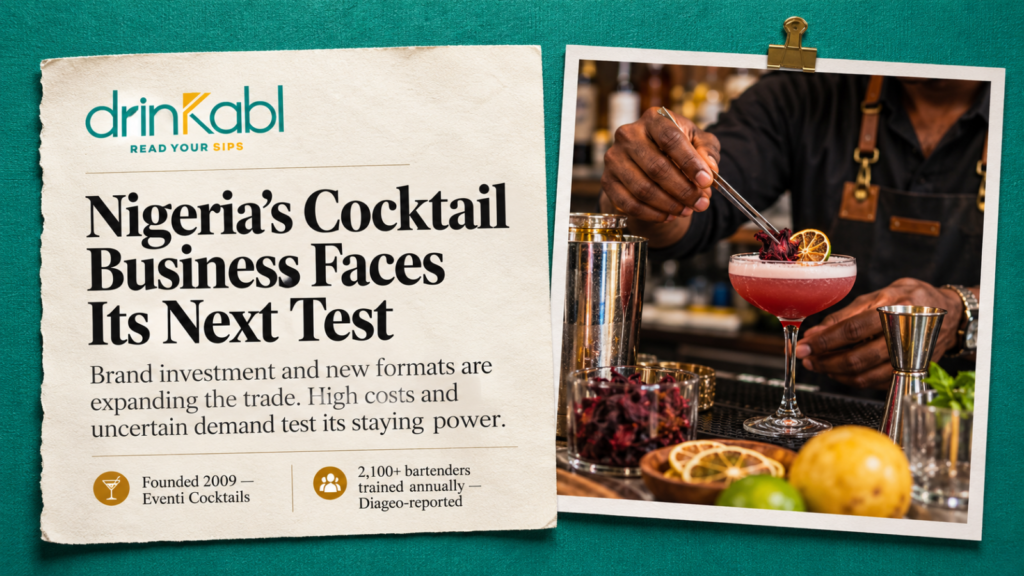
Lara Rawa’s experience with Eventi Cocktails illustrates how entrepreneurs have responded to gaps in the market. Founded in 2009, the business provides cocktail services for events, allowing clients to bring a bar experience to private and corporate occasions without operating a permanent cocktail venue. The model creates opportunities around event catering and beverage service, but it also requires careful planning, reliable staff and accurate estimates of the ingredients needed for each booking.
Rawa established Lagos Cocktail Week in 2014 after identifying a shortage of platforms where Nigerian bartenders could showcase their skills and connect with beverage brands. The festival has since developed into a meeting point for hospitality professionals, consumers and drinks companies. At its 12th edition in October 2026, the programme combined consumer experiences with professional discussions, bartender competitions and exchanges involving bar communities in Lagos, Accra and Abidjan. Its development illustrates how an event organiser can create commercial connections around a trade that extends beyond the festival itself.
The value of that platform is potentially wider than ticket sales or sponsorship. Beverage brands can introduce products to consumers, bartenders can demonstrate their skills, and hospitality businesses can establish relationships with suppliers and potential collaborators. But the long-term impact depends on what follows the event. Repeat orders, new menu placements, paid work and viable business relationships would provide stronger evidence of industry development than attendance alone.

Rawa has also advocated the use of Nigerian ingredients such as zobo and agbalumo in cocktail creation. These ingredients can help distinguish local recipes, but their commercial potential depends on reliable sourcing, consistent quality and prices that leave operators with adequate margins. Eventi Cocktails and Lagos Cocktail Week therefore illustrate two different ways of addressing the sector’s needs: delivering cocktail services directly and building a platform through which the wider industry can connect.
Brands and entrepreneurs are expanding the market
Beverage companies are investing in bartending partly because professionals influence how spirits are presented, recommended and consumed. Diageo’s World Class programme combines competition with training and professional exposure, with its 2026 Nigerian edition involving activities in Lagos, Abuja and Port Harcourt. Diageo has said it trains more than 2,100 bartenders in Nigeria annually through structured programmes. That is a company-reported figure, but it provides a concrete indication of the scale of its investment in professional development.
For Diageo, the commercial logic is that better-trained bartenders can improve customer experiences and help venues sell premium drinks. Its wider portfolio includes brands such as Johnnie Walker, Don Julio and Singleton, which can be presented through different cocktail recipes and serving occasions. However, the number of bartenders trained does not reveal how many subsequently earn higher incomes, secure better jobs or increase sales at their venues. Those outcomes would need to be measured separately.
Other businesses are experimenting with formats that reach consumers outside traditional bars. Quacktails sells cocktails and mocktails in pouches and serves customers ordering for homes and events. Nitecap, founded by Laolu Onifade, has taken a packaged approach with canned cocktails and mocktails available through digital delivery, retail and hospitality partners. In a September 2026 interview, Nitecap reported selling more than 3,000 drinks during its first two months and reaching $2,000 in monthly recurring revenue. These are company-reported early results, not independently audited figures, and they do not establish profitability.
The two ventures demonstrate how entrepreneurs are testing convenience and alternative distribution. Pouches can suit events and informal social occasions, while cans can offer a ready-to-drink option without requiring consumers to visit a bar or prepare a cocktail themselves. But packaged products introduce their own costs, including production, packaging, inventory and distribution. Their success ultimately depends on repeat purchases and a price that works for consumers, retailers and the manufacturer.
Lagos Cocktail Week also shows how brand activations have become part of the business. At the 2026 Cocktail Village, Absolut staged a bartender competition with a ₦1 million prize for the winner and ₦500,000 for the runner-up, while other brands used dedicated spaces to showcase products. These activities create opportunities for sampling and consumer engagement, but the participating companies have not publicly disclosed enough comparable sales or return-on-investment data to establish the commercial impact of the festival as a whole.
What comes next for Nigeria’s cocktail trade?
The sector’s future depends on whether the activity now visible can produce stronger businesses and professional careers. Independent operators need better cost control and reliable supply; packaged-drink ventures need repeat customers and effective distribution; and hospitality businesses need trained staff who can deliver consistent products. Beverage companies, meanwhile, have an incentive to build relationships with bartenders and venues that can support long-term product demand rather than one-off promotional activity.
Nigeria’s local ingredients offer another opportunity, particularly if businesses can turn distinctive recipes into products that are consistently available and commercially viable. Regional exchanges between Lagos, Accra and Abidjan could also help bartenders develop professional networks and expose Nigerian recipes to new audiences. These are plausible avenues for growth, not guaranteed outcomes. Their value will depend on whether they lead to paid opportunities, wider distribution and repeat sales.
The industry also needs better data. Figures on cocktail sales, operator numbers, employment, bartender earnings and business margins would help entrepreneurs and investors distinguish promising activity from sustainable growth. Without those measures, it is premature to put a reliable value on Nigeria’s cocktail market or project its future size.
For now, Eventi Cocktails, Lagos Cocktail Week, Diageo’s training programmes and independent ventures such as Quacktails and Nitecap show that businesses are building around cocktails in different ways. The next test is whether they can turn consumer interest and brand investment into dependable revenue, stronger professional opportunities and businesses that remain viable beyond a successful event or launch.